Quick answer
Why do dance shoes cost so much
When the studio store wants $68 for a Capezio character shoe, the Amazon look-alike is $24, and you cannot tell which part of the gap is real and which is just the logo.
Quick read
Dance shoes cost more than street shoes because they're built for specific technical demands: flexible soles for foot articulation, heels built to take a dancer's weight at the height the style calls for, and sizing systems that prioritize fit over length alone. Most beginner requirements are in the $40-$80 range. The $100+ prices are for performance-level or professional use. Brand matters only when the studio requires a specific one. If the choice is left open, fit and return policy beat the logo. The real cost risk isn't the shoe price. It's buying the wrong spec or a non-returnable shoe that doesn't fit, and having to buy again.
Gear for this situation
What to do
- Understand what you're actually paying for. Dance shoes have three costs built in: technical construction (a split-sole or suede sole built for articulation and grip is not the same as a sneaker outsole), compliance (the costume sheet or studio requirement specifies brand, color, heel height, and sole type because those details are visible on stage and matter for technique), and fit risk (dance shoes size differently from street shoes, so buying cheap without an exchange policy usually means buying twice).
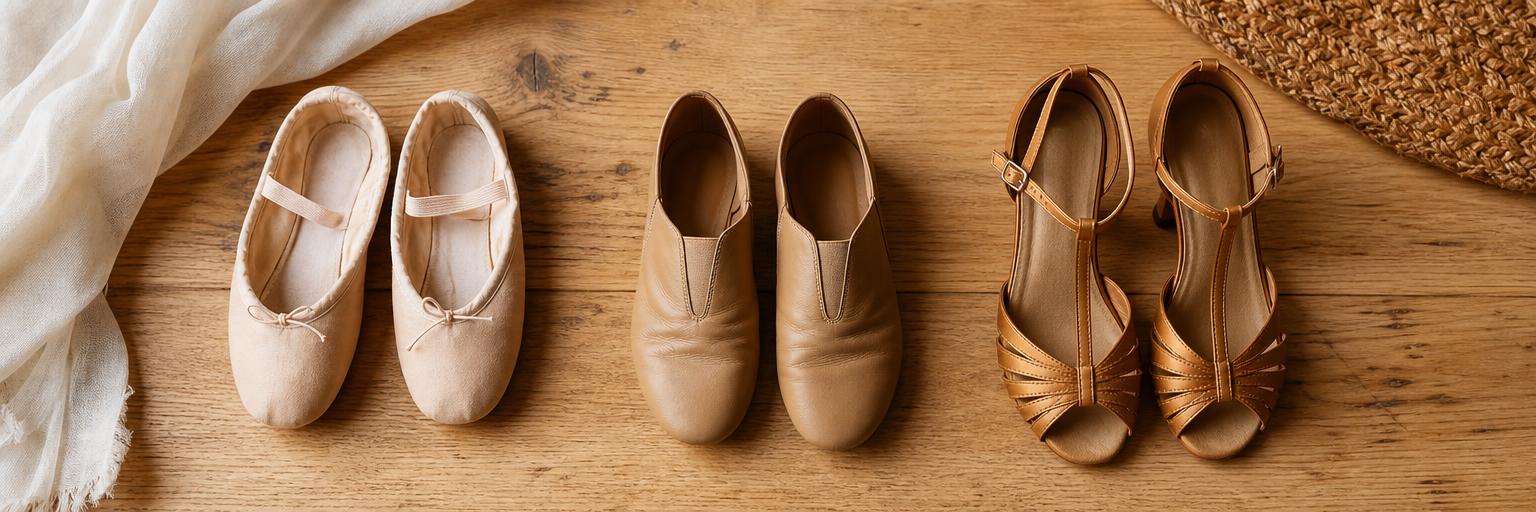
- Most beginner requirements are in the $40-$80 range. Ballet slippers: $15-$30. Basic jazz shoes: $35-$55. Character shoes: $45-$75. Basic tap shoes: $35-$60. The $100+ prices you may have seen are professional or advanced performance shoes, not what a first-year student needs.
- Check whether the studio specifies a brand before assuming the cheapest option works. If the costume sheet says 'Capezio tan character shoe,' that means that brand, that color, that heel height, not a similar-looking shoe from Target. A shoe that's out of spec will be noticed and you'll buy again.
- The exchange policy matters as much as the price. A $50 shoe with a clear exchange-for-fit policy beats a $35 shoe sold final-sale or opened-nonreturnable. Dance shoe sizing is unpredictable across brands and styles. Buying a cheap shoe where you can't return it when the fit is wrong often costs more than the price gap itself. Our shoe fit finder is the cheap insurance against that miss: it takes her current street size and returns the brand-correct starting number for ballet, jazz, tap, and character across Capezio, Bloch, and So Danca, which is the single highest-leverage move on this whole page since the buy-twice trap is the costliest mistake parents actually make.
- When the studio leaves the brand open: shop for fit and return policy first, price second. Capezio, Bloch, and So Danca dominate the beginner range and their baselines are $40-$75. Theatricals and Sansha offer budget alternatives, but fit can run inconsistent and some are final-sale.
- Shoes last roughly one season for active students. A $55 shoe bought correctly in September is not expensive spread over a full recital year. A $35 shoe that doesn't fit and can't be exchanged, plus a $50 replacement under deadline, is more expensive than the number on the tag suggested. The other direction is real money too: a growing kid usually outgrows a ballet, jazz, or character shoe before she wears it out, and the outgrown pair has resale value to next year's family at her old size. Listing it in the studio swap group the week the new pair arrives recoups a real fraction of the original price, which is what makes the buy-used path in item 9 sustainable for the whole studio. The my child outgrew their dance shoes mid-season walkthrough covers the early-tells side of this (toe-curl, red lines across the foot, tightened-as-far-as-it-goes drawstring) so the next reorder lands on a calm Tuesday instead of a frantic Friday.
- Protect the season you paid for, because the costliest mistake after buying the wrong shoe is killing the right one early. A dance shoe earns back its price by lasting the year, and the usual early death is the wrong care for the material. Pull the shoes out of the bag to air after every class, since sweat sealed in a zipped bag breaks leather and canvas down fast, and keep every pair away from the dryer, the radiator, and direct sun, because heat warps the shape and softens the sole glue. Hand wash canvas slippers in cold water and let them air dry, wipe leather clean and condition it once a season, and brush a suede sole so it does not glaze over, since a glazed sole looks brand new but grips like ice and gets a still-good shoe thrown out when an eight dollar brush would have saved it. We lay the routine out by material in dance shoe care by material.
- Before you pay full retail on a brand-new pair, check the two ways to pay less that still keep the shoe in spec. The first is the studio's own group order. Ask the front desk in your first week whether yours runs one. When a studio does, it places a start-of-season bulk order with a brand or a local dancewear shop and passes along a team discount or free shipping, and because the studio set the requirement, what arrives through that order is the right brand, color, and heel height by definition. That is the rare way to save money and guarantee the spec at the same time, and the only reason to skip it is if your studio doesn't run one. The second is timing. Dancewear brands and retailers run real seasonal sales, a back-to-dance stretch in late summer and clearance after recital season, and shipping is usually flat or free over a threshold, so ordering the required shoe early in one of those windows and putting a sibling's pair, tights, or the next size up on the same order spreads the cost instead of paying full price plus rush shipping in the deadline week. Whichever route you take, the rule from the rest of this page still holds, so match the costume sheet exactly and keep a fit-return option.
- If the price still stings, buy the requirement used, because most kids outgrow a dance shoe long before they wear it out. A growing dancer is done with a ballet, jazz, tap, or character shoe in a season or two with the sole barely touched, so the studio swap group, a consignment rack, or a dancewear resale page is full of correct-brand shoes at a fraction of retail. Two rules keep it safe. Match the costume sheet exactly, same brand, color, and heel height, since used does not mean close enough, and either have her try them on or buy a measured size with a return option, because a deal that does not fit is not a deal. The one shoe never to buy used is pointe, which molds to the first dancer's foot and will not safely support a second.
Common mistakes
- Don't buy dance shoes at Target, Walmart, or a general shoe store. These are not dance shoes. They lack the sole flexibility, the heel construction, and the sizing system that dance-class and performance requirements need. They look similar; they are not the same.
- Don't assume sizing down from street shoes is a mistake. Dance shoes are intentionally sized smaller. Ballet slippers typically fit 1-2 sizes smaller than street shoes. Jazz shoes run about half a size smaller. Character shoes track closer to street but vary by brand. This is normal, not a defect.
- Don't buy the most expensive option because it seems more reliable. Dance shoes are spec-first tools. A $58 So Danca character shoe that meets the costume sheet requirement beats a $90 Bloch with the wrong heel height. Read the requirement before reading the price.
- Don't give dance shoes as a class surprise or incentive gift. Dance shoe purchases are fit-specific and spec-specific. A well-intentioned 'nice dance shoe' without knowing the studio's exact requirement and the dancer's current size is almost always the wrong shoe.