Quick answer
Where to find skin-tone dance shoes
When her costume sheet specs 'skin-tone ballet flats,' the Capezio site stops at caramel which reads two shades lighter than her leg, and you do not know where the deeper shades actually live.
Quick read
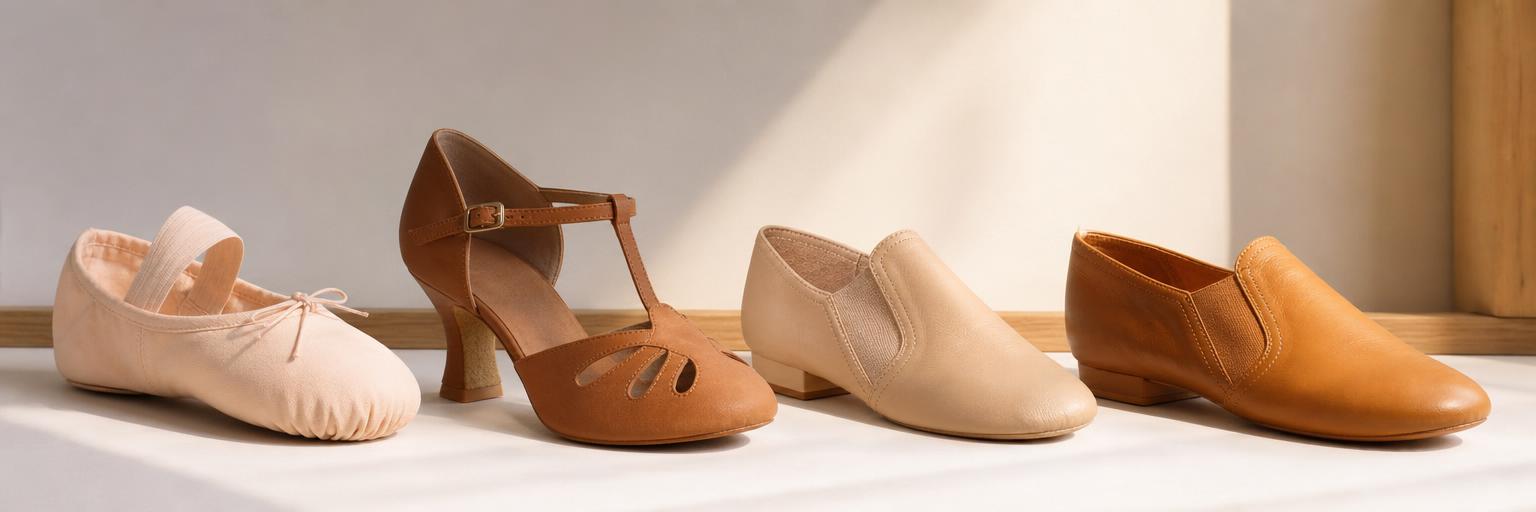
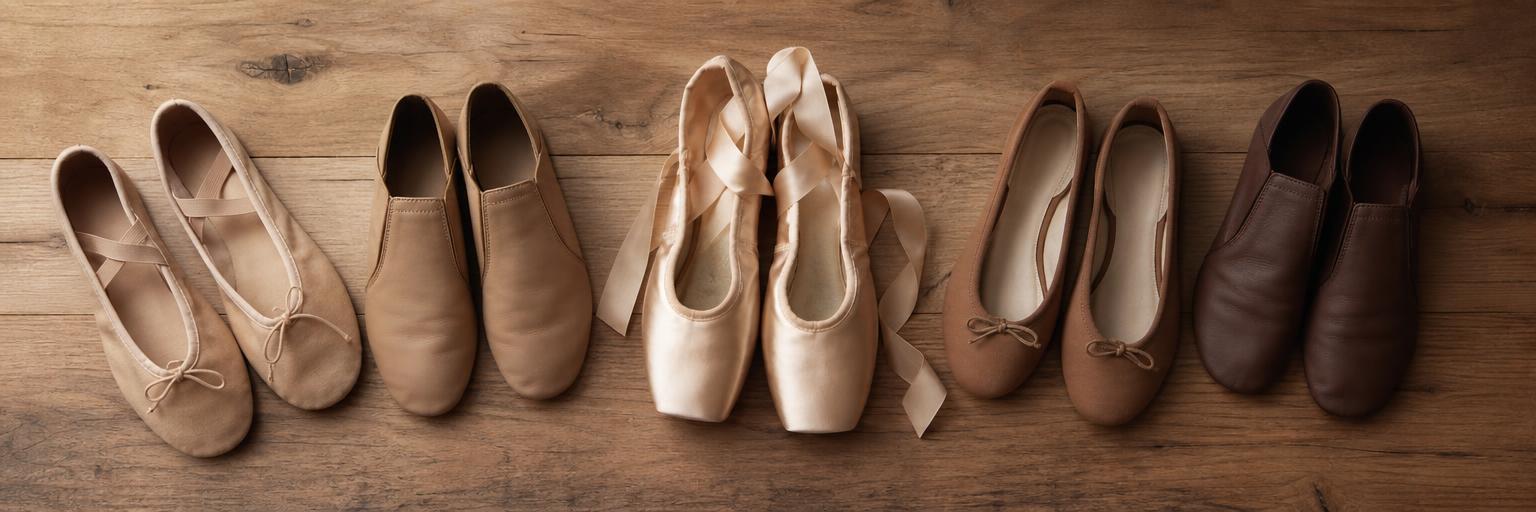
Here is the honest map by category, because the footwear story is uneven. Ballet, jazz, contemporary half-soles, and pointe now have genuinely deep options; tap and character heels still do not. For ballet and jazz, Blendz Apparel makes truly deep True Tone shades brand-direct (leather ballet flats about $35, jazz booties about $64) all the way to a dark Confident Cocoa. Blendz makes contemporary half-soles in those same deep shades brand-direct, and Capezio's FootUndeez half-sole lists a real Espresso (about $28.50), though it is usually sold out brand-direct. For pointe, Bloch's B You tonal Heritage runs $126 across four shades from B24 up to the deep B31, Suffolk offers Brown and Bronze, and Suffolk Pointe Hues ($24) is a dye that matches any tone the stocked shoes miss. Mainstream ballet and jazz from So Danca and Capezio stop at caramel or mocha, a light-to-medium tan that is not a true brown. The real gap is tap and character or heeled shoes. Those top out at caramel or mocha with no deep brown made, so a deep-skin dancer buys the closest tan and pancakes it, since the leather upper does not take dye. One rule throughout: confirm the deepest shade is actually in stock before you count on it, because brands list more colors than the retailers carry.
Gear for this situation
What to do
- Sort by discipline before you shop, because the deep-tone story is uneven. Ballet, jazz, contemporary half-soles, and pointe have genuinely deep options now. Tap and character or heeled shoes do not. Knowing which side of that line your shoe is on tells you whether you're picking a shade or planning a workaround. If you landed here because the costume sheet says 'flesh' or 'nude' and you're not sure whether it means a character heel, a ballet slipper, or a half-sole, the flesh-or-nude requirement decoder is the first read; the category dictates which deep-shade options below are even on the table.
- For deep-tone ballet and jazz, start with Blendz Apparel. It makes truly dark skin-tone shades brand-direct, not the light caramel ceiling: leather ballet flats around $35 and jazz booties around $64, in four True Tone shades up to a deep Confident Cocoa, with the deepest shades showing in stock when we checked. We line up the everyday options in the jazz shoe review and the beginner ballet slipper review.
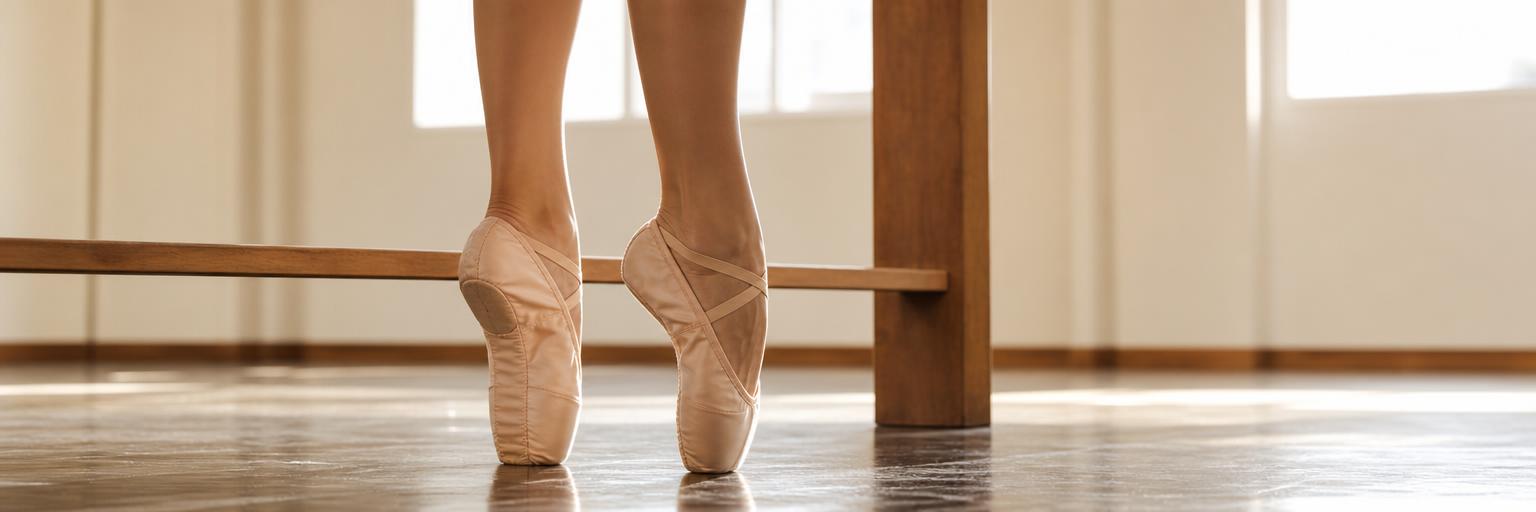
- For pointe, Bloch's B You tonal line is the widest mainstream range, four shades from B24 up to the deep red-brown B31, and it now runs on two brand-direct models at $126: the Heritage and the European Balance. We re-checked in May 2026 and the deep B29 and B31 are broadly in stock on both models, not the one-or-two-pairs-left picture we saw earlier, and Bloch's tonal collection page now surfaces all four shades plus matching ribbon and elastic. A few niche size-and-width combos do sell out, so order direct from Bloch and confirm your exact size and width is in stock before you check out. Suffolk adds Brown and Bronze as a second source. Pointe is fitter-first, so settle fit and model at the fitting, then order that exact shoe in the shade you need. Our pointe first-fitting review covers why the fitting comes before the color.
- For a half-sole or foot undeez in a deep tone, the reliable path is Blendz Apparel, which makes contemporary half-soles brand-direct in four genuinely deep shades, canvas around $26 and leather around $29, with all four in stock when we checked. Capezio's FootUndeez do list a real Espresso (about $28.50, around $22.80 on sale), the deepest mainstream shade, but it was sold out in every size brand-direct when we looked, so treat it as a nice-to-find rather than the plan. See the foot undies and half soles review.
- Once you find the deep shade, get the fit right, because that shade usually pulls you to a brand-direct specialist you have never been fitted in. A Blendz ballet flat or jazz bootie does not run like the Capezio or Bloch your studio sized her in, so do not order her usual number. Measure her bare foot and order off that maker's own printed size chart for the exact shoe, not her street size and not the size marked on her current pair. For the mainstream deep options our cross-brand shoe fit finder turns her everyday size into a per-brand starting number, while pointe stays fitter-first, so settle that at the fitting and order the shade after. And order early while her deep shade is still in stock, since a soft shoe she has danced in is not returnable, and if that shade is down to a single size there is nothing to swap into when the fit is off.
- If you need a tone the stocked shoes don't carry, Suffolk Pointe Hues ($24) is a satin dye that matches any shade, though it goes in and out of stock so order ahead. It works on satin pointe shoes only. Leather jazz and character uppers do not take dye well, so for those a brand that already makes the deep shade is the real answer.
- For the tap or character shoe where no deep shade exists and dye won't work, pancake the closest tan instead. Pancaking is the wardrobe trick of coloring a shoe with makeup rather than dye, and it is the move for the leather and canvas that dye blotches. Start with the least-orange tan you can find, then build it deeper with a cream or liquid foundation a shade or two past her skin, worked in with a sponge on canvas or a thin even coat on leather, or use a calamine-based pancake body makeup like the Ben Nye and Mehron lines already used on stage skin. The stage makeup review lays out the Ben Nye deep-shade range (Brown Light through Dark) and the authorized-reseller routes that keep you out of grey-market listings, since pancaking a recital shoe relies on the exact pigment density a counterfeit will not deliver. Set it with a translucent powder so it does not rub off on her tights or the floor, and tuck the leftover makeup in the dance bag, because pancake wears at the toe and heel and wants a touch-up between numbers. It is not permanent the way dye is, but it is the only way to take a caramel character heel to a true deep brown today, and it reads right under the lights.
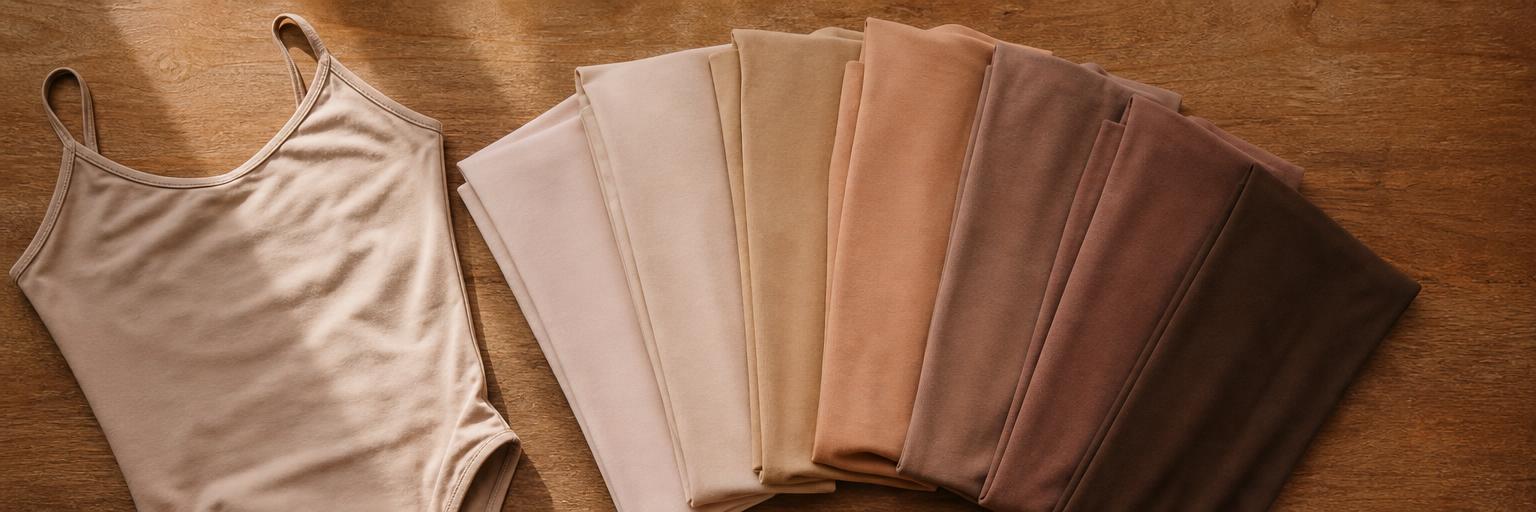
- Whatever route gets you the shade, remember the shoe is only the bottom of the leg line, and the tights are the bigger surface, so match both to the dancer or the shoe match is wasted. A genuinely deep ballet flat over a too-light tight still breaks the line at the ankle, and a spot-on tan tight ending in a caramel shoe two shades off does the same thing lower down. Hold the shoe and the tights she will actually wear against her leg together, in the light closest to the stage, and judge them as one continuous tone rather than matching each to her skin on its own. The tights are usually the easier half to get right, since deep skin-tone tights are more widely stocked than deep shoes. The move is often to nail the tight first and then find the shoe that disappears into it. We work through that side in matching tights to a deeper skin tone and the dance tights review.
Common mistakes
- Don't assume a deep-brown tap or character shoe exists. As of now it does not: tap and character heels top out at caramel or mocha across every brand, so a deep-skin dancer buys the closest tan and pancakes it (the leather upper does not take dye well), or waits for the market to catch up.
- Don't try to dye a leather jazz or character upper to darken it. Leather takes dye poorly and blotchy. Satin pointe shoes take Suffolk Pointe Hues well; leather shoes need to be bought in the shade you want.
- Don't read the brand's color list as the retailer's stock list. A deep shade can be in stock straight from the brand yet missing from a studio shop or a third-party site, and the odd size-and-width combo sells out, so confirm the specific tone and your size ship before you build a costume around it.
- Don't settle for a generic light tan and call it skin tone. A caramel or mocha that reads as a sock against a deep-skin leg is the same mismatch the whole skin-tone category exists to fix. Match the shoe to the dancer the way you would match tights.