Quick answer
What does flesh or nude mean on a dance shoe requirement
When the costume sheet says 'flesh shoes' with no brand or shade name, the dance store's website lists flesh in three different shades, and the recital is in 17 days.
Quick read
Ask the studio before ordering. 'Flesh' is an old industry color name with no consistent meaning across studios. What most studios mean: a pale tan character shoe (caramel or suntan shade, $45 to $65) for musical theatre and recital, or a pale pink ballet slipper for ballet. The exact shade varies by production and lighting. Get the studio's specific color name and whether they mean a character shoe or a ballet slipper. Order from a retailer with an exchange policy, not return-only.
Gear for this situation
What to do
- Ask the studio before ordering anything. 'Flesh' is an old dance industry color name with no consistent meaning across studios, brands, or productions. What your studio means by 'flesh shoes' depends on the show's lighting, the production's costume concept, and the teacher's preference. A quick email or text to the studio front desk saves you from ordering the wrong thing. Ask them to confirm two things: which kind of footwear they mean, since 'flesh' gets used for more than one, and the specific color name.
- There is a third answer to that category question, and it is the one parents miss. For lyrical and contemporary numbers, 'flesh' or 'nude' usually does not mean a shoe in the normal sense at all. It means a barefoot look, which the dancer gets from a nude foot thong (a small sandal that covers the ball of the foot and the toes, sold as a lyrical sandal, a dance paw, or Capezio FootUndeez) or a nude half sole. These give a little protection and the grip to spot a turn while reading as bare skin from the audience, and they are sized and chosen completely differently from a character shoe or a ballet slipper. Lyrical and contemporary are where most competition 'nude' requirements actually land, so if your dancer's number is in either style, ask whether the studio means a foot thong or half sole before you go hunting for a tan character shoe. Once the studio confirms it is a half sole, the foot undies and half soles guide is where to actually buy: it sorts the fabric thongs from the leather lyrical sandals (different products often sold under the same 'lyrical sandal' name), maps the deep skin-tone shades from Blendz Apparel and Capezio Espresso the brands rarely keep stocked, and points the parent at the right product when 'foot undie,' 'dance paw,' and 'foot thong' all come back as the same thing. Match the nude to her own skin here the way you would tights, because the entire point is that the foot looks bare.
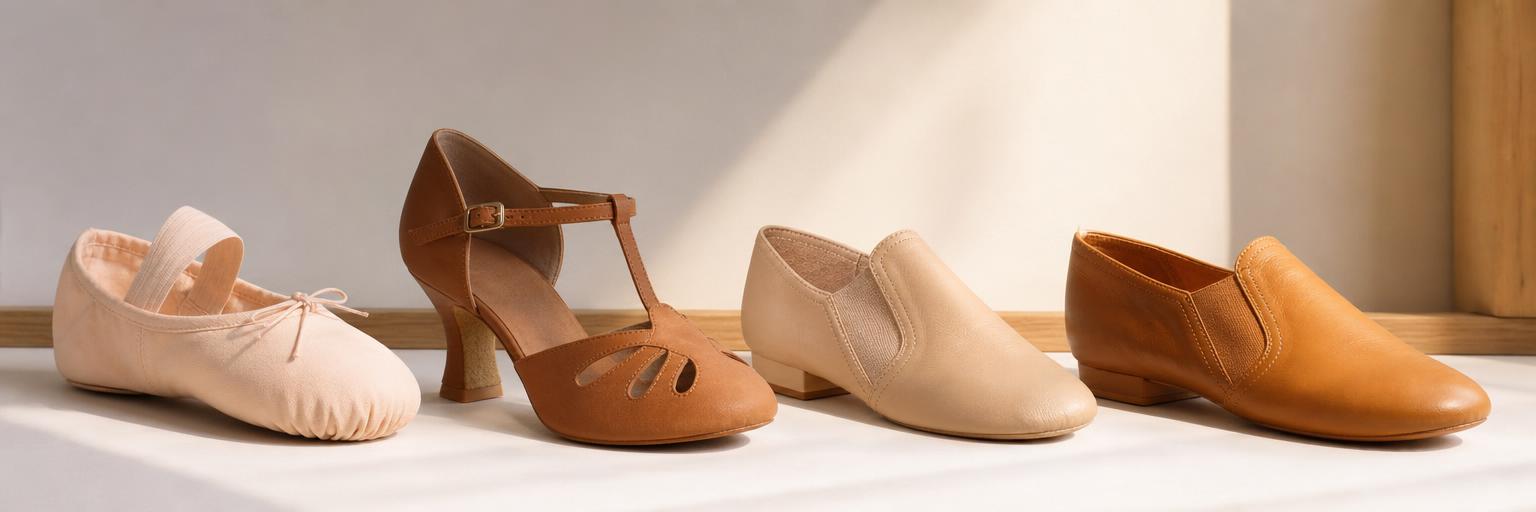
- If the requirement is for a character shoe (common for musical theatre, recital, and competition): most studios mean a pale tan shade sold as 'caramel,' 'suntan,' 'tan,' or 'light tan' depending on the brand. Capezio calls it Caramel. Bloch calls it Tan. Leo's calls it Suntan. These are all close but not identical. If the studio doesn't specify a color name, ask whether they have a physical sample or a brand preference from last year's order.
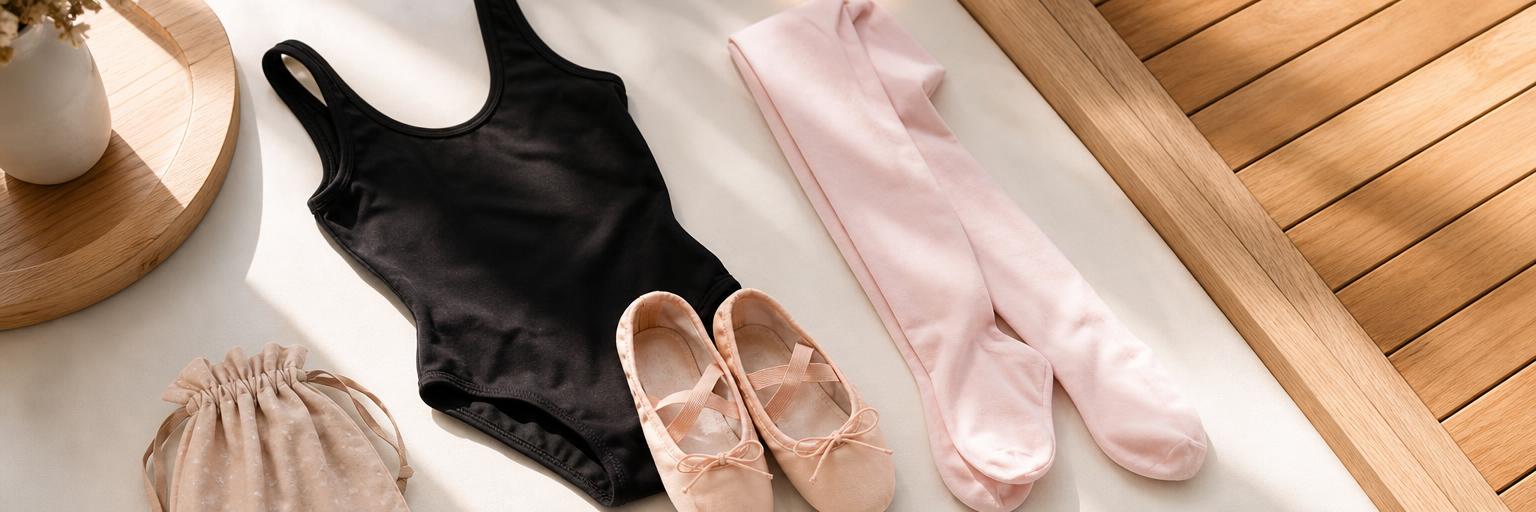
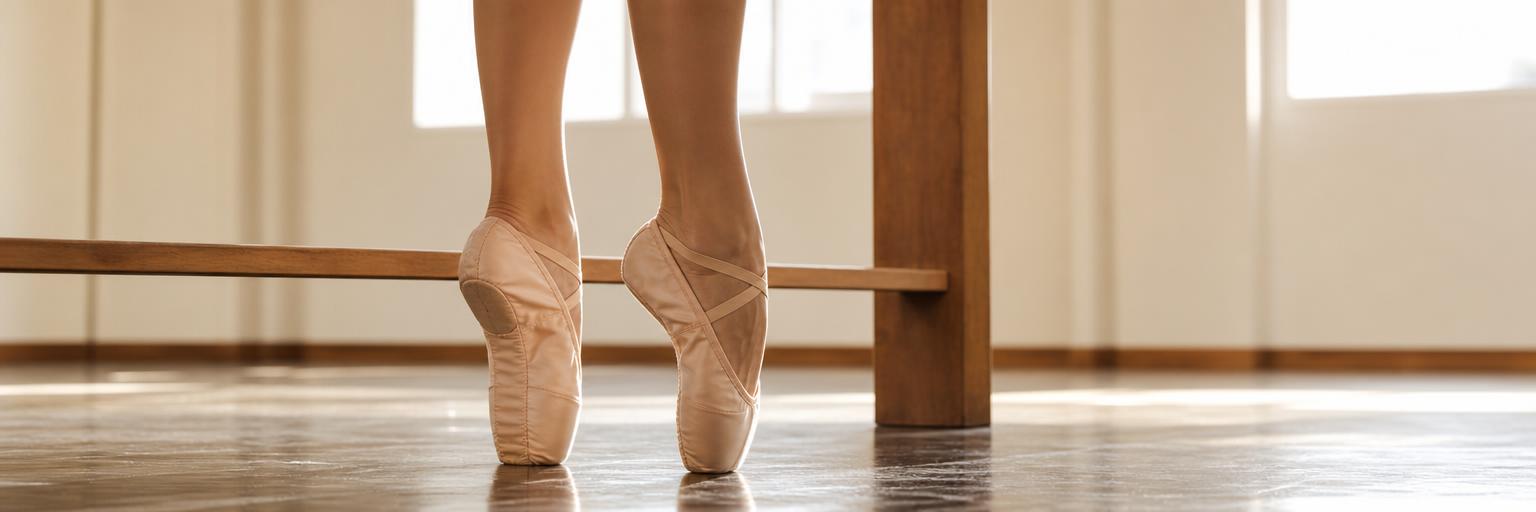
- If the requirement is for a ballet slipper: studios saying 'flesh' for ballet usually mean a pale pink ballet slipper in the dancer's usual ballet pink shade. This is typically the same slipper the dancer already owns for class. Confirm before buying a second pair.
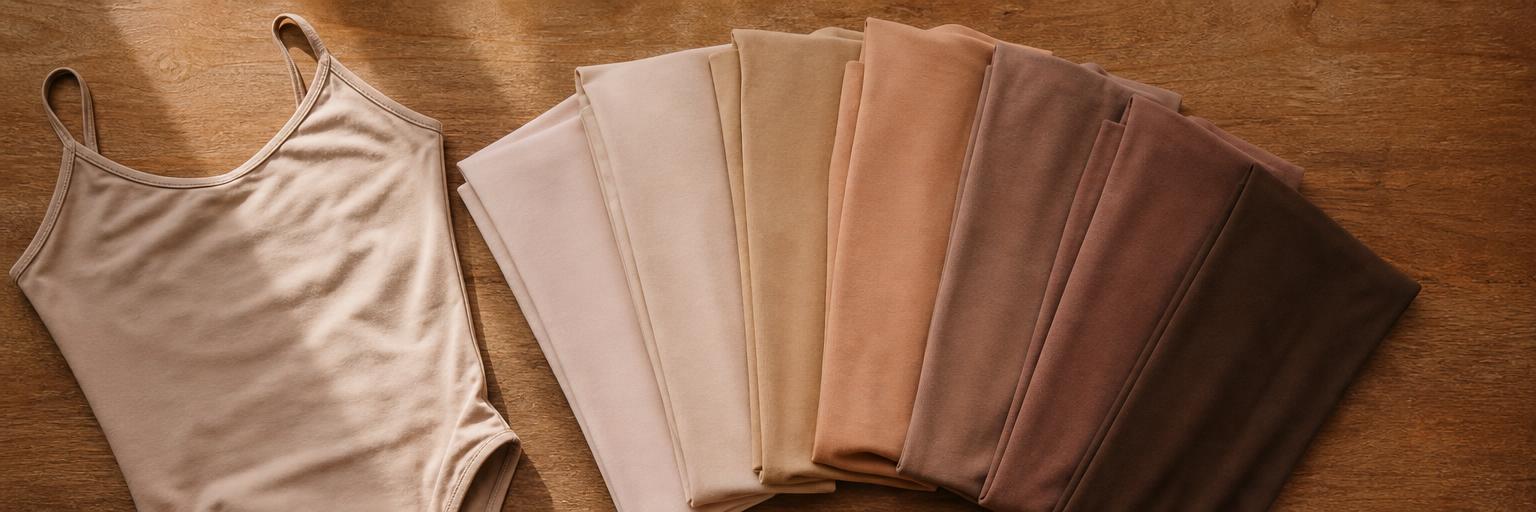
- Match to the production's skin-tone intent, not to a generic 'nude.' The dance industry's use of 'flesh' as a color name assumes a specific skin tone that is not universal. If your dancer's skin tone is significantly different from the shade being sold as 'flesh' or 'caramel,' ask the teacher whether the shade matters for the specific production or whether the dancer's natural contrast with the shoe is acceptable. Some teachers are specific; others are not.
- If the shade being sold runs lighter than your dancer's skin, you have more room to ask for a real match than families did a few years ago. After a 2020 push for inclusive dancewear, the major dance brands committed to a wider range of skin tones, and at a lot of studios the expectation has shifted from one default 'tan' toward matching the shoe and tights to the dancer wearing them. Character shoes are still behind tights on this. Capezio's Shanel style adds a deeper shade (Chai) next to its Caramel, and So Danca offers a broader skin-tone range across its shoe lines, but most character-shoe styles still come only in a single 'caramel' or 'tan.' Tights are where the genuine deep shades live, so when no shoe is a true match, get the shoe as close as you can and match the tights closely to her skin, since from the audience the leg reads as one line. Raise it with the teacher directly, because many studios will approve a true skin-tone match over a too-light 'flesh' once a parent asks, especially when the lighter shoe breaks the leg line instead of extending it.
- Compare the shade against the tights she will actually wear in the number, not against her bare foot. The whole point of a flesh or caramel shoe is to extend the leg line so the shoe disappears under stage lights, and on stage that leg is almost always in tights, not bare. The shade that reads as one clean line from the audience is the one closest to her costume tights, which is why a studio requiring caramel character shoes usually also specifies a tan or caramel tight. If you are deciding between two close shades, hold them against the tights for that costume, not against her ankle. If you do not yet have the right tights either, the tights-to-skin-tone walkthrough maps where the genuine deep shades live (Mariia True Bare, Blendz Apparel, Bloch Coffee and Cocoa) so you can pick the tight first and then match the shoe against it.
- If you have to order before the studio's confirmation comes through, pick a retailer with an exchange policy. If the studio tells you 'Capezio character shoe in caramel' and you order that, you're in good shape. If you're still waiting on confirmation, order from a retailer that allows exchanges on unworn, tagged shoes rather than a return-only policy. Discount Dance and DancewearCorner both do. Don't remove tags or wear the shoes before confirming the shade is correct.
- Don't leave this until the week before the recital. Character shoes in a specific color and size sell out in late April and May as recital season peaks. If the requirement is confirmed in March or early April, order then. A correct shoe ordered early and stored unworn is a much better outcome than correct shade confirmed late and size unavailable. If you are already inside that window, the dance recital shoe shopping on a deadline walkthrough covers the guaranteed-by-date shipping windows, the local-store call sequence, and the borrow-from-a-teammate route when the right shade in the right size is gone everywhere online.
Common mistakes
- Don't assume 'flesh' means the same color across brands. Capezio Caramel, Bloch Tan, Leo's Suntan, and Theatricals Caramel are all marketed to fill the 'flesh shoe' requirement but are noticeably different shades in hand. If your studio specified a brand last year or has a brand on file, use that brand. Mixing brands within a production produces visible inconsistency on stage.
- Don't assume 'nude' and 'flesh' mean the same shade. Some studios use 'nude' for a lighter, more pink-beige shade and 'flesh' for a deeper tan. Some use them interchangeably. When in doubt, ask. Don't infer from the label.
- Don't order from a non-dance retailer for this shade requirement. General shoe retailers and Amazon sellers often carry character-style shoes labeled 'nude' or 'flesh' that are sized and constructed differently from dance-specific character shoes. Fit, sole construction, and heel height differ. Order from a dance-specific retailer (Discount Dance, DancewearCorner, Capezio direct, Bloch direct) where the product is built for dance.
- Don't wait to confirm the exact requirement. A 'flesh ballet slipper' and a 'flesh character shoe' are completely different products at different price points ($20 to $35 vs $45 to $65). Ordering the wrong category means a full return, a reorder, and potentially a size that's out of stock. Confirm character shoe vs ballet slipper, and the color name or code, before placing any order.