Picks at a glance
Price$126.00 for Heritage, up to $151.00 for Elegance Stretch, verified 2026-08-02
Why it winsReordering the exact model and width from the brand is the one online pointe purchase that is genuinely safe.
Where it falls short$126 before ribbons and elastic, and Bloch's own return terms are the least forgiving of the three routes here.
Check before buyingAll 77 size and width combinations of Heritage were in stock at check time. Bloch direct does not exchange, charges a $6 return fee, and applies final-sale rules to discounted items.
Check at Bloch →Price$112.00 across the range, verified 2026-08-02
Why it winsCheaper than reordering Bloch direct, and the shank options mean you can follow a fitter's exact prescription rather than approximating it.
Where it falls shortSame model name can mean different shanks, and ordering the wrong one gives you a shoe that fits but does not work.
Check before buying68 size and width combinations in stock at check time. Ava also comes in a #3.5 shank, so confirm which shank the fitter put her in, not just the model name.
Check at Capezio →Price$92.00 for the Bloch Tensus Demi, $106.00 for most Russian Pointe models, verified 2026-08-02
Why it winsCarries brands the two brand sites do not, and one cart covers shoes, ribbon, and pads together.
Where it falls shortA retailer's stock of your exact model can vanish without warning, and this is the wrong place to browse if you have not been fitted yet.
Check before buyingDeep stock at check time: 100 size combinations available on several Russian Pointe models. Use for reorders only, and match the exact model, width, and size from the fitting.
Check at Dancewear Corner →Which one for your dancer
- First fitting (no fitting yet): don't shop from this guide. Book the appointment. Show up with the teacher's written recommendation and bare feet. Let the fitter choose the model.
- Reordering after the first pair: buy the exact model and width from your fitting. If the model is discontinued, go back to the fitter. Don't substitute on your own.
- Teacher approves Gaynor Minden: buy direct from Gaynor Minden or a stocking retailer. Verify teacher approval first. Some studios don't allow synthetic construction.
- Needing accessories (pads, tape, lambswool): read Pointe Toe-Care Accessories. Buy only what the fitter already approved.
Before you buy
- Don't buy pointe shoes online before a professional fitting. Foot structure, vamp height, and box shape can't be solved from a size chart.
- Don't try on new shoes outside the studio before confirming fit. A scuffed shank ends the return.
- Don't switch brands or models on a reorder without asking the fitter. A different model from the same brand is a different shoe.
- Don't use price as the primary filter. Pointe shoes that don't fit correctly cause real injuries.
How to approach it
Pointe shoes are the only category where the answer is always the same: the fitter chooses the model. This isn't a cop-out. It's the actual truth about how pointe shoes work. Box shape, vamp height, shank stiffness, and width all interact in ways that only show up on a specific foot in a specific shoe, assessed by a trained eye. No size chart on the internet can replicate that. The safe purchase online is an exact reorder of the shoe your fitter already named.
What we would do
For a first fitting, we would not shop from any guide, including this one. We would get the teacher's written recommendation, book a fitting at a studio or specialty retailer that has a certified pointe fitter, and show up with bare feet and the schedule. After the fitting, we would buy exactly what the fitter named. For reorders, we would use DancewearCorner if the model is in stock there, or buy direct from the brand. If the model was discontinued, we would call the fitter before substituting anything.
How to work out which one
The fitting process works like this: teacher says yes, teacher gives a written recommendation, you find a studio or specialty retailer with a certified fitter, you book the appointment. At the fitting, the fitter puts you in 5 to 10 different shoes. The right shoe holds the toes straight without curling or compressing them, snugs the heel without pinching, and feels tight in a way that doesn't hurt. The fitter picks that shoe. You buy that shoe, in that width, in that size. For reorders, use the exact model name, width, and size the fitter named. DancewearCorner stocks Bloch and Capezio. Buy direct from the brand if the model isn't in stock elsewhere.
Mistakes to avoid
Don't buy pointe shoes online before a fitting. Not even the brands listed here. Pointe shoes bought without an in-person assessment by a trained fitter cause injuries, not just discomfort. Don't use price to filter. The $20 difference between a properly fitted shoe and a cheaper one isn't worth a stress fracture. Don't try them on at home first: scuffing the shank ends the return. Don't switch models on a reorder without calling the fitter first. And don't let a dancer work in shoes that have broken down. A shank that's gone doesn't always show visible wear on the outside. If she's rolling through or the platform feels soft, the shoe is done.
Where to start
| Best For | Start Here | Why | Check First |
|---|
| Pre-fitting prep (no fitting yet) | STOP shopping. Book a fitting first. | There is no online substitute for a professional pointe-shoe fitting. No brand, no guide, no review fixes a shoe that doesn't fit a specific foot. | Whether the teacher has approved pointe work. Whether there is a certified fitter in your area. Whether you have the teacher's written recommendation. |
| First reorder after fitting | DancewearCorner pointe collection: buy the exact model/width/size the fitter named | Reordering the exact shoe is the only low-risk online pointe purchase. | That the exact model and width from your fitting are in stock. If discontinued, call the fitter before substituting. |
| Accessories (pads, tape, lambswool) | Exact replacement of fitter-approved setup only | Wrong pad thickness or material changes how the shoe fits. This isn't a comfort issue; it's an alignment and injury issue. | That the fitter already named specific accessories at the fitting. If not, ask first. |
How A Pointe Shoe Should Fit
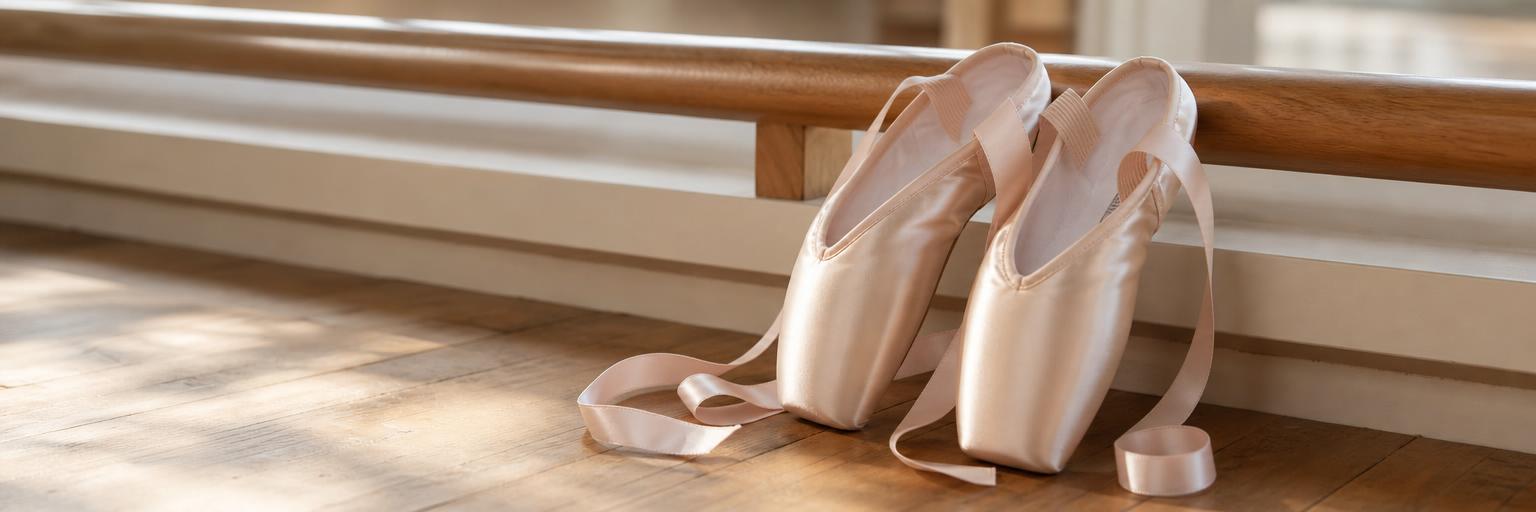
This is the question every parent whispers at the fitting, so here is the honest answer before you walk in. A correctly fitted pointe shoe feels snug in a way a street shoe never does. It holds the toes flat and straight without curling or crushing them, hugs the heel without pinching or gapping, and supports the foot fully so the dancer stands up on the platform instead of sinking past it or knuckling over the front. The single most common first-fitting mistake is choosing the pair that feels immediately comfortable. A pointe shoe that feels like a cozy sneaker in the store is almost always too big, and a too-big shoe is the one that lets the foot sink and slide, which is how blisters, bruised toenails, and real injuries start. Trust the fitter when she says the snug pair is the right pair, even when your dancer lobbies for the roomier one. Length is right when the toes just reach the end with the foot flat and clear it slightly when she rises, width is right when the box holds the foot without squeezing the joints, and the shank should match her strength, which for a brand-new pointe student is almost always a medium. You do not have to judge any of this yourself. Your job is to bring bare feet, the teacher's written recommendation, and honesty about what hurts, and to let the trained fitter read the rest. For the full what-to-wear, what-to-bring, and what-to-skip checklist before the appointment, our first pointe fitting prep walkthrough covers the whole visit.
Brands You Will Encounter At Most U.S. Fittings
Most U.S. dance studios work with a handful of brands. Here is what each one is known for, so you are not starting from zero at the fitting. On skin tone, Bloch carries by far the widest tonal pointe range, the others ship standard pink or light tan, and a dye covers the rest. The deep-tone section below has the full picture.
| Brand | What They Are Known For | Beginner-Friendly | Where To Buy After Fitting |
|---|
| Bloch | The most widely stocked beginner brand at U.S. retailers. Multiple box shapes. European Balance and Serenade are commonly fitted for beginners. It also carries the widest skin-tone range in pointe, the B You tonal line in deep shades B24 to B31 at $126, covered in the deep-tone section below. | Yes, widely used for first fittings | DancewearCorner, Bloch direct, most major dance retailers |
| Capezio | Strong U.S. market presence. Multiple width options. Commonly recommended at studio fittings that want a U.S. alternative to Bloch. | Yes, common for first fittings | Capezio direct, DancewearCorner, major retailers |
| Gaynor Minden | Synthetic pre-broken-in construction. Doesn't need traditional breaking in. Some fitters love them for beginners. Some teachers don't allow them. Ask first. | With teacher approval only | Gaynor Minden direct; limited retail presence |
| Grishko | Traditional Russian construction. Harder break-in. Strong shank durability. Requires an experienced fitter who knows the brand well. | Not typical for first fittings | Specialty pointe retailers |
| Russian Pointe / Freed | Professional-grade. High craftsmanship. Requires very experienced fitting. More common at serious pre-professional programs. | No, advanced students only | Specialty pointe retailers |
What The Features Mean
Fitters use specific terms to describe pointe shoes. Knowing what these mean helps you understand what the fitter is evaluating, even if the decision is still theirs.
| Term | What It Is | Why It Matters |
|---|
| Box shape | The shape of the toe area. U-box is wider and flatter across the top. Tapered narrows to a rounder point. | U-box for square toes (similar-length toes). Tapered for Greek or Egyptian foot shapes (one toe longer). The fitter evaluates toe length first. |
| Vamp height | How far the shoe extends over the top of the foot toward the ankle | High vamp provides more support but restricts some movement. Short vamp allows more articulation but may not support a beginner's arch. Fitter decides. |
| Shank stiffness | How much resistance the sole gives when the foot points | Soft shanks break down fast (bad for beginners). Hard shanks resist foot articulation (also bad for beginners). Medium is the standard starting point. |
| Platform width | The flat area at the tip of the shoe that the dancer stands on | Wider platform means more stability and easier balance. Beginners often do better with a moderate platform. Very narrow platforms are for experienced dancers. |
| Width (A through EE) | How wide the shoe is across the toe box | A is very narrow. EE is very wide. The fitter measures and matches the same way a street-shoe fitter would, but the scale is different. |
Getting The Shade Right For Deeper Skin Tones
For most of their history pointe shoes came in one color, a pinkish light tan, which left dancers with deeper skin tones painting their satin with foundation or calamine to get a match. That has started to change, but unevenly, so here is the honest state of it. Fit comes first and color comes second: the fitter names the model, size, and width on the merits of the foot, and none of that bends for the shade. Once you have that answer you order the exact shoe in the tone you need, and for the deepest tones you order direct because brand-direct is where the depth lives. We keep the live shade and stock detail current in where to find skin-tone dance shoes, and the table below is the short version.
| Option | Shade Range | Price | The Catch |
|---|
| Bloch B You tonal pointe | Four tones, B24 (pale tan) up to B31 (deep red-brown), across the Heritage, European Balance, and Etu models | $126 Heritage and European Balance, $151 Etu | The widest mainstream range, and the deep end holds up. In May 2026 the deep B29 and B31 were broadly in stock straight from Bloch on both the $126 Heritage and the $126 European Balance, and the tonal collection page now lists all four shades plus matching ribbon and elastic. A few size-and-width combos sell out, so order direct and confirm your exact size before checkout. |
| Suffolk skin-tone pointe | Standard pointe range plus Brown and Bronze | In line with other studio pointe shoes (roughly $90 to $120) | A second mainstream brand carrying deeper satin, worth knowing if your fitter already works in Suffolk. Confirm the shade is in stock before counting on it. |
| Suffolk Pointe Hues dye | Eight matte shades, Matte 100 through Matte 600 plus Black and Red, one bottle covers several pairs | $24 | The universal fallback when the fitted shoe does not come in your tone. It works on satin pointe shoes only. Leather jazz and character uppers will not take it. It goes in and out of stock, so order ahead. |
Getting The New Pair Ready For Class (The Sewing Nobody Warns You About)
Here is the part the lede promised to circle back to, the thing nobody warns first-timers about. The fitted shoes show up with no ribbons or elastics on them, just bare satin, and they are not ready for class until you prep them. None of this changes which shoe she dances in, that was settled at the fitting, but doing it wrong can ruin a brand-new pair you cannot return. Ask the teacher or fitter to mark placement, then work through these in order.
- Don't sew a single stitch until the teacher or fitter marks the placement. Where the ribbons and elastic sit depends on your dancer's ankle and how her foot lines up over the box, and the usual starting point is ribbons at the back inner edge angled slightly forward with elastic across the ankle, but that is a starting point and not a rule. Sew it wrong, unpick it, and you have left needle holes in satin you cannot return. Have it marked at the fitting or the first class.
- Ribbon and elastic are sold separately and do not come in the box. The common setup is about two and a half yards of seven-eighths-inch pointe ribbon, which covers both shoes, plus elastic in the width your studio specifies. Cut the ends on a slight angle and seal them with a quick pass of a lighter or a dab of clear nail polish so they do not fray by mid-season.
- Sew by hand with heavy thread, not the machine. Button or carpet thread holds where regular thread frays, and the classic backup is waxed dental floss. Knot on the inside, keep your stitches clear of the drawstring channel, and make the ribbons genuinely solid, because a ribbon that works loose mid-class is both a fall risk and the fastest way onto a teacher's bad side.
- Tuck the drawstring, never cut it. Tie it in a small bow and tuck the ends down inside the shoe. You will want to snug or loosen the throat of the shoe as it softens over the first few weeks, and a trimmed drawstring takes that adjustment away for good. Cutting it is the rookie mistake you can't take back.
- Ask how she's allowed to break them in before you touch them. Some teachers want a beginner to dance the shoes in slowly and forbid bending the shank or slamming the box in a door, because learning to control the break-down is half the point of the first pair. Others want the demi-pointe softened a little by hand first. It is the teacher's call every time, so get the instruction before you try to help.
Is This Normal, Or Does She Go Back? Reading The First Few Weeks On Pointe
After the fitting, the real test is the first few weeks of actually dancing in the shoes, because a beginner can't always feel a fit problem standing still in a fitting room. Some discomfort is normal. Pointe works muscles her feet have never used, and a new shoe is stiff until it softens. The dangerous myth is that pointe is supposed to hurt and she should just push through, because specific kinds of pain mean the fit is wrong, and toughing those out is how beginners get hurt. Here is how to tell the difference. When in doubt the teacher sees her feet in class and the fitter can reassess, so ask rather than wait it out. The is-this-normal-or-refit quick answer puts this same call on a single page you can pull up the night a pointe class goes sideways.
| What you notice | Normal, or a problem? | What to do |
|---|
| General foot fatigue and mild, spread-out soreness after class | Normal, especially early. She is using new muscles and the shoes are still stiff. | Keep going. It eases as her feet strengthen and the shoes break in, and ice and rest after class help. |
| Numbness, tingling, or toes that go cold or white | A problem, and never one to push through. The shoe is cutting off circulation, usually too tight, too short, or the ribbons tied too hard. | Loosen the ribbons first. If it keeps happening, stop and go back to the fitter, because numb toes are not something a beginner trains through. |
| Sharp or pinpoint pain in one spot, the top of the foot, the arch, or a single toe joint | A problem. General soreness is dull and spread out, while sharp pain in one place is not break-in. | Stop for the day, tell the teacher, and if it persists see a doctor. Sharp localized pain is the kind that turns into a real injury if she trains through it. |
| Black, bruised, or repeatedly lost toenails | A problem with the fit, not a rite of passage. Usually the box is too short or the pad setup is wrong. | Back to the fitter for a box-length and pad check, and keep the nails trimmed straight across in the meantime. |
| Toes curling or knuckling under instead of lying straight | A problem. The box is the wrong shape or too big, so she is gripping to stay in the shoe. | Get refitted. A shoe she has to grip is the wrong shoe, and it trains a habit that is hard to undo later. |
| Heel popping off in releve, or the platform feeling soft and sinking under her | Could be fit, could be a worn-out shoe. A brand-new pair that sinks is fitted wrong, while an older pair that sinks is simply done. | If the pair is new, back to the fitter. If it has months of wear on it, that is the lifespan signal from the list above, so replace it. |
| Pain that gets worse over the weeks instead of better | A problem. Break-in discomfort should ease as her feet strengthen, not build week over week. | Tell the teacher, because worsening pain can mean the fit is wrong or that she is doing too much too soon, and it is worth a doctor's look. |
The shortlist
- Haven't had a fitting yet? What To Expect At A First Pointe Fitting and When Is A Dancer Ready For Pointe answer those questions first. Fitting appointment and teacher recommendation come before any shopping.
- After the fitting: buy the exact model, width, and size the fitter named. Buy from the fitter's studio or a retailer that stocks the same brand. Do not substitute brand, model, or width.
- Reordering after the first pair: DancewearCorner pointe shoe collection carries Bloch, Capezio, and several other brands. Only reorder the exact model and width from your fitting. If the model is discontinued, go back to the fitter.
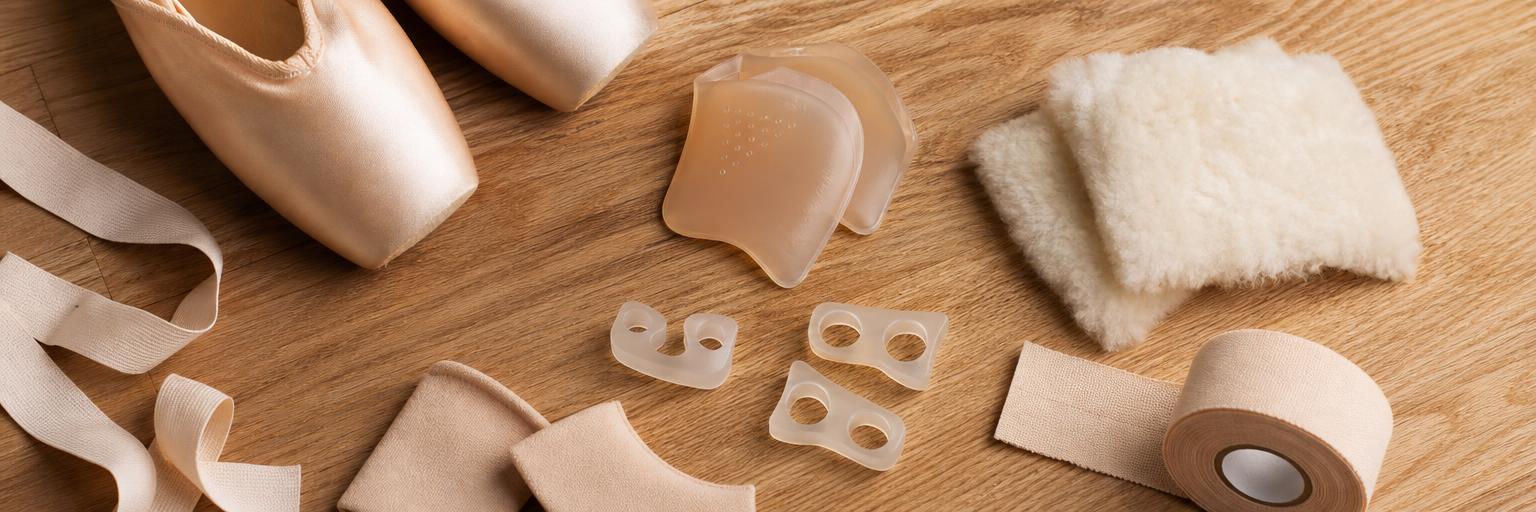
- For the accessories that go inside the shoe (gel pads, toe tape, lambswool): also read Pointe Toe Care Accessories. Your fitter should recommend a pad setup at the fitting. Buy exactly what they recommend.
How to choose
- Your job at the fitting is simple: show up with the teacher's written recommendation, a copy of the class schedule, and bare feet. Don't pre-research specific models. The fitter's job is to put your dancer in 5-10 different shoes and find the one that works for that specific foot. Your job is to be patient and honest about discomfort.
- The right shoe feels snug in a way that's different from street shoes. It holds the toes straight without curling or compressing them, snugs the heel without pinching, and doesn't feel like a street shoe that fits. If it feels immediately comfortable, it's probably too big.
- The fitter is evaluating box shape (U-box for square toes, tapered for pointed toe shapes), vamp height (how far the shoe extends toward the ankle), shank stiffness (how much the sole resists pointing), and width. All four interact. Getting one wrong changes how the shoe performs, how fast it breaks down, and whether it's safe.
- Beginner shanks are almost always medium. Soft shanks collapse too fast for a beginner who can't yet control the break-down pace. Hard shanks resist the foot articulation that beginners are developing. The fitter decides. You don't.
- Gaynor Minden uses synthetic construction that doesn't require traditional breaking in, which some teachers love and some studios don't allow. Confirm with the teacher before the fitting so the fitter knows whether to even try them.
- Plan for the part nobody warns first-timers about: the shoes arrive with no ribbons or elastics attached, and they have to be sewn on by hand before the first class. The ribbon and elastic are sold separately, and where exactly they get stitched depends on your dancer's foot and ankle, so have the fitter or teacher mark the placement before you sew. Budget an evening for it, or ask whether the studio or a local seamstress will do the first pair. A dancer can't take class in unsewn shoes.
- A first pair lasts 3-6 months for recreational dancers (2-3 classes per week). Intensive training burns through a pair in 4-8 weeks. The shank gives out before the outside of the shoe shows visible wear. If she's rolling through or the platform feels soft under her weight, the shoe is done.
- Treat the first pair as a starting point, not the shoe she'll wear forever. Reorder that exact model and width between fittings, but plan to be refitted, not just reorder blindly, every so often. A young dancer's feet are usually still growing, and as her feet and ankles get stronger over the first year the shoe that was right for a brand-new pointe student often isn't the right shank or model six months on. A reasonable rhythm is a fresh fitting whenever she's grown out of the size, whenever the teacher says her strength or technique has shifted, or at least once a season for a still-growing dancer. The teacher usually tells you when, so ask at the start of each term rather than reordering the same pair on autopilot until it stops working.
Skip it if
- Don't buy any pointe shoe online before a professional fitting. Not even the brands listed here. Pointe shoes bought without an in-person fitting cause real foot injuries, not just discomfort. First fitting must happen in person with a trained fitter.
- Don't try the new shoes on outside the studio before confirming the fit. Walking to the car, testing on carpet, or wearing them around the house before you're sure scuffs the shank and ends the return. Test on a hard floor only, in the studio or fitting room.
- Don't switch brands or models on a reorder without asking the fitter first. A different model from the same brand is a different shoe on a different last. Brand and model both matter.
- Don't use price as the primary decision filter. The $20-30 premium for a properly fitted shoe is not a splurge. A stress fracture or plantar plate injury from a poorly fitted shoe costs significantly more in every way.
- Don't buy pads, toe tape, or spacers before the fitting. Pre-buying accessories changes how the shoe fits when the fitter assesses it. The fitter should recommend a pad setup at the fitting. Buy exactly what they recommend.