Review

Best Pointe Toe-Care Accessories

Pointe toe-care is the one dance category where we'll tell you to stop shopping and call your fitter. Pads, spacers, tape, and lambswool change how the shoe sits on the foot, and the wrong addition can cause real injury. The only safe online purchase is an exact replacement of a setup your fitter has ALREADY approved. If your dancer is new to pointe, in pain, or switching shoes, close this page and book a fitting. What follows tells you what's on the shelf and how to think about it. It does NOT replace a real fitting.

Updated 2026-06-10 · Independent research, editorial standards here

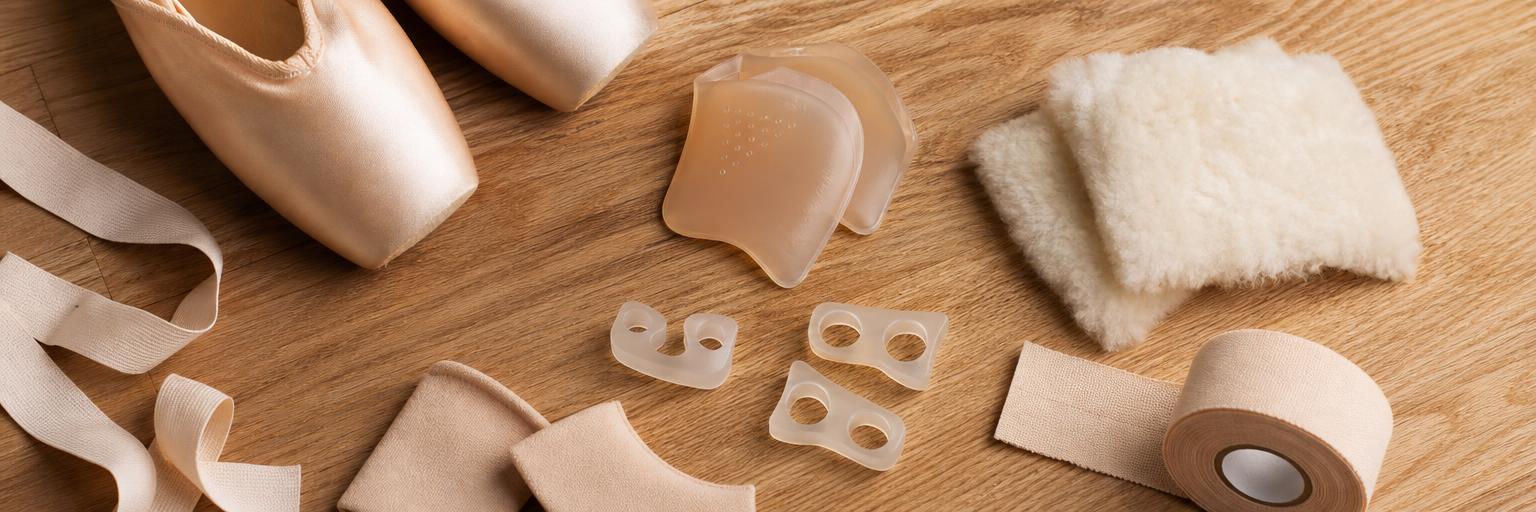
Pointe shoe accessories arranged on a wooden surface: silicone toe pads, gel toe spacers, small squares of lambswool, a roll of athletic tape.

Best Picks By Situation

  • New pointe dancer: don't buy from this guide. Book the fitting. Real pointe fittings are not optional, and no online accessory replaces them.
  • Replacing a known-working setup: buy the exact brand, material, and thickness your fitter approved. Resist the temptation to 'try something better.'
  • Performance week: use familiar supplies only. Trying a new pad three days before show is how the show goes wrong.
  • Tempted by a bundle: skip it. Bundles in this category usually mean three slight variations of one item. Three chances to experiment when you shouldn't be experimenting.

Before You Buy

  • Don't use accessories to push through pain. Pain in pointe is a fitting issue or an injury: call the fitter, don't shop your way out.
  • Write down your dancer's current shoe model, toe-pad type, spacer use, and any teacher or fitter instructions. You'll need this if something goes wrong.
  • Check the seller's return policy on opened accessories. Most won't accept them.
  • Treat any medical, injury, swelling, or numbness concern as OUTSIDE this guide. See a PT or pointe specialist.

Buying Strategy

Pointe toe-care is the one dance category where I'll openly tell you to stop shopping. Pads, spacers, tape, lambswool, gel caps, and sewing supplies all change how the shoe fits and how the dancer works on stage. The safe online route is exact replacement of a setup your fitter has ALREADY approved. New pain, numbness, swelling, or injury risk is not a shopping problem: it's a fitting problem, and a fitter solves it. The wrong toe pad can cause real injury, and that injury sidelines your dancer for weeks.

What We Would Do

For a new pointe dancer, we would NOT buy toe-care products without fitter or teacher direction. Find a pointe fitter, book the appointment, and use the approved setup as the basis for everything you buy online afterward. For a dancer replacing familiar supplies, we would buy the EXACT material, thickness, and shape that's already working: same brand, same product, same size. For performance week, no experiments. For bundles, skip them unless they happen to contain the exact items the fitter already approved.

Buyer Walkthrough

Treat this category as part of a real pointe fitting, not as standalone shopping. If your dancer has a fitter-approved setup and you're just reordering: fine, buy the exact same thing. If she's new to pointe, in pain, changing shoes, or trying to fix discomfort, online shopping is the wrong tool. Book a fitting. Pads and spacers can meaningfully change fit AND meaningfully cause harm when chosen wrong.

Mistakes To Avoid In Plain English

Don't use pads or spacers to push through pain. Pain in pointe is the fitter's job, not the cart's. Don't change thickness or material right before a performance. The show is the wrong time to discover the new pad doesn't sit right. Don't buy bundles just because they look efficient when they're really three slight variations of the wrong item. And don't treat online reviews as fitting advice. There are entire careers built around pointe fitting; a $10 accessory shouldn't override that.

Where to start by buyer type

Best For

New pointe dancer (any age)

Start Here

STOP shopping. Book a fitting first.

Why

There is no online substitute for a real pointe fitting. Toe-care products can change fit in ways that hurt feet.

Check First

Whether your dancer has been fitted in the current shoes. Whether she's experiencing pain (= call the fitter, not the cart).

Best For

Replacing supplies that already work

Start Here

Exact-replacement route: same Pillows For Pointes model and size

Why

Changing material or thickness changes the shoe. Don't experiment.

Check First

Brand, size, shape, thickness: write it down before reordering.

Check at Pillows For Pointes
Best For

Performance week

Start Here

Familiar backup supplies only

Why

Experimenting before a performance is how you spend the show fighting your shoes.

Check First

Whether the dancer has actually worn this exact pad before. If not, save it for after the event.

Picks at a glance

Product / Route

Spacers, gel caps, tape: Dancewear Corner ballet/pointe collection

Best use

The supporting-accessory aisle. Useful for one-cart replenishment.

Price signal

Low-ticket per item; prices vary by seller

Check before buying

Don't use spacers or gel caps to solve a pain problem. That's a fitting issue.

Check at Dancewear Corner
Product / Route

Sewing and maintenance supplies: Dancewear Corner pointe accessories

Best use

Routine support: ribbons, elastic, needles, thread. One-cart with pads and spacers.

Price signal

Low-ticket prices vary by kit

Check before buying

Confirm what your dancer actually needs for the CURRENT shoe. Don't pre-buy for a shoe that might change.

Check at Dancewear Corner

Current Shortlist

  • Replacing a setup the fitter already approved? Buy the EXACT brand, material, and thickness already working. Pillows For Pointes is the most-cited brand for toe-pad replacements, and the brand you'll most often be replacing.
  • Need pads, spacers, tape, and sewing supplies in one cart? Dancewear Corner's ballet/pointe accessories has the broadest dance-specific coverage. Read item-level return rules before clicking buy. Opened accessories often don't return.
  • New to pointe OR experiencing pain? STOP. Don't buy from this guide. Call your fitter or teacher first. The wrong toe pad can change how the shoe sits on the bones in the foot, and the consequences are real.
  • Tempted to bundle pads, spacers, and tape into one Amazon order? Don't. Marketplace listings make authenticity and fit verification harder. This is the wrong category to save $4 on.

How To Choose

  • Call the fitter or teacher FIRST if your dancer is new to pointe, in pain, or changing shoes. Don't make pointe shopping decisions alone. This is the one dance category where a $15 mistake can hurt feet.
  • Separate comfort accessories from shoe-fit solutions. A foam toe pad makes a fitted shoe more comfortable. The same pad in a wrong-sized shoe just disguises the problem.
  • Remember the pad is part of the fit, not an add-on the shoe ignores. Whatever the fitter put in the box, the shoe was sized with that pad already in it, so the pad takes up real room and a beginner's snug pointe shoe has very little to spare. That is why a plusher pad is not a free upgrade. Swap a thin pad for a thick gel one and you have effectively made the shoe a size smaller, crowding the toes and changing how she stands on the platform. It is also why replacing the exact thickness is not fussiness. If she genuinely needs more or less padding, that is a refit, not a reorder, so loop in the fitter instead of sizing the change yourself.
  • Ask the teacher where she stands on gel pads versus lambswool before you settle on a setup. Some teachers, especially in pre-professional and exam programs, limit gel and foam on purpose because they want the dancer to feel the shoe and build foot strength, and they point dancers to lambswool or a thin pad instead. A gel pad your dancer loves is the wrong buy if her program doesn't allow it, so the padding philosophy is a teacher question, not a shopping one.
  • Replace the exact setup that's already working. Same brand, same material, same thickness. Don't 'try something better' a week before performance.
  • Keep the approved setup clean and replace it before it packs down, because a worn pad quietly changes the fit. Gel and foam pads trap sweat, so air them out after every class instead of leaving them balled up inside the shoe, and wash the reusable gel sleeves with mild soap and let them dry all the way so they don't turn into a bacteria-and-odor problem sitting against broken skin. Lambswool is barely reusable, so refresh it rather than re-tucking yesterday's flattened wad. Don't share pads between dancers, even sisters, because they mold to one foot and carry along whatever is on the skin. There is also a bigger reason to stay on top of this than comfort. A pad that has packed down thin is no longer the thickness the shoe was fitted around, so a tired pad slowly recreates the loose, sloppy fit you paid a fitter to avoid. When the cushion is visibly compressed or the gel has gone stiff, reorder the exact same pad rather than waiting for blisters to tell you it is done.
  • Check the seller's return policy on opened accessories. Most don't accept them. Buy your usual setup; don't experiment with three variants.
  • Write down your dancer's current shoe model AND current pad/spacer setup BEFORE changing anything. You'll need it if something goes wrong and you have to revert.

Avoid If

  • Don't use this guide as a substitute for a real pointe fitting. There isn't one online. Find a fitter.
  • Don't add pads or spacers to push through pain. Pain in pointe shoes is a fitting problem or an injury, not a shopping problem.
  • Don't experiment with final-sale accessories when your dancer is between fittings. Wrong choice + non-returnable = real money and possibly a real injury.
  • Don't buy from marketplace listings where authenticity or seller identity is unclear. Counterfeit toe pads exist, and they don't sit the way the originals do.

What's Actually On The Shelf (And What Each One Is For)

This is the part the lede promised, a plain read on the accessories you'll see so you can make sense of what the fitter recommended or reorder it without guessing. It is not a menu to shop from on your own. The fitter or teacher decides what goes in the shoe, and if your dancer is new, in pain, or switching shoes, that conversation comes before any of this. With an approved setup in hand, here is what each thing on the shelf actually does.

AccessoryWhat It DoesWho It Is Usually ForThe Catch
Gel toe pads (the Ouch Pouch type)A soft gel sleeve that slips over the toes and cushions the pressure at the tip and sides of the box. The most popular comfort pad, and the one most beginners get handed first.Dancers who want the most cushion, and most recreational and beginning students whose teachers allow gel.Gel runs warm and can make the foot sweat and slide, and a lot of pre-professional and exam programs limit it on purpose so the dancer can feel the shoe. Ask the teacher before you commit to gel.
Foam toe padsA lighter, more breathable pad with less cushion than gel, so the dancer feels the floor more through it.Dancers who find gel too hot or too bulky, and teachers who want some protection without deadening the foot.Less cushion than gel and it packs down faster, so you replace it more often than you'd like.
LambswoolRaw wool you tuck around the toes yourself for a thin, breathable layer. The traditional minimal padding.Pre-professional and exam dancers, and any teacher who wants the dancer to feel the floor and build real foot strength.You shape and refresh it yourself, which takes a little practice, and it compresses with wear so you top it up. Often the answer when a program won't allow gel.
Toe spacers and separatorsA small gel or foam wedge that sits between toes to ease one pressure point or keep toes from overlapping inside the box.Dancers with a bunion, an overlapping toe, or one toe taking all the load.A spacer changes how the toes sit in the box, so it is a fitter or podiatrist call, not a comfort add-on you guess at.
Toe tapeThin adhesive tape wrapped on individual toes to stop blisters and protect skin and nails. It goes on under the pad, not instead of it.Dancers prone to blisters, or with a nail or corn that rubs in one specific spot.Taping is a technique the teacher or fitter should show you once, and the wrong tape or a sloppy wrap bunches and makes the rub worse.
Gel toe caps and tubesA single gel sleeve for one problem toe, like a long second toe or a corn, instead of padding the whole foot.Dancers where one toe is causing all the trouble while the rest are fine.Targeted relief, not a full setup, and adding bulk on one toe can push the pressure onto the next one. Confirm it with the fitter.

Keep reading

More reviews worth your time