Quick answer
When should my child start pointe
When she asks to start pointe in the car on the way home from class, three of her friends started last month, and her teacher has not said anything to you yet.
Quick read
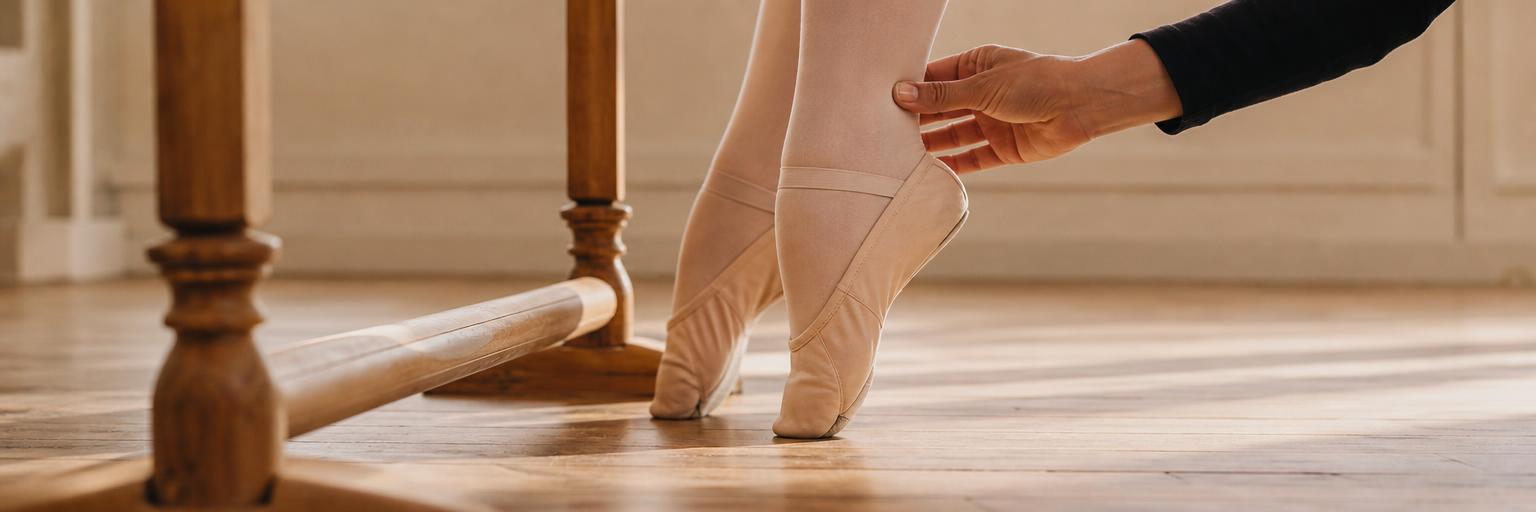
The teacher decides, not the age, not the year count, and not the parent or child. Pointe readiness is a physical assessment: ankle and calf strength, foot articulation, core control, and alignment consistency. Most teachers evaluate around age 10-12 after 2-3 years of consistent technique training, but readiness varies by individual and early or late both happen. The rule: if the teacher hasn't brought it up, don't push. If she's ready, the next step is a professional fitting, not an online order.
Gear for this situation
Pointe Toe-Care AccessoriesRead the reviewDoes my dancer need demi-pointe or pre-pointe shoesRead the answerBallet Slippers For BeginnersRead the reviewDance Floors And Shoe Care For PracticeRead the reviewPointe shoe buying riskRead the answerWhat do I need for my child's first pointe shoe fittingRead the answer
What to do
- Wait for the teacher to bring it up. Pointe readiness is a clinical-level assessment, not a milestone tied to age or year count. Teachers evaluate ankle strength, calf development, foot articulation, core stability, and whether the dancer's technique is consistent enough to protect herself on pointe. 'She turns 11 next month' is not a readiness signal. Readiness is a physical one, and the teacher sees it in class every week.
- Know the one place age does matter, even though it is never the green light. Dance medicine and any teacher you should trust hold the line at roughly 11 to 12 as the earliest pointe is safe for anyone, because the bones in a young foot are still forming and the growth plates do not finish hardening until around then, so loading them on pointe too early risks a lasting injury that no amount of strength makes up for. That age is a floor, not a target. Clearing it does not mean she is ready, it only means she is finally old enough for the physical readiness the teacher is judging to even be on the table. So if anyone offers to fit an eight-year-old for pointe, walk out, and if your eleven-year-old is not on pointe yet, that is normal and not a delay.
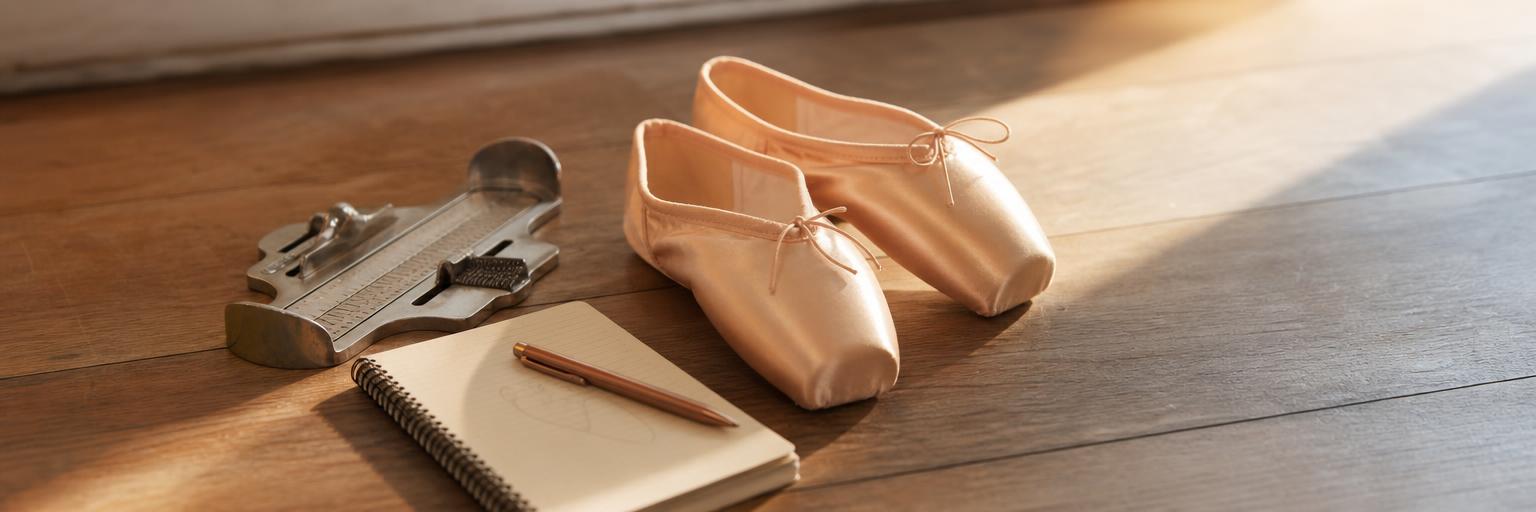
- If the teacher says she's ready: book a professional pointe fitting at a specialty dance retailer. This is not optional and cannot be done online. The fitter evaluates foot shape, toe length distribution, how the foot fills the box, and shank strength relative to technique level. A wrong first pointe shoe doesn't just cause discomfort. It causes real injuries. The first pointe fitting walk-through covers what to bring (convertible tights so the fitter can see the foot, a teacher's clearance note if you have one), why you prep her toenails two days ahead, and the one step nobody warns you about: the shoes come home with the ribbons and elastics loose in the box, not sewn, so plan a sewing evening before her first pointe class.
- If the teacher says not yet: ask specifically what benchmarks the dancer is working toward. 'Not yet' from a pointe teacher always has a reason (usually ankle strength, core instability, or technique consistency gaps). Ask what the teacher wants to see before reconsidering, and make sure the dancer's training is targeting those areas.
- If your child is asking and the teacher hasn't brought it up: do not buy in secret, do not practice in ballet slippers, and do not let her try someone else's pointe shoes. Ask the teacher directly at the next class. That conversation is the right next step, not a shopping cart.
- Before you say yes, know that pointe is a standing commitment, not a one-time purchase. Going on pointe almost always means adding a pointe or pre-pointe class on top of her regular ballet, not swapping one for the other, and most studios require her to keep taking a set number of ballet technique classes a week to hold the strength pointe demands, so the weekly hours and the tuition usually step up the season she starts. The shoes are a recurring cost too, since a beginner's first pointe shoes wear out in about two to four months of consistent work and run roughly $70 to $120 a pair before ribbons, elastics, and pads. None of this is a reason to hold her back when she is truly ready, but it is the part nobody mentions at the fitting, so plan for the added classes and the every-few-months shoe before you commit rather than getting caught out by the first replacement. Our dance cost planner lets you drop in the extra weekly class hours and the every-three-month shoe so the pointe-season tuition lump is on the wall calendar in September instead of a surprise in February.
- Once fitted and cleared: start with the basics. Ribbons, elastics, toe pads, and lamb's wool are the first-purchase kit. None of these should be bought before the fitting, because the specific shoe shape determines which accessories work. The pointe toe-care accessories guide covers what to buy and in what order.
- Once she is cleared and fitted, expect the first months on pointe to be slow and mostly at the barre, because that is exactly how it should look. A good teacher does not put a brand-new pointe student straight into center work or choreography. She starts the dancer at the barre, often facing it with both hands for support, doing a few minutes of simple rises and rolls through the foot at the end of class, and adds time on the shoes gradually as the feet and ankles adapt. So if your dancer comes home saying she 'only did a little' at the barre, that is not the studio holding her back, it is the careful loading that keeps her feet safe while the muscles and connective tissue catch up to the new demand. The pain line to watch, said plainly so you can spot it in the moment: sore arches and the occasional blister are normal in the early weeks; sharp joint pain, bone pain, or pain that does not fade within an hour of taking the shoes off is not normal and is the signal to pull her out of pointe until you have talked to the teacher AND a pediatric sports-medicine doctor or pediatric orthopedist. Not the studio fitter alone. Growth-plate injuries from early or wrong-fit pointe can affect the foot for a lifetime; the cost of one missed pointe class while you get the read is nothing against the cost of getting that wrong. Plan on a real stretch of barre-only work, often a season or more, before she is dancing a full piece on pointe, and resist the urge to compare her pace to another dancer's, since the slow build is the part that protects her.
- After the first fitting: keep the fitter in the loop when the shoes start to feel different. Beginner pointe shoes typically die in 2-4 months of consistent practice. Returning to the same fitter or bringing the worn pair makes the next purchase faster and safer than guessing a replacement online.
Common mistakes
- Don't let your child start pointe because a friend's child started. Readiness is individual and has nothing to do with keeping up with the cohort. A dancer pushed onto pointe before the physical benchmarks are met has real injury risk. The same equipment that's safe at readiness is dangerous before it.
- Don't buy pointe shoes online for a first-time pointe student. The fit complexity is not exaggerated: shank strength, box shape, vamp height, and outer sole all need to match the foot and technique level. Fitters spend years developing this skill. A size chart on Amazon does not replace it.
- Don't treat 'trying on' pointe shoes as harmless practice. Pointe shoes have essentially no give until they're properly broken in. A dancer standing in unbroken pointe shoes for even 20 minutes without cleared technique and proper guidance can bruise bones. The fitter says this for a reason.
- Don't rush the start to align with a performance or showcase. A pointe debut timed to an event rather than to readiness is almost always too early. The teacher's job is to protect the dancer's long-term capability, not to meet a costume deadline.