Quick answer
Pointe shoe buying risk
When the first pointe shoes you have been eyeing run about $90 online and the dance store wants closer to $115, and your dancer has never been fitted for pointe before.
Quick read
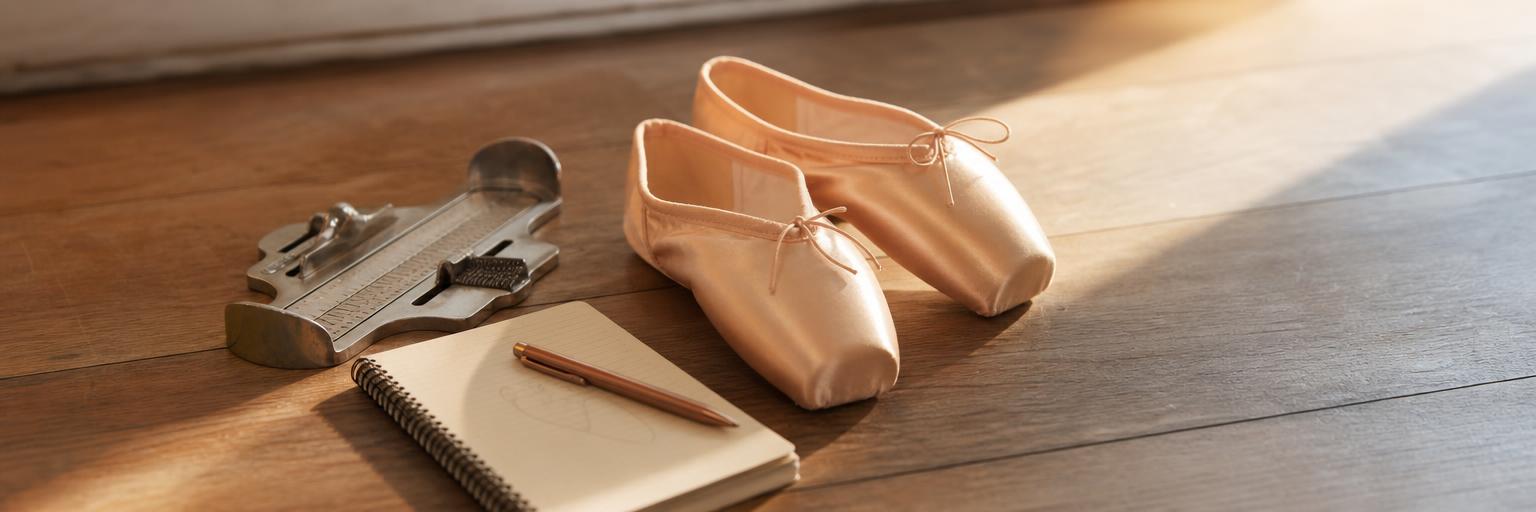
A first pointe fitting has to be in person with a trained fitter, no exceptions, because a pointe shoe bought off a size chart causes injuries and the money saved online is never worth a stress fracture, so the $90 online versus $115 at the store is not the real decision, the fitting is. Once you have an exact model, size, and width from that fitting, reordering the identical shoe is safe, but only from an authorized retailer and only if nothing has changed in her foot or training, because a growth spurt or a teacher saying the shoes are not working means a new fitting, not a reorder. Two buying risks matter more than the price gap. Never buy pointe used, even barely worn, because the paste box and shank mold to the first dancer's foot within hours and support a new foot wrong even at the right label size, so pointe is the one dance shoe where the studio swap group is the wrong move. And skip the rock-bottom listing from a seller you cannot identify, because a price well below everyone else signals a counterfeit (especially of the popular Russian brands) or aged dead stock, where the paste has hardened or degraded and the shoe flexes unpredictably no matter what the label says.
Gear for this situation
What to do
- Identify which situation you're in before doing anything else: first-time fitting, or reorder of a known model. These two situations have completely different rules. First-time means fitter, in person, no exceptions. Reorder of the exact same model and size means online is safe, but only if nothing has changed in the dancer's training load or foot. If she has not actually been cleared for pointe yet by her teacher, the when should my child start pointe walkthrough covers the readiness checks (age, training years, ankle and core strength, and the teacher's call) that have to land before any shoe purchase is even on the table.
- For a first-time fitting: ask the teacher for a referral to a trained pointe fitter, not just any dance store employee. A proper fitting takes 30-60 minutes and involves assessing box width, vamp depth, shank strength, and how the dancer's foot moves in the shoe. Your teacher knows who the qualified fitters are in your area, and the pre-fitting prep (what to wear, what to bring, what to skip) matters more than any single shoe choice.
- If there is no trained pointe fitter within driving distance, ask the studio about a fitting day before you ever treat online as the answer. Pointe brands and regional dance stores send trained reps to studios on scheduled dates to fit a whole class at once, and many directors set one up precisely because their families are spread out. That visiting fitter does the same in-person assessment a store would, just brought to you. A long drive to a real fitting, or waiting for the studio's fitting day, is the right call here. Online still is not, no matter how far the nearest store sits.
- For a reorder: the only safe online reorder is the exact same brand, exact same model, exact same width and size as the pair that was professionally fitted. Even then, confirm with your fitter before ordering, because manufacturers occasionally update a model's shank strength or box construction without changing the name. When the new pair arrives, sanity-check it against the dead pair before the dancer takes a single class in them: hold both side by side, flex the shanks against the table, press the box width between thumb and finger. If the new shank flexes noticeably easier or harder, or the box feels meaningfully different in the hand, that is a return-and-refit signal, not a break-in situation; pushing through a quietly changed model is how a fitted pair becomes a wrong-shoe injury.
- When you do reorder online, buy from an authorized retailer, not the cheapest listing you can find. A reorder is only safe if the shoe in the box is genuinely the model she was fitted in, and the pointe market has two quiet traps a rock-bottom price often signals. One is counterfeits, especially of the popular Russian brands, sold by random marketplace sellers in convincing boxes but built on the wrong last with the wrong shank. The other is dead stock, because a pointe shoe is paste and fabric, the paste keeps hardening and then degrades with age, so a pair that sat in a warehouse for years can be far harder or weaker than a fresh one even when the label matches. The fitter's own store usually ships reorders, and a known dancewear retailer is fine. What is not fine is a deeply discounted pair from a seller you cannot identify, so if the price sits well below everyone else, treat it as a reason to ask why, not a deal.
- Understand that foot changes disqualify online reordering. Growth spurts, changes in training intensity, a foot injury, or a teacher saying the current shoes aren't working all require a new in-person fitting, not an online order. (The my child outgrew their dance shoes mid-season walkthrough is the corresponding playbook for non-pointe shoes, where reordering online IS the answer for a known-fit pair in the next size. Pointe is the exception, not the rule, and the same growth signals that trigger a calm online reorder for ballet slippers trigger a full new fitting for pointe.)
- Budget for accessories at fitting time, not before. Pointe accessories like toe pads, gel spacers, ribbons, and elastics are chosen and adjusted at the first session, and they usually add about $25 to $50 on top of the shoe (the gel toe pads, around $30, are the bulk of it). Buying them before the fitting often means buying the wrong type. Ask the fitter what they recommend after the shoe is selected.
- Know the shoes come home unsewn, because the fitting is not the finish line. Pointe shoes ship with the ribbons and elastics loose in the box, and the dancer cannot take a single class until they are hand-sewn into place. Where they go is not a guess. The teacher or fitter marks the angle for the ribbons and the spot for the elastic based on how that dancer's foot sits, so ask before you thread a needle. If you do not sew, find out early whether your studio sews them for a fee or expects it done at home, and give yourself an evening for it instead of discovering a box of loose ribbons the night before the first pointe class.
- After the fitting, maintain the relationship with your fitter for future adjustments. As technique develops, the dancer's needs change. A fitter who knows the dancer's history is more reliable for reorders and upgrades than online reviews or parent recommendations.
Common mistakes
- Don't buy pointe shoes online for a first-time fitting, regardless of price. Pointe shoes bought without in-person fitting cause injuries. The fitter is not optional. The money saved on online pricing is not worth a stress fracture or plantar plate injury.
- Don't pick a pointe shoe just because it feels as comfortable as a street shoe. Pointe shoes should feel snug in a way that street shoes don't. If a first pair feels immediately comfortable in the store, it is too big. This is the most common first-time fitting mistake, and it leads to working in an unsafe platform position. Trust the fitter when she says the snug pair is the right pair, even when your dancer pushes for the looser one.
- Don't trust generic size charts. Pointe shoe sizing varies dramatically between brands and between models from the same brand. A dancer who wears a Bloch Aspiration in one size will not wear a Grishko Nova in the same size. The lasts are completely different shapes.
- Don't let the dancer try them on at home before the fitting appointment. Pointe shoes bought before a fitting are a wasted purchase. The shoe that fits correctly on a fully warmed-up foot in a studio, assessed by a trained eye, is not the same shoe that feels okay on a cold foot in a living room.
- Don't buy pointe shoes used, no matter how lightly worn they look. The studio swap group is the right move for almost every other dance shoe, but pointe is the exception: the paste box and shank start molding to the first dancer's foot within hours of wear, so a secondhand pair supports the new foot wrong even when the size on the label is technically right. And a 'barely worn' pair can't be aged from the outside, so you inherit the dead-stock problem on top of the molding one. Pointe is the one line in the dance budget where used is never the answer.