Quick answer
What shoes do I need for a line dancing class
When you start a line dance class and your sneakers stick to the floor on every turn so the twist goes into your knee, and you are staring at boots, dance sneakers, and sole pads with no idea which one a beginner actually needs.
Quick read
The thing nobody tells a first-timer is that your sneakers are the problem, not your dancing. Line dancing lives on pivots and quarter-turns, and a running or training sneaker has a rubber tread built to grip, so when you go to turn, the shoe stays planted and the twist travels up into your knee. That stuck, awkward feeling on the first night is the shoe, not you, and over weeks of fighting it that is a real way to tweak a knee. What you want instead is a smoother sole the ball of your foot can pivot on, and you have three honest options. The cheapest is to fix the shoes you already own with stick-on suede sole pads, the self-adhesive suede patches you press under the ball and heel, which cut the grip enough to turn without buying anything new. The classic is a boot or shoe with a smooth leather sole, the reason western boots have always worked on a wood dance floor, and for a beginner you want a low heel, an inch or under, not a tall stacked heel that asks for balance you have not built yet. The option I would point most new dancers to is a suede-soled dance sneaker, because suede sits right between leather and rubber: it slides enough to pivot but grips enough that you do not feel like you are on ice, which is the safest place to start. Match the sole to the floor too, since a slick polished floor wants a little more grip, suede over bare leather, and a grippier floor wants the smoother sole. What you do not want is to show up in running shoes, or in brand-new slick-leather boots that skate until they are broken in. Start with comfort and a sole you can turn on, and the steps get a lot easier.
Gear for this situation
What to do
- Name the real problem before you buy: your regular sneakers grip the floor, so the turn cannot happen at your foot and the twist goes up into your knee. Line dancing is built on pivots and quarter-turns, and a smooth sole is what lets the ball of your foot rotate. You are not bad at it, you are fighting your shoes.
- Cheapest fix first, if you want to try the class before spending: stick-on suede sole pads, the self-adhesive suede patches you press under the ball and heel of shoes or boots you already own. They cut the grip enough to pivot and cost a few dollars on Amazon, so you are not buying new footwear to find out whether the hobby sticks.
- The middle option, and the one I would start most new dancers on, is a suede-soled dance sneaker. Suede sits between leather and rubber, so it slides enough to turn but grips enough that you do not feel like you are on ice, which is the safest balance for a beginner. The dance sneakers review covers Fuego and the other suede-sole sneaker brands and how they fit.
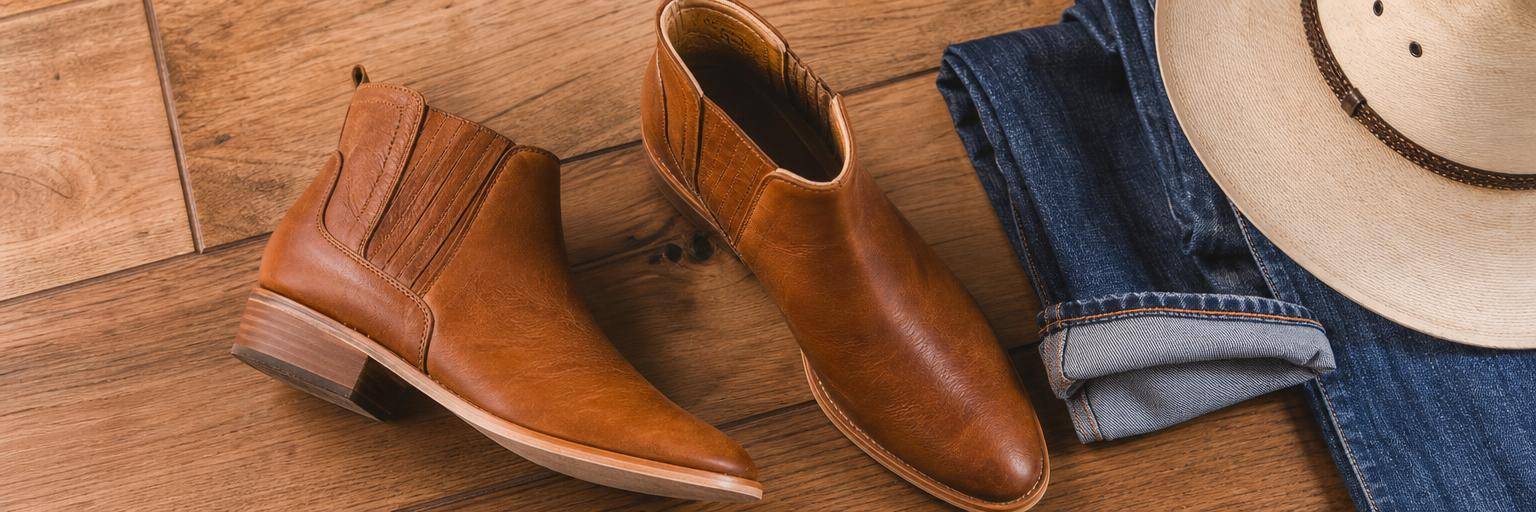
- The classic route is a boot or shoe with a smooth leather sole, the reason western boots have always worked on a wood floor. For a beginner, pick a low heel, an inch or under, not a tall stacked heel that asks for balance you have not built yet. The ballroom and social dance shoe review walks the leather-sole versus suede call for adult social dancers.
- Match the sole to the floor and order the right size. A slick polished floor wants a little more grip, suede over bare leather; a grippier floor wants the smoother sole. Boots and dance sneakers do not run like your street shoes, so order off the brand's chart, and the dance shoe sizing guide keeps you from guessing across brands.
Common mistakes
- Don't dance the class in running or training sneakers. They have the grippiest tread of anything in your closet, which is exactly wrong for turning, and the more they stick the more the twist loads your knee. This is the single most common first-night mistake and the easiest to fix.
- Don't buy a tall heel because the boots look the part. A stacked heel demands balance and ankle control a new line dancer has not built, so start at an inch or under and earn the height later. The shoe should help you turn, not give you something new to manage.
- Don't wear brand-new slick-leather boots straight to class. Fresh leather soles skate until they are broken in, which is its own way to go down, so scuff them up at home first, walk the soles on a rough surface, or start in the suede-sole option while the leather pair breaks in.