Quick answer
My child has flat feet: do they need special dance shoes?
When her pediatrician confirmed flat feet at the 6-year-old checkup last week, her first ballet class is in 4 days, and you cannot tell if she needs orthotics in the slippers or if the soft sole is the point.
Quick read
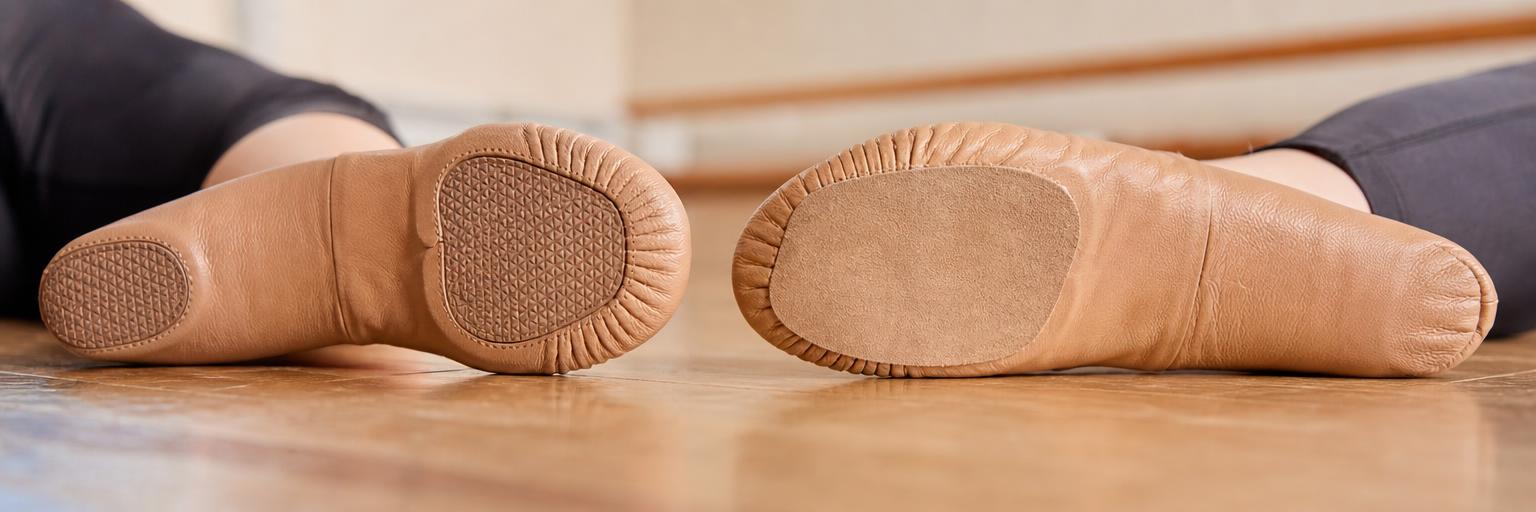
Class dance shoes (ballet slippers, tap shoes, jazz shoes, character shoes) are intentionally built without arch support. This is by design, not a flaw. The soft construction is meant to let the foot work and develop strength through class exercises. For most flat-footed recreational dancers, standard class shoes work fine. If there is foot pain, the first conversation is with the teacher or a physical therapist, not the shoe store. The exception is hip-hop and studio sneaker classes, where a cushioned dance sneaker is appropriate and available.
Gear for this situation
What to do
- Talk to the teacher before changing shoes or adding insoles. Teachers see flat-footed and high-arch dancers constantly. Many explicitly ask parents not to add arch supports to class shoes because it interferes with the foot development exercises in class. Your teacher has observed your child moving and can tell you whether the shoe is the issue or whether foot-strengthening work is already in the curriculum.
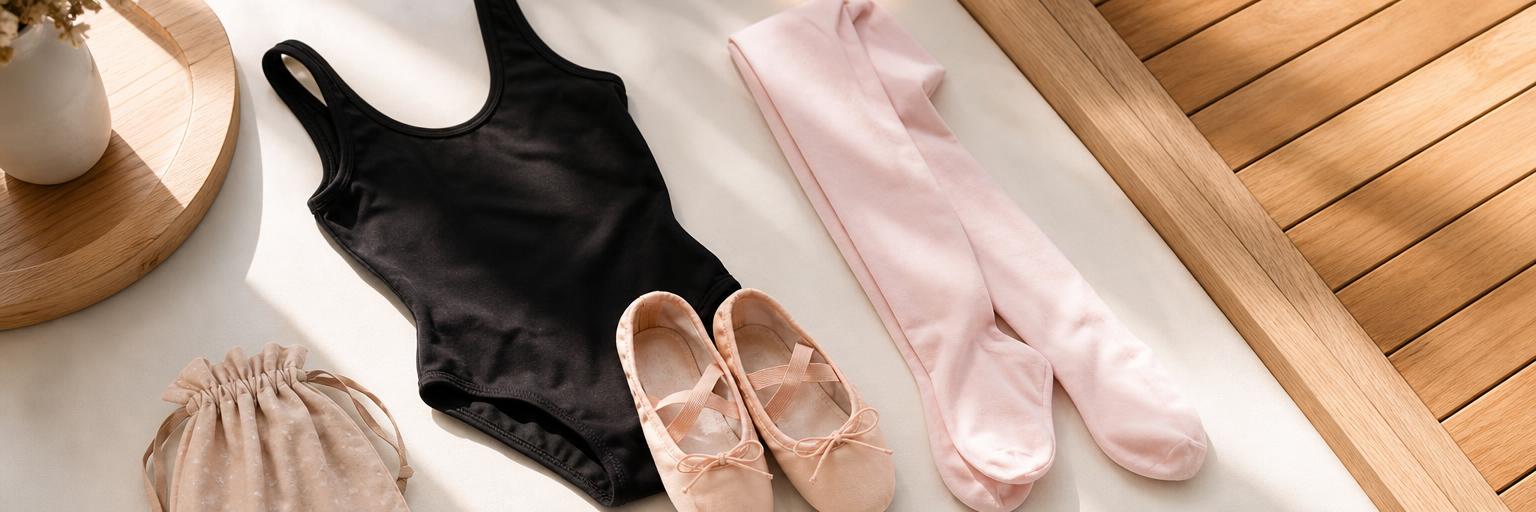
- For ballet slippers, tap shoes, jazz shoes, and character shoes: standard options are appropriate for flat feet. These shoes are intentionally built soft and without arch support so the foot can articulate and develop through class. Capezio, Bloch, and So Danca do not make arch-support versions of ballet or tap shoes. The field consensus is that studio technique builds foot strength, and added support works against that. The one flat-foot-specific thing to get right is the fit itself: a low arch spreads under weight, so her foot measures longer and wider standing than sitting. Measure with her standing at full weight on the foot, and when the brand offers widths, trust that standing measurement, because flat-footed dancers take a wide more often than not.
- For hip-hop, street dance, or studio sneaker classes where your child stands or moves on hard floors for longer periods: a cushioned dance sneaker like the Bloch Boost Mesh or Capezio DS11 Fierce offers more structure than a class shoe. These are the right context for a more supportive option. Ask the teacher which style they allow before buying. The dance sneakers review compares the Boost, the DS11, and the rest of that lane on cushion stack, sole flex, and pivot patch, so a flat-footed dancer's family lands on the one that actually gives the support a class shoe by design will not.
- If your child has foot pain, shin pain, or ankle soreness after class: don't adjust the shoe first. Tell the teacher, and if the symptoms persist across multiple classes, see a physical therapist or podiatrist who works with young athletes or dancers. Pain that doesn't resolve with rest warrants professional assessment. A different shoe model is not a substitute for that.
- Learn to tell normal foot-strengthening soreness from the pain that needs a look, because that is what the worried parent is really asking. A flat-footed dancer who is new to soft shoes, or back after a summer off, often feels a general achiness through the arch, the calves, and the bottom of the foot for the first few weeks, because class is finally working muscles that street shoes used to carry for her. That kind of soreness is dull, spread across the foot, eases within a day, and improves week over week as the foot gets stronger. The pain that warrants a teacher's eye and maybe a podiatrist is the opposite kind, sharp or stabbing, parked in one spot like the heel or the inner edge of the arch, there even when she is just walking or first out of bed, bad enough to change how she walks, or getting worse instead of better. Watch it for a week or two and you will usually know which one you are dealing with.
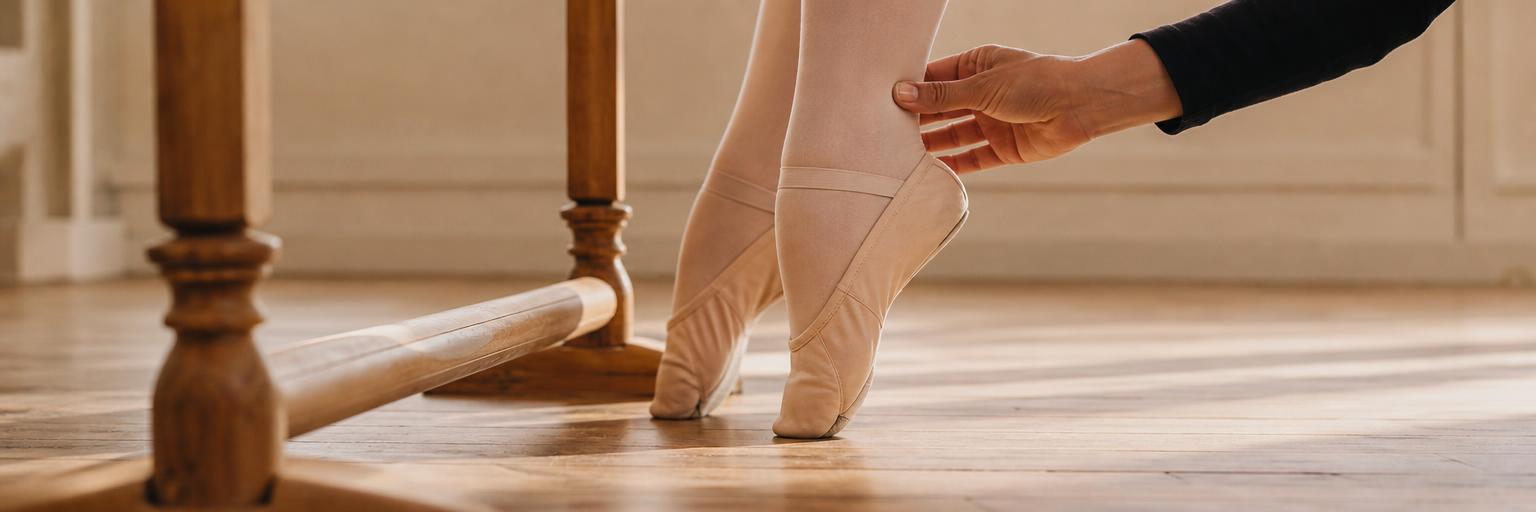
- Know what flat feet actually do in class, because the thing teachers watch for is rarely the arch at rest and almost always the ankle rolling inward when the foot is working. On a flat-footed dancer you will often see the ankle and the inner arch collapse toward the floor in plié, in tendu, and especially on relevé, where the weight slides to the big-toe side instead of staying centered over the whole foot. That collapse, what teachers call pronating or rolling in, is the real thing being corrected, and the fix is the dancer learning to lift the arch and stack the ankle through engagement, which is exactly the strength that class builds over time. Understand this mechanic, because it explains why the answer is almost never a shoe. An insole can prop the arch up while she stands still, but it cannot teach the muscles to hold that position the instant she rises or lands, and only the second one keeps her ankles safe as the steps get harder. If you can see her ankles rolling in on relevé, mention it to the teacher, who will give her the cue and the conditioning for it.
- If you want to do something constructive while the arch develops, ask the teacher for the foot-strengthening they actually want, because the work that builds an arch is barefoot exercise, not a shoe you can buy. The standard moves are simple and free, and most teachers are glad to show them: slow rises up onto the balls of the feet and back down with control, doming the foot by drawing the ball toward the heel without curling the toes under, scrunching a towel toward you with the toes, and picking small objects up off the floor with the foot. A lot of studios already fold this into class, which is exactly why a teacher may ask you to skip the arch supports and let the foot do the work. If the teacher does assign banded conditioning, a basic resistance band is the only gear involved, and our recovery and conditioning tools guide covers choosing one at the resistance level the teacher specifies. What this is not is a green light to self-prescribe a strengthening program off the internet, because the same exercise done wrong or pushed too hard can set a young foot back instead of forward.
- If a teacher specifically recommends arch support or a different shoe construction after watching your child in class: follow that recommendation. Teachers who make a shoe recommendation after observing a dancer in class are acting on what they see. That recommendation overrides any guide, including this one.
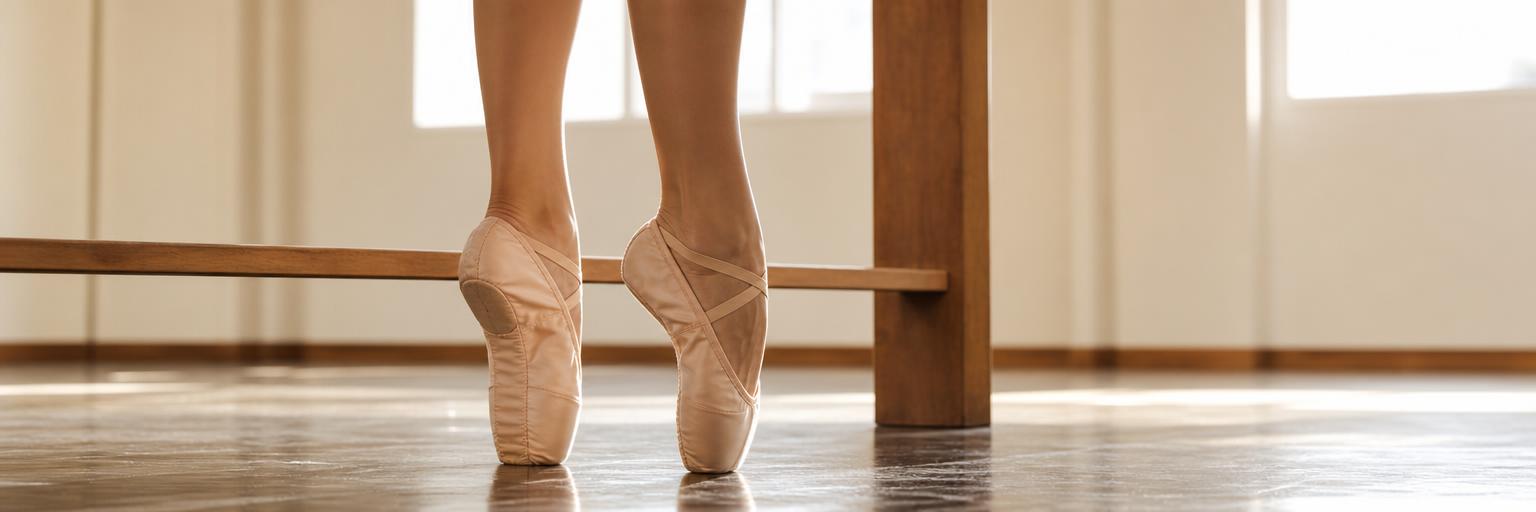
- For flat-footed dancers approaching pointe: pointe readiness assessment by a trained teacher includes foot structure. Teachers evaluate arch flexibility, ankle strength, and foot articulation before approving pointe work. This is part of the readiness conversation, not the shoe-shopping conversation. A flat arch is not automatically disqualifying for pointe, but it is something the teacher and fitter need to know. The when should my child start pointe walkthrough covers what teachers are actually looking for (and the non-negotiable age floor regardless of arch type), and the first pointe shoe fitting article covers what to bring to the fitter once the teacher has cleared her.
Common mistakes
- Don't add drugstore arch insoles to class dance shoes without teacher approval. Most insoles are too thick for dance shoes and push the foot out of the position the teacher is training. They also change how the shoe fits: a shoe sized correctly without an insole feels too tight with one inside, and a wider size to compensate creates its own problems.
- Don't assume street-shoe orthotics can go in dance shoes. Custom orthotics are designed for the depth and construction of street shoes. They typically don't fit in dance shoes and aren't designed for the footwork patterns in class.
- Don't treat flat arches as automatically a problem that requires special gear. Many professional dancers have low arches. The arch develops with training. A first-year dancer with flat feet and no pain symptoms does not need special shoes. She needs class time.
- Don't buy shoes marketed as 'arch support dance shoes' from generic brands without teacher verification. Products sold this way are usually not made for actual dance movement and may perform worse in class than standard options from established dance brands (Capezio, Bloch, So Danca).