Quick answer
What is the difference between jazz shoes and character shoes
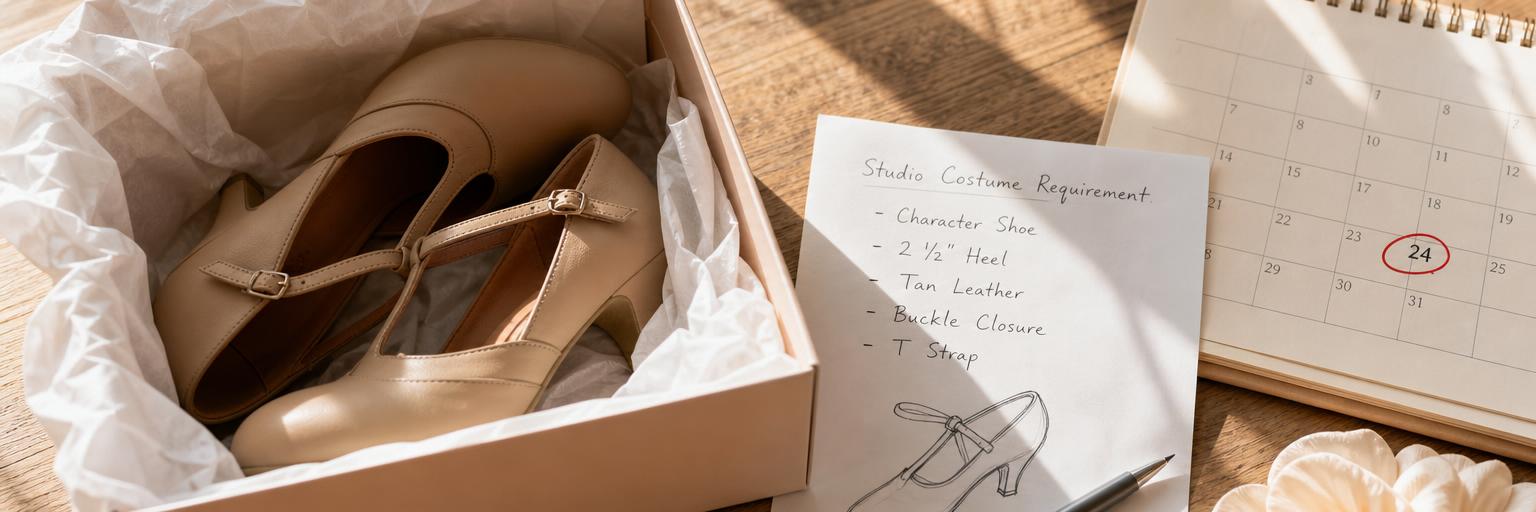
When the costume sheet says 'tan character shoe, 1-inch heel' and the studio store only has jazz shoes in tan, and dress rehearsal is in 9 days.
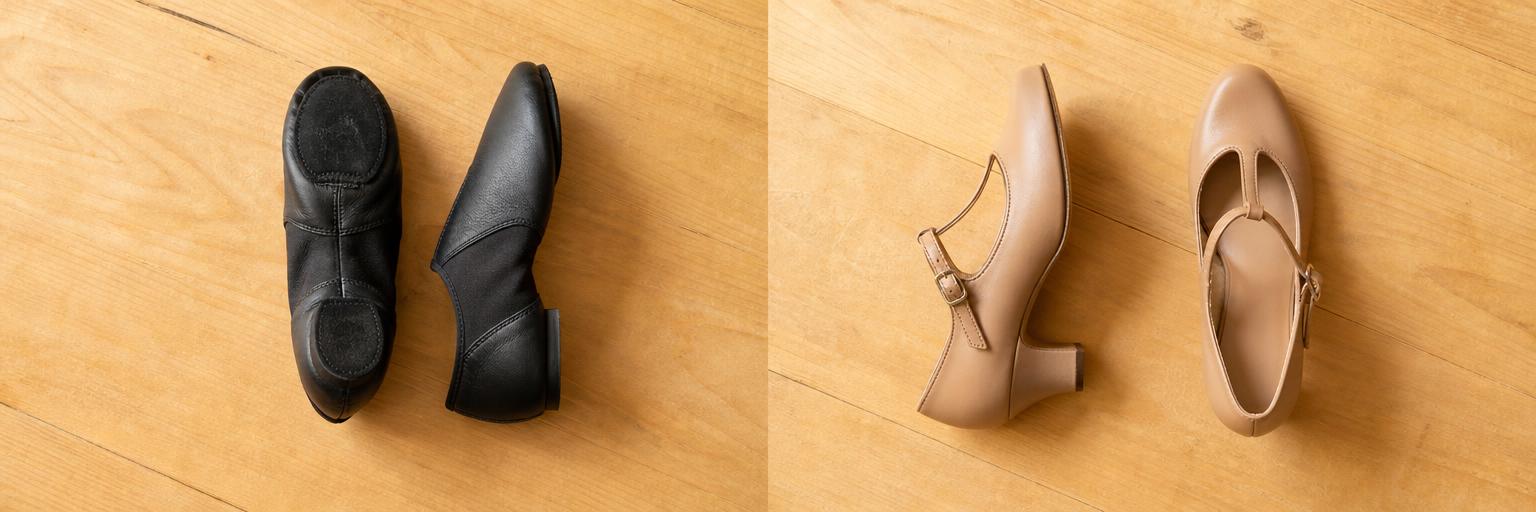
Quick read
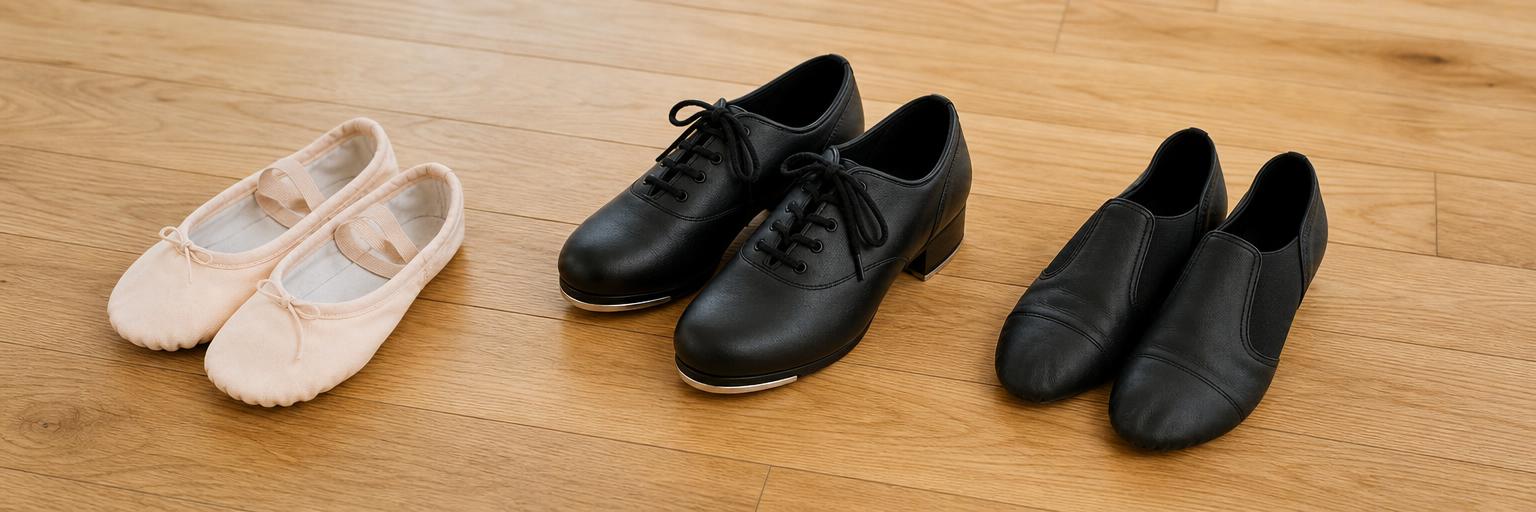
Jazz shoes are for jazz technique class and jazz-style performance: split-sole or full-sole, flexible construction, usually black or tan, no heel. Character shoes are the standard recital and musical theatre performance shoe: a low oxford or T-strap with a 1-1.5 inch heel, leather upper, usually tan or black. They are not interchangeable. A jazz shoe is too casual for most recital requirements that specify character shoes. A character shoe's heel makes it wrong for jazz technique class.
Gear for this situation
What to do
- Read the full studio or costume requirement before shopping either type. The requirement line usually says one of: 'jazz shoe,' 'character shoe,' 'tan character heel,' 'split-sole jazz,' or a specific brand and model. These are not interchangeable terms, and buying the wrong category almost always means buying again.
- Jazz shoes are flexible, low or no-heel performance and class shoes used in jazz and general technique class. Split-sole jazz shoes are the most common class shoe. They flex at the arch for jumps and floor work. Full-sole jazz shoes offer more support and are common for younger students. No meaningful heel. Usually available in black, tan, and nude. Correct for jazz class and jazz-specific performance numbers. The jazz shoes review covers the split-sole versus full-sole call for a younger dancer, the slip-on versus laced upper, and the brand fit notes that make most jazz orders go right the first time.
- Character shoes are the standard recital and musical theatre performance shoe. They have a defined heel (usually 1, 1.5, or 2 inches), a leather upper with an oxford lace or T-strap, and a harder sole. They are a performance dress shoe, not a technique class shoe. A costume sheet that says 'character shoe' means a heeled leather oxford, not a jazz shoe. Color is usually tan or black; heel height is specified on the costume sheet.
- The confusion happens because both shoes are used in recitals and both come in tan and black. The rule: if the requirement says 'heel' or specifies a heel height, it's a character shoe. If the requirement says 'split-sole,' 'jazz shoe,' or 'flexible,' it's a jazz shoe. If the requirement just says 'tan shoe' without a heel height, email the teacher before ordering.
- They serve different purposes on stage. Character shoes are for musical theatre, charm routines, and any number where a heeled performance look is required. Jazz shoes are for jazz and contemporary numbers where the dancer needs to feel and flex the floor. Many dancers in competitive or performance companies own both. They're not the same shoe for different prices.
- Even once you have the right category, don't carry one shoe's size over to the other, because jazz and character shoes are sized on different lasts and different logic. Jazz shoes run snug, usually about half a size to a size down from street, and a few models like the Bloch Jazzsoft ask women to size up instead, while the Capezio Freeform is disputed enough that the brand and specialty fitters disagree by two sizes, so the number is never a safe guess. Character shoes sit much closer to street size and depend more on the brand than on the style, so a child who wears a youth 1 in her jazz shoe will not reliably wear a youth 1 character shoe. Order each one to that exact model's size chart rather than to her other dance shoes, and when she lands between two sizes follow the brand's own recommendation instead of rounding up the way you would for school shoes. The sizing-across-styles guide has the offset and the brand exceptions for both.
- One thing catches first-time families off guard, and it is the reason to order the character shoe early. A character shoe needs a little setup before it is stage-ready, where a jazz shoe is ready to wear. Most character shoes arrive with the elastic strap loose in the box rather than sewn on, so plan to stitch it across the instep yourself or ask the studio, since many will do it for a few dollars. The leather sole is slick when new and slides on a marley stage, so scuff it hard on rough pavement or coarse sandpaper before dress rehearsal, going edge to edge until the smooth finish is gone. And the heel takes breaking in, an hour or two around the house across a couple of weeks, not the night before. Give yourself the lead time to do all three.
- For a young dancer, when the costume sheet just says 'character shoe' with no strap named, the closure style is a choice worth making on purpose. A Mary Jane, one strap across the instep with a single button, is far easier for a five or six year old to fasten herself than a T-strap, and that matters because most studios keep parents out of the wings on recital day, so a quick change has to happen without you there to buckle anything. A T-strap or an oxford lace reads a little dressier and is common for older dancers and specific costume looks, so if the sheet names one, buy that. Keep the heel low for the youngest dancers, around 1 to 1.5 inches rather than 2 or more, because steady balance does more for a first-recital kid than heel height. The Capezio Jr. Footlight is the model most studios accept as a default when nothing specific is required, and it comes in multiple widths; the character-shoes review has the full buy.
- If you're buying for a first class rather than a costume requirement: jazz shoes are for jazz class, character shoes are for musical theatre or for studios that use them as a general recital shoe. When in doubt, ask the teacher what class the shoes are for before buying anything.
Common mistakes
- Don't substitute a jazz shoe for a character shoe on a costume requirement. They look related but a jazz shoe has no meaningful heel. A character shoe requirement specifies heel height for a reason: the costume, the choreography, and the on-stage look were designed around it.
- Don't substitute a character shoe for a jazz class. The heel is wrong for floor work, jumps, and the technique movements jazz class involves. Your child's teacher will notice immediately and ask you to get the right shoe.
- Don't order either shoe before confirming the requirement with the studio. Costume sheet requirements are often more specific than you expect. They may name a brand, a color name (tan vs caramel vs suntan), and an exact heel height. Buy from the requirement, not from what looked right online. When the recital is in under three weeks, this confusion is the most expensive deadline mistake; the recital shoe shopping on a deadline walkthrough covers what to do if you've already ordered the wrong category and need to recover.
- Don't assume the same shoe works for multiple classes. A dancer taking both jazz class and a musical theatre number at recital needs both shoes: a jazz shoe for class and a character shoe for the performance requirement. This is normal, not an upsell.
Keep reading