Quick answer
What do I need for my first social dance class
When you signed up for a 6-week beginner salsa series at the community studio starting Thursday at 7pm, the website's only spec was 'no jeans, no flip-flops,' and you do not own a single piece of dance gear.
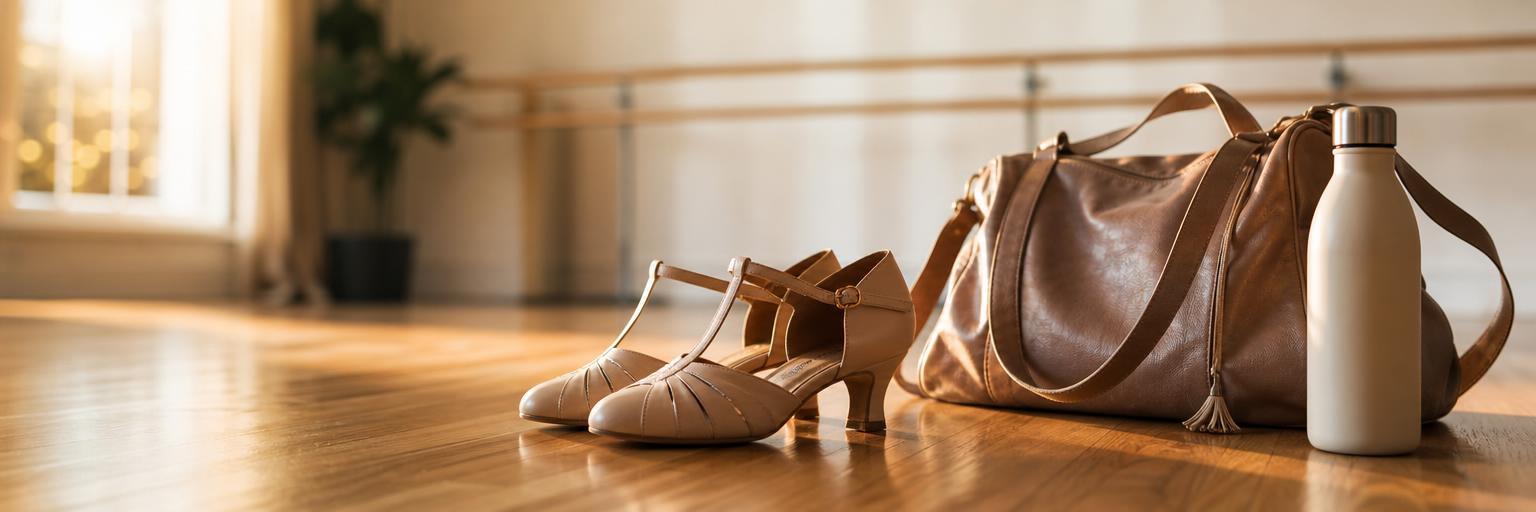
Quick read
Don't buy specialty shoes before the first class. Wear fitted clothing that allows hip and leg movement: leggings, dance pants, or fitted slacks. Avoid jeans and anything stiff. Bring a change of clothes if you're unsure. After the first session, ask the instructor directly what shoes are recommended, because social dance shoes vary meaningfully by style and instructor preference, and buying before that conversation often means buying the wrong shoe.
Gear for this situation
What to do
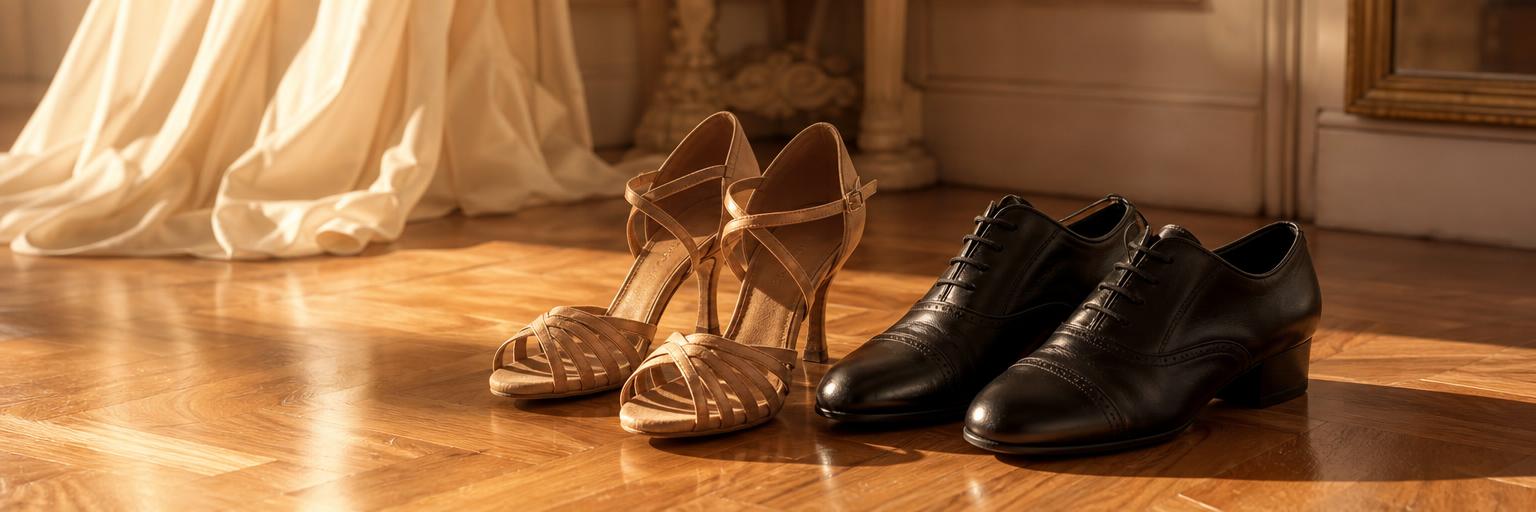
- Don't buy dance shoes before the first class. The right shoe for salsa is different from swing, and different again for ballroom or Argentine tango. The instructor will tell you what's appropriate for that specific style on that specific floor after watching you move. Buying before that conversation often means buying something you'll replace in two weeks.
- Wear fitted clothing that allows full hip and leg movement. Leggings, fitted dance pants, or close-fitting slacks all work. Avoid jeans, cargo pants, or anything stiff through the hips and knees. The instructor will see your weight shifts and hip placement. Fitted clothing lets them give you accurate feedback. Loose pants hide your legs and make it harder to learn footwork.
- Wear street shoes with a smooth, low-friction sole for the first class if you don't have dance shoes. Avoid thick rubber soles (like sneakers or boots) that grip the floor. Turns and weight shifts on a rubber sole on hardwood floor are painful and teach bad habits. A leather-soled dress shoe, a smooth-soled flat, or a low-heeled closed shoe are better options than athletic sneakers.
- Ask the instructor directly after the first class what shoes they recommend. Instructors in social dance have strong opinions about footwear, and those opinions vary by style and floor type. The answer you get from the person teaching you on the actual floor you'll be dancing on is more reliable than any online guide, including this one. Once the instructor has named a category (suede-sole Latin, smooth-sole standard, low-heel character), the ballroom or Latin dance class shoes walkthrough decodes what each label actually means by style and floor, so you can shop on spec instead of guessing from a product page.
- Bring water and expect to sweat. Social dance is aerobic, especially in the first few classes when your body is learning to coordinate movements it's never done before. A small towel is useful in a beginner class. Avoid heavy meals for 2 hours before class.
- Decide whether you are going to lead or follow, because in partner dance that is the real choice you are making, not the style on the sign-up sheet. Leading is steering, you pick the moves and signal them through the frame; following is responding, you read that signal and move with it. Both are real skills, both take the same work, so follow is not the easy seat and lead is not the boss of the floor. Tradition put men in the lead and women in the follow, and plenty of classes still default that way, but more and more let you pick whichever you want and a growing number teach you to do both. If the sign-up does not say, just ask, because some classes need a rough balance of leads and follows for the rotation to work and the studio would rather know before you walk in. If you are coming with a spouse or a friend, you do not both have to lead or both follow, one of each is the simplest start, and trying the other role down the line only makes you a better dancer.
- You do not need to bring a partner, and you will not dance with the same person the whole class. Almost every beginner social class rotates partners every few minutes, so the instructor can watch everyone and so you learn to lead or follow with different bodies instead of memorizing one person's habits. This rotation is the part that scares adults off, and it should not. Everyone in a beginner class is equally new and equally nervous, an awkward pairing is over in two minutes when the rotation moves, and a quick thank-you when you switch is the whole etiquette. Showing up by yourself is the normal way to take a first social dance class, not the exception.
- Pack like you will be in a closed frame with a stranger every few minutes, because in a rotating class you will be. The sweat is not only your own problem once someone new has a hand on your back, so throw a clean spare top in your bag and change into it partway through a long class, the way regulars quietly do. Go light on cologne or perfume, since a scent that reads as faint at home is overwhelming in a close frame and a genuine problem for anyone in the room with allergies. Keep mints or gum in the bag for the same close-quarters reason and skip the garlic-heavy lunch. None of this is about being fancy. It is the courtesy that makes people glad when the rotation lands them with you, and being the person others are glad to rotate to does more for your first night than any single step you learn.
- Ask about a beginner series or intro package rather than drop-in classes. Most social dance studios offer a structured beginner series (usually 6 to 8 weeks) that teaches the core vocabulary of the style in sequence. Drop-in classes assume some baseline. A beginner series is calibrated to start from zero. Before you write the check for the package, the how much does it cost to start dancing as an adult breakdown puts series tuition, drop-in math, and the shoe you'll buy after class one in one picture so you commit to a cadence that fits your life.
Common mistakes
- Don't arrive in athletic sneakers and expect them to work on a dance floor. Thick rubber soles grip hardwood and sprung floors in ways that make turns and slides nearly impossible. You'll know in the first five minutes. Bring a backup pair of smooth-soled shoes if you're not sure what to wear.
- Don't let the first class be the end of it if it felt awkward. The first social dance class almost always feels awkward. Your brain is learning spatial relationships, timing, weight shifts, and lead-follow communication simultaneously. Awkward at class one is normal. The second and third class are usually where it starts to click.
- Don't buy a beginner package from a high-pressure studio without taking one trial class first. Some social dance studios push package sales aggressively after the first class. Take a single trial class, then decide whether the instructor and floor are right for you before committing to a package.
- Don't skip the dance shoes long-term. Street shoes work as a temporary measure, but the right dance shoes make a meaningful difference in how quickly you learn. The right sole lets you pivot and shift weight without fighting the floor. Once you know the style and the instructor's preference, shoes are worth buying, and that is the moment to read our ballroom and social dance shoe guide, which picks by the floor you will actually dance on and the heel you can actually balance in, brand last, and flags which sellers let you return a pair before the sole is marked.
Keep reading