Quick answer
What do I do when a costume piece breaks backstage
When she came off stage at 1:18pm with a rhinestone strip dangling from her left hip, her group number is at 2:03pm, and the studio's repair kit is in the team mom's car.
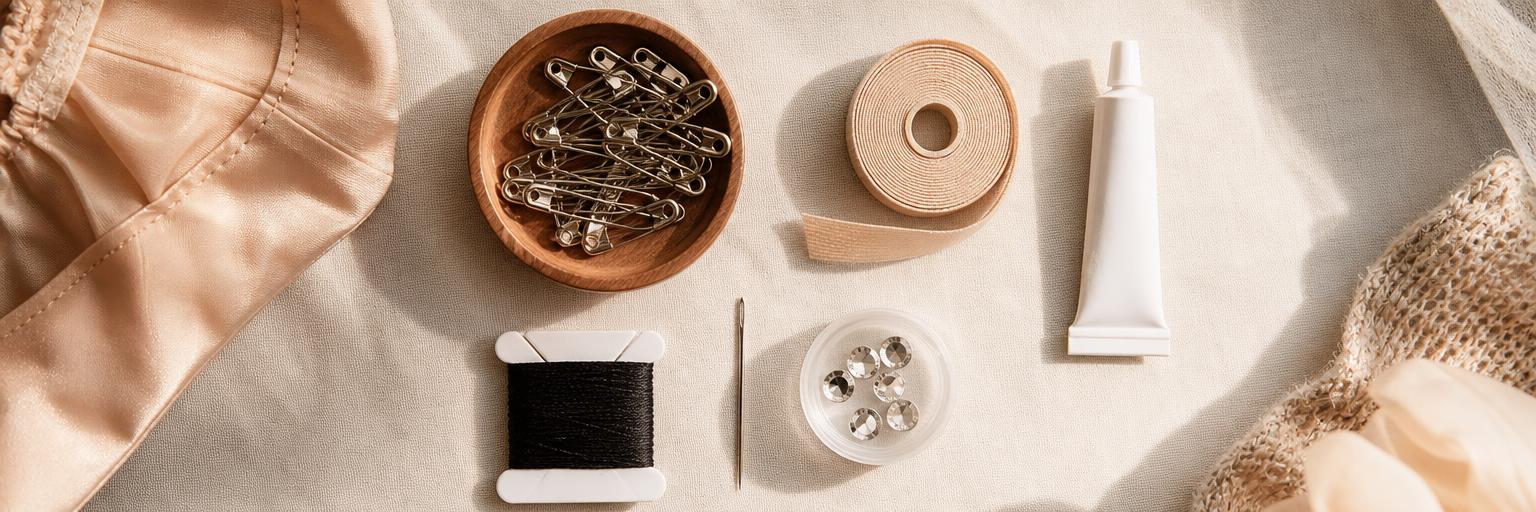
Quick read
The fix depends on what broke. A loose rhinestone or small trim strip: fabric glue (Beacon 527 or Gem-Tac), press and hold 60 seconds, done. A snapped closure or hook: a safety pin at the attachment point holds for a performance. A dropped hem: hem tape ironed with a flat iron or body heat, or safety pins on the inside. The rule: always have a small repair kit in the dance bag, not in the car.
Gear for this situation
What to do
- Don't panic. Every competition venue has other parents with repair kits, and most costume emergencies are fixable in under 10 minutes with the right supplies. Do a fast triage: is the break cosmetic (one loose rhinestone) or structural (a broken strap the dancer can't go on in)? Cosmetic repairs can happen in parallel with warmup. Structural repairs need to happen now, with everything else on hold.
- Use the room before you panic over a supply you don't have. Backstage lending is universal at competitions, and a calm 'does anyone have fabric glue?' down the dressing room almost always turns one up in seconds, so ask out loud instead of tearing your own bag apart for something that isn't in it. Find your studio's people too, because most teams travel with a master repair kit and often a designated costume mom who has fixed this exact costume before. And the moment a break is structural, tell the teacher, not only because she may have the fix, but because your dancer is one spot in a formation. The teacher is the one who decides whether the routine can hold the two minutes for a repair, whether the dancer goes on with a safe stop-gap, or whether the group adjusts spacing, and that isn't a call a parent should be making alone in the wings.
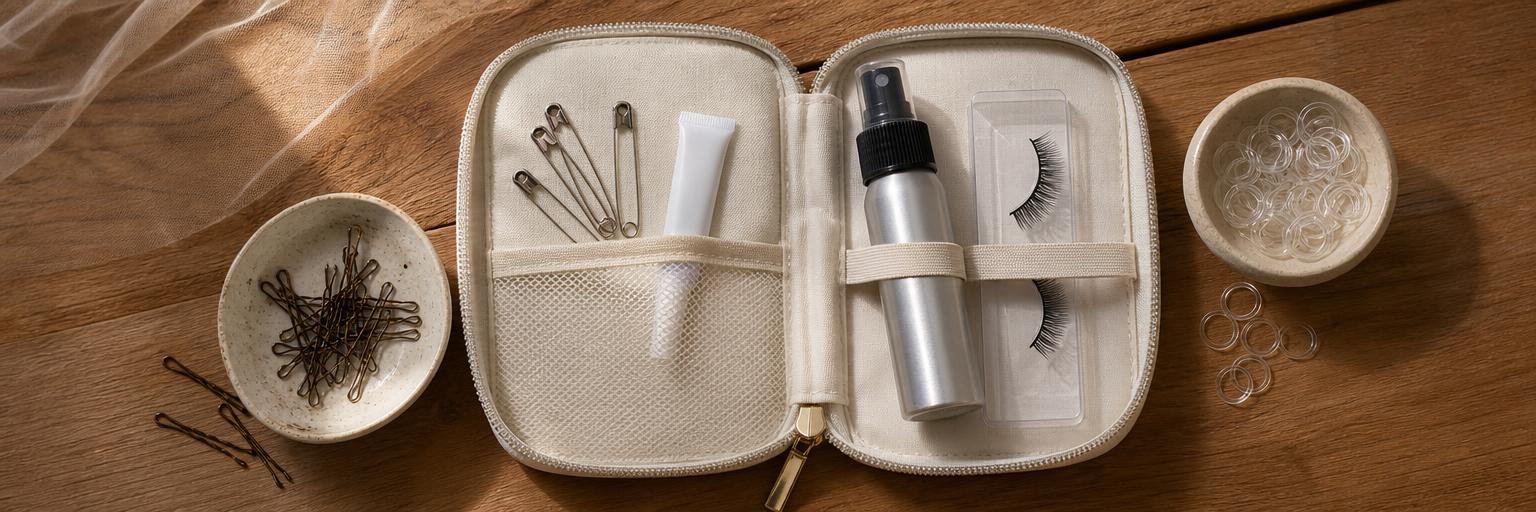
- Loose rhinestone, stone row, or small trim strip: fabric glue designed for rhinestones (Beacon 527 Multi-Use Glue or Gem-Tac) pressed onto the back of the piece and held firmly against the costume for 60 seconds holds through performance. Have the dancer stand still for 2-3 minutes after. The glue sets faster under body heat. Do not use super glue (Cyanoacrylate) on fabric. It wicks into the surrounding material, creates a stiff patch, and can ruin the costume. The competition first-aid and foot-care guide covers what to pack in the emergency kit.
- Peeling applique or bead trim strip: use the same fabric glue along the full length of the lifted edge, press, and hold with a binder clip or your fingers for 2-3 minutes. If the strip is long or the dancer is about to go on: safety pins on the inside of the costume along the peeled edge, as close together as practical, hold the trim flat until glue can be applied properly after the number.
- Broken snap, hook, or clasp: a safety pin at the same attachment point holds for a full competition day. Pin through both sides of the closure, parallel to the opening, so the pin itself bears the stress rather than the surrounding fabric. Use a pin size appropriate to the material: a large safety pin through chiffon will tear it. Two medium pins are safer than one large one. Reinforce with a second pin if the closure bears weight or stress during lifts.
- Back zipper that splits open or won't stay up: this is the most common bodice failure and it has fast fixes. If the teeth separate behind the slider as she zips, unzip all the way to the bottom and re-zip slowly, which re-meshes the track. If the slider has worn loose and the teeth keep popping open behind it, pinch the slider gently with pliers to close the gap, a hair at a time, then test before pinching more. If it zips fine but creeps down, hook the zipper pull onto the top hook or button with a small split keyring, or safety-pin the top of the placket closed from the inside. For a zipper that drags and sticks, run a graphite pencil or a bit of beeswax down the teeth so it glides.
- Dropped or unraveling hem: no-sew hem tape (HeatnBond Hem, Dritz Stitch Witchery, or Steam-A-Seam) activated with a flat iron or even a straightening iron on low heat re-bonds a fallen hem in 60 seconds. If no iron is available, fold the hem up, press hard with your fingers for 30 seconds, and pin the inside with safety pins every 2 to 3 inches. The hem will hold for a performance. Re-iron after the event for a permanent hold. For a raw edge that's unraveling, clear nail polish along the edge stops the run immediately.
- Headpiece, tiara, hat, or hair flower that won't stay put, or that lost a stone on the way: this is its own kind of break, because none of the bodice fixes above reach the head, and a piece that pops loose in the last formation is the one the whole audience watches fly off. Anchor it into the bun, not the loose hair, with bobby pins crossed in an X so each pin locks against the other and the accessory can't slide free. A tiara or comb gets a pin through each end plus one at the center, and a flower or feather clip gets a pin bridged over its base into the bun. For a hat, run a loop of clear elastic under the bun or under the chin, hidden along the hairline, so a head snap in a turn can't launch it. If a stone or trim popped off the piece itself, a dot of the same fabric glue (Gem-Tac or Beacon 527) sets it back, or a strip of wig tape (topstick) holds a flat accessory against the skin for one number. Secure all of it before warmup, then have her do a few hard head snaps in front of a mirror, because the time to find out it slides is in the dressing room, not on stage. And when the accessory keeps sliding because the bun underneath is letting go, fix the foundation first, since no amount of pinning holds a headpiece to a collapsing bun: the two-minute re-pin rescue (wet comb, reset the crossed pins, re-net, spray) is in the performance makeup and hair emergency kit plan.
- A strap, spaghetti strap, or shoulder seam that pulled away from the bodice. This is structural. Use safety pins as a stop-gap, but the dancer needs to know not to put full weight on the repaired side. A small hand-sewing needle and matching thread is a permanent fix in 5-7 minutes. A quick running stitch through the seam allowance is enough to hold through a routine. Most moms who've been at this for more than a season carry a travel sewing kit in the dance bag. If the repair isn't solid enough, pull the number and get it properly sewn before the next event.
Common mistakes
- Don't use super glue (Cyanoacrylate) on costume fabric. It wicks into surrounding material, creates a white-haze stain, and makes the fabric permanently stiff at the repair site. Beacon 527 or Gem-Tac are the right tools for rhinestone and trim repairs on fabric. Keep one in the kit and leave the super glue at home.
- Don't let the dancer warm up or go on stage in a structurally compromised costume. A decorative rhinestone falling off mid-performance is a costume issue. A strap holding a bodice that pulls loose during a lift is a safety issue. Know the difference and hold the dancer until the structural repair is solid.
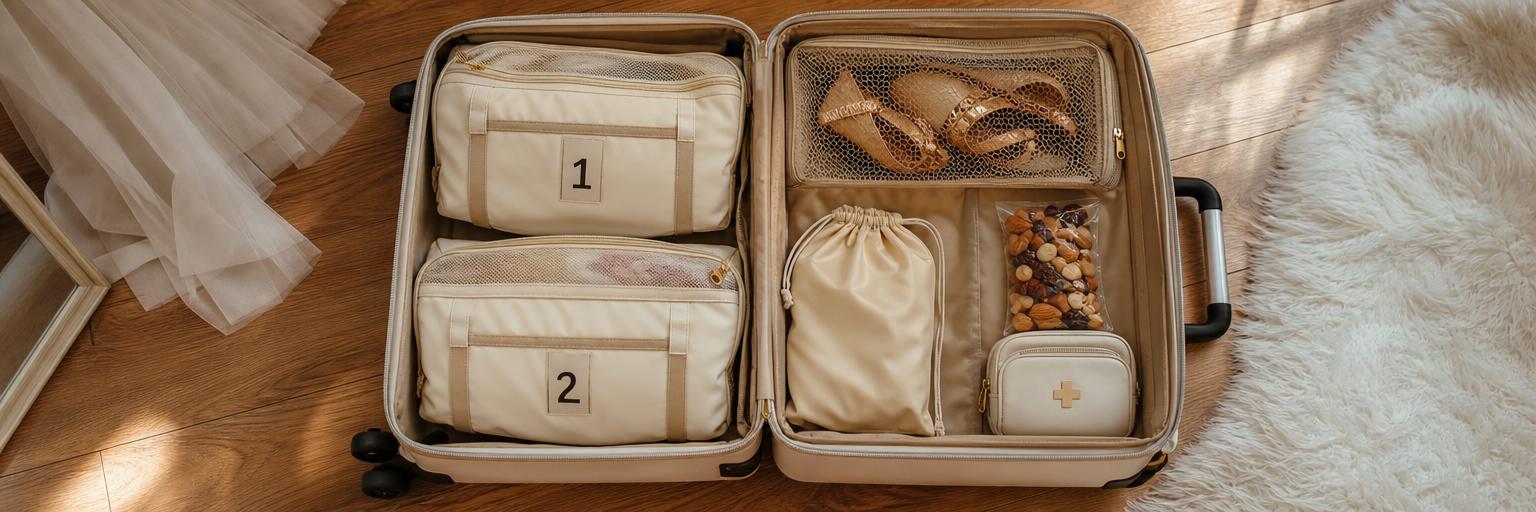
- Don't wait until competition morning to check the repair kit. The kit belongs in the dance bag permanently, restocked after every event. Finding out the glue is empty or the safety pins are gone at 7am in a hotel room is avoidable. After every competition weekend, restock whatever was used before putting the bag away. The full backstage-fix-kit packing list (clear nail polish, safety pins in three sizes, fashion tape, travel hairspray, rosin, etc.) lives in the competition weekend packing checklist under the night-before bag-load.
- Don't over-fix in the moment. A heavy layer of glue applied in a panic may save the rhinestone and ruin the surrounding fabric. A thin, precise application held firmly is enough. Backstage is not the place for a full costume repair. The goal is to get through the performance. A proper repair happens after, at home, with time and the right tools.