A garment bag has one job, and dance parents underestimate it every season. Cheap bags rip the first time a stiff tulle skirt catches the zipper. Bags with no accessory pockets lose tights, hair pieces, and earrings backstage. And the wrong size turns a quick change into a backstage scramble. Pretty doesn't matter. Pockets, zippers, and clear labels do. The right bag depends on whether you have one costume or six.
Clear panel so you can identify the costume without unzipping it, a 3-inch expandable gusset for a tutu, and a return policy behind it.
Where it falls short
One bag, one costume. If your dancer has six numbers, you are buying six of these or moving up to a rack system.
Check before buying
All three colors were in stock at check time. Capezio direct takes returns on unopened, eligible items within 30 days, which is unusual in this category.
$13.99 to $15.99 for the bags, with rack bundles running to $101.92, verified 2026-08-02
Why it wins
The accessory pocket keeps that number's tights and hairpiece with the costume, which is the whole game during a 90-second change.
Where it falls short
Almost everything was sold out when we checked, and the listed price range includes rack bundles that cost five times what the bag does.
Check before buying
Stock churns hard here: only 1 of the 18 size and bundle variants was in stock at check time. If the size you need shows available, it may not stay that way.
First recital, one or two costumes: a simple labeled garment bag + a small accessory pouch is enough. Don't overspend.
Multi-costume competition: prioritize gusset depth, separate pockets, labels you can read across a crowded dressing room, and a hanger that holds the costume's weight without sagging.
Quick-change dancer: organize BY COSTUME, not by product type. Each costume needs ITS tights, ITS shoes, ITS hair pieces, ITS jewelry in ONE pocket group. Loose-everything-in-a-pouch is how things get lost.
Studio team order: consistent bags everyone can label and replace easily. Pick something you can still order in February, not something nobody else has.
Before you buy
Measure your costumes BEFORE picking bag size. The tutu that needs gusset depth doesn't fit in a flat bag. The catsuit that's 50 inches long doesn't fit in a 37-inch bag.
Check the accessory plan. If tights, shoes, and hair pieces all live in the same pouch, you'll be hunting for the right tights at 7:55am for the 8am call.
Don't buy pretty bags with weak zippers, weak seams, or weak hanger hooks. The cheap bag dies the first time someone overpacks it.
A rack bag doesn't replace individual garment organization. Even with a Glam'r Gear or Dream Duffel rack, each costume still needs its own bag inside.
How to approach it
A garment bag is a backstage workflow tool, not a costume cover. The right bag depends entirely on how many costumes your dancer has and how fast she has to change. One costume? A simple labeled bag plus an accessory pouch handles everything. Six costumes? Now pocket visibility, zipper durability, hanger stability, and labeling become the actual product features. Pretty bags with weak zippers don't survive the season. Plain bags with strong pockets and clear labels do.
What we would do
For a first recital, we'd buy a Dream Duffel Regular Garment Bag ($15), label it clearly, and put all the accessories in one small pouch. Don't overspend on a kid who might not be doing this next year. For a multi-costume competition season, we'd buy gusseted Dream Duffel bags (for tutus and fluff) OR Glam'r Gear transparent bags (for ID-from-outside) and group each costume's accessories in ONE pocket, not a shared pouch. For quick-change dancers, every group HAS to be self-contained. And we'd buy ONE backup bag before recital week. A zipper failure on Friday becomes a same-day scramble Saturday morning otherwise.
How to work out which one
Walk the costume through the actual day. Closet → car → venue lobby → dressing room → hanging rack → quick change → stage → back to the rack → reuniting with shoes, tights, hair pieces, and accessories → back to the car → home. One costume can use a simple labeled bag and a pouch. Multiple costumes need visibility (so you can ID them from outside) and grouping (so each routine's accessories stay together). The system has to work when your dancer is changing in 90 seconds with twelve other kids in the room.
Mistakes to avoid
Don't buy a pretty garment bag with weak pockets, weak zippers, or a weak hanger. The cheap-feeling bag dies the first time it gets overpacked. Don't mix all jewelry, tights, and hair pieces from multiple costumes into one shared pouch. You'll be hunting for the right tights at the wrong moment. Don't assume a rolling rack bag eliminates the need for individual garment organization. Even with a Glam'r Gear rack, each costume still needs its own bag inside. The best garment system makes the right outfit obvious when your kid is panicking backstage.
Backstage time pressure makes mixups the #1 cost. Pocket visibility + labeling matters.
Pocket count and visibility, zipper strength, labeling space, hanger durability.
Quick-change dancer (under 5 minutes between routines)
Outfit-by-outfit organization system: each costume + its accessories in ONE group
Shoes, tights, hair, and jewelry need to stay with the correct costume. Loose-pouch organization fails under pressure.
Whether the bag's pockets actually separate by outfit, OR whether you're stacking everything together.
The shortlist
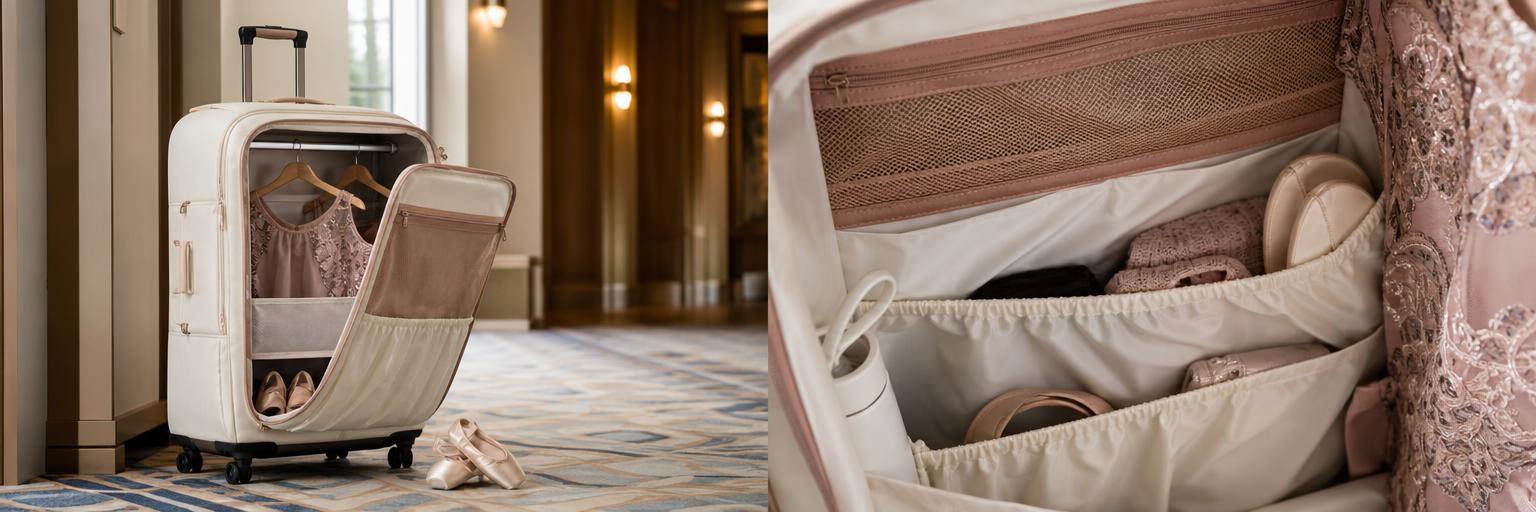
Most families buy Dream Duffel side-zip garment bags ($15-$17). 37x18 inches, side-zip access, dedicated accessory pockets, and a contents-card workflow. The contents card is the part that actually prevents backstage mixups, more than any other feature.
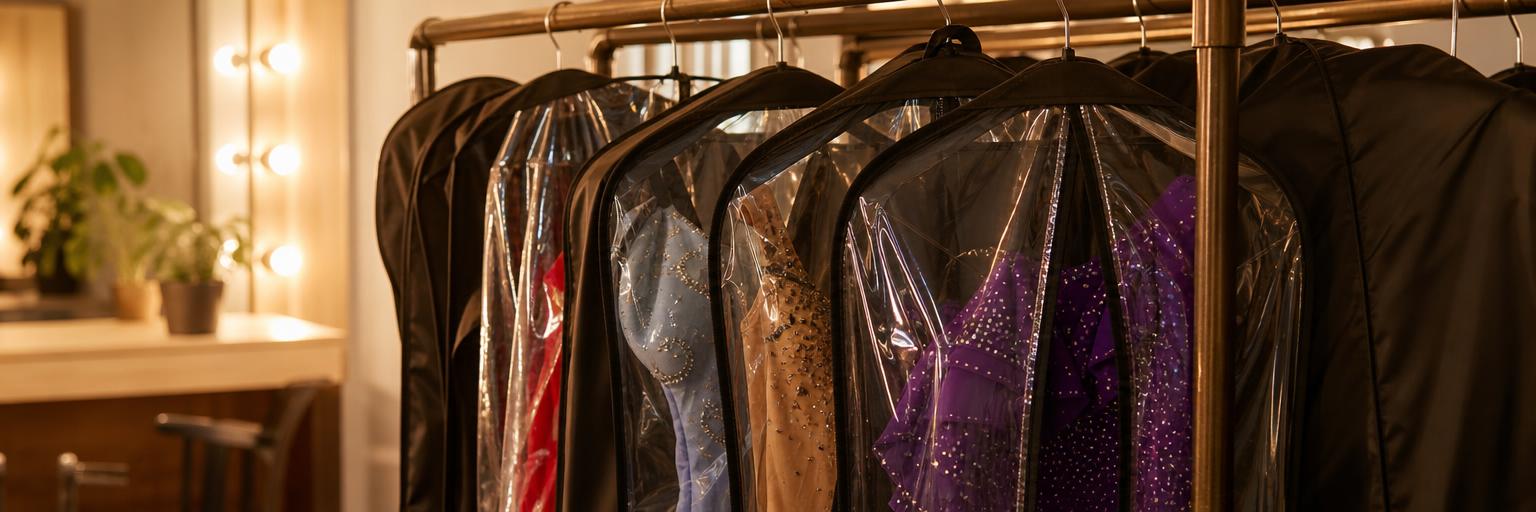
Need to see your costume from outside the bag? Glam'r Gear transparent garment bag ($13.99-$15.99). Clear panel + three zippered accessory pockets + front label pocket. Watch the stock, some variants sell out fast in competition season.
Already buying shoes and tights at Dancewear Corner? Add Capezio B305 On The Go (~$22), an all-in-one recital kit with a 3-inch expandable gusset and clear-panel visibility. Horizon 1857 is the understated black-expandable alternative.
Need a one-time emergency bag? Cheap plastic from anywhere works for ONE event with strict labeling and a separate accessory pouch. Don't make this your recurring competition system. They tear, the zippers fail, and the missing pockets cost you accessories.
How to choose
Size the bag for your BULKIEST costume, not your smallest one. A soft tutu fits in a gusseted bag and crushes in a flat one.
Match the bag's LENGTH to how the costume hangs, not just its bulk. Hang the costume, measure from the top of the hanger hook to the lowest point of the hem, and add about four inches so nothing folds against the zipper. Most kids' recital costumes clear a standard 36 to 40 inch bag. A long lyrical dress, a floor-length gown, or anything on a taller teen or adult dancer needs a 44 inch or longer bag, or the hem folds up at the bottom and sets a crease that shows under stage lights. The classical pancake tutu is the one costume no garment bag protects, because the stiff plate sticks straight out sideways and a flat bag crushes it no matter the gusset. Those ride in a dedicated round tutu bag or a tutu box, carried flat or hung upside down by the bodice, not in the costume garment bag at all.
Pick pocketed bags when you have quick changes. Tights, hair pieces, shoes, and jewelry all need a dedicated spot or they'll disappear backstage.
Label every bag clearly if your dancer has multiple routines. Contents cards inside, dancer's name outside. Twenty identical black bags backstage look identical for a reason.
Pick side-zip or wide-opening bags for costumes with stiff embellishments, feathers, or tulle. A top-zip opening forces the stiff skirt down past the zipper track every time you load, which is exactly how the tulle catches the teeth and a seam or the zipper itself tears. A side zip lets you lay the costume in flat and clear of the teeth, so the fluff stays uncrushed and nothing snags on the way in.
If you already use a Rac n Roll or similar rolling rack, buy garment bags that fit that system's dimensions. A bag that doesn't fit the rack is wasted.
Buy at least ONE backup bag before recital week. A zipper failure on Friday turns into a same-day scramble Saturday morning.
How To Pack The Bag So The Quick Change Actually Works
A good bag only helps if you pack it for the way recital day actually runs. The mistake is packing by costume the night before and planning to sort the order out backstage, where there is no room and no time. Pack it once, in performance order, so anyone can hand your dancer the right thing without you standing there.
One costume per bag whenever you can swing it, hung in the order she performs. Three numbers means three bags beats one stuffed bag, because nobody is digging past costume two to find the tights for number three with thirty seconds on the clock. If you have to combine, hang them in performance order and pin the running order to the strap.
Fill out the contents card like you won't be there, because you might not be. Quick-change helpers rotate and the card is what lets a stranger dress your kid right. Write the number name, every piece (costume, tights color, shoes, hair piece, jewelry), and the easy-to-forget things like a quick-change shrug or a specific bobby-pin color.
Give every loose thing its own pocket and keep the layout identical across bags. Tights in the top pocket, jewelry in the zip pouch, shoes in the bottom, the same in every bag. A system she knows by feel beats hunting through a different setup in each bag under stage lights.
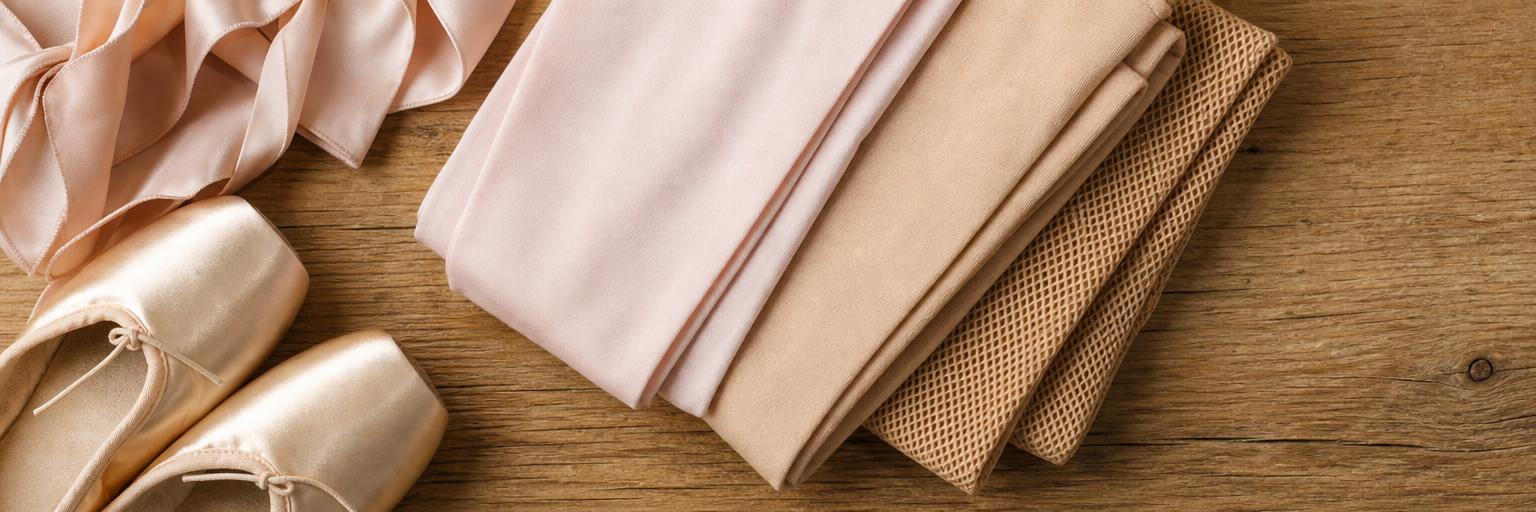
Pack a spare set of tights and the backup shoes, not just one of each. A run on the drive over or a heel that snaps at warm-up is a normal recital morning, not a freak accident. The spare required-color tights and the second shoes in the bag turn a meltdown into a thirty-second fix.
Stage the bag where the change happens, not where you're sitting. If she has a fast change, the bag lives at the quick-change station in the wings, already unzipped to the next costume, not out in the house with you. Walk the route once before the show so you know where that station is.
Label it so SHE can find it, not just you. Her name in big letters at a kid's eye level, plus a bright ribbon or tag she can spot in a wall of identical black bags. The dancer who can find her own bag is the one who isn't in tears looking for mom two minutes before places.
Skip it if
Don't try to make cheap plastic bags last a full competition season. They tear, the zippers fail, and you'll be re-buying mid-season anyway.
Don't use unlabeled identical black bags backstage. Every dance bag at the venue looks the same. Without labels, your kid is hunting for her costume while her music starts.
Don't assume 'in stock' on a popular bag will last through recital season. Stock disappears in May. Buy in March if you can.
Don't overload one bag with multiple heavy costumes when the zipper track is light-duty. Cheap bags fail at the load points first.
Don't check your dancer's costume in your suitcase when you fly to a competition. A garment bag in the belly of a plane gets crushed under everyone else's luggage, and a delayed or lost bag the day before nationals means she has no costume and cannot go on. A soft garment bag is made to travel with you. Fold it over the handle of your roller or over your arm and carry it on, and most airlines will gate-check it for free at the jet bridge if the overhead bins fill, which still keeps it out of general baggage. The costume flies with you, never in cargo.