Best Competition Backstage Foot Care And First-Aid Kit
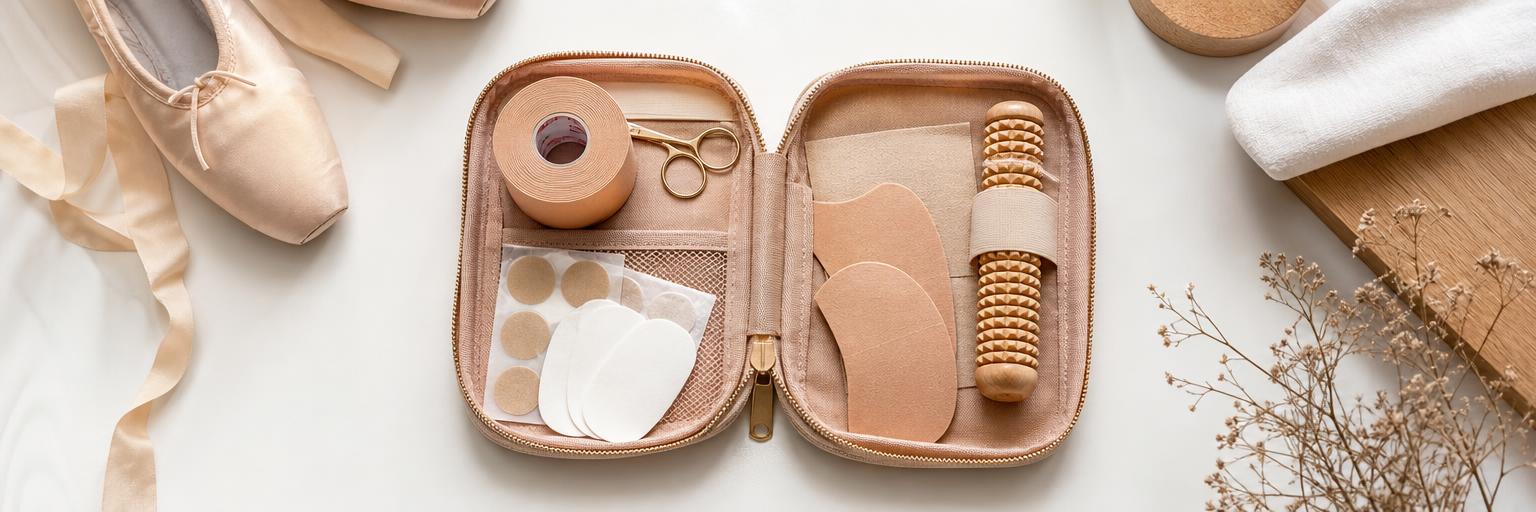
Here's the rule I follow: if you've ever had to sprint out of a convention center to find a CVS at 9pm on a Friday before a competition, you've already bought everything I'm about to list, and you bought it in a panic without reading a word. If you haven't done that yet, buy it now. It's about $40 worth of four items, it fits in a zip pouch the size of a pencil case, and it will save your dancer's competition day at least once. The goal isn't a complete first-aid kit. The goal is four items that solve the four things that go wrong backstage: a blister that appeared between load-in and Stage 1, shoes that slip at the heel, a hotspot that needs prevention before the next number, and a raw patch that needs taping over before the shoe goes back on. Everything else, the venue first-aid station has.
Sold per pack at Target, CVS, and Amazon. Amazon blocks automated price checks, so we could not verify a figure on 2026-08-02.
Why it wins
It seals the raw patch so she can finish the number, which is the only thing that matters once a blister has opened backstage.
Where it falls short
Pricey per pad, the adhesive irritates some skin, and it is treatment rather than prevention, so it arrives after the damage is done.
Check before buying
Widely available, which is the point: you can restock these on the road. Test the adhesive on a small patch of skin before competition day if there is any sensitivity history.
Per item across the range. We could not verify a current heel-cushion SKU under that name on 2026-08-02.
Why it wins
A gel heel insert is the cheapest fix there is for a character shoe that slips at the back, and it beats stuffing the toe with tissue.
Where it falls short
We could not confirm the specific product is still made, so check what you are buying rather than ordering from the category page blind.
Check before buying
Capezio's gel range was live at check time, but no product listed specifically as a heel cushion. Confirm you are buying a heel product and not a toe pad before ordering.
Active blister between load-in and Stage 1: Compeed Blister Pad. Clean the skin, dry it, press the pad down. It will stay through the rest of competition day.
Applying before new shoes go on: Body Glide on the heel, ball of foot, and toe box before the shoe. It is far easier to stop a blister than to fix one.
Ankle taping or creating a barrier layer: Elastikon 1" roll. Tears by hand, doesn't cut circulation, conforms to the foot.
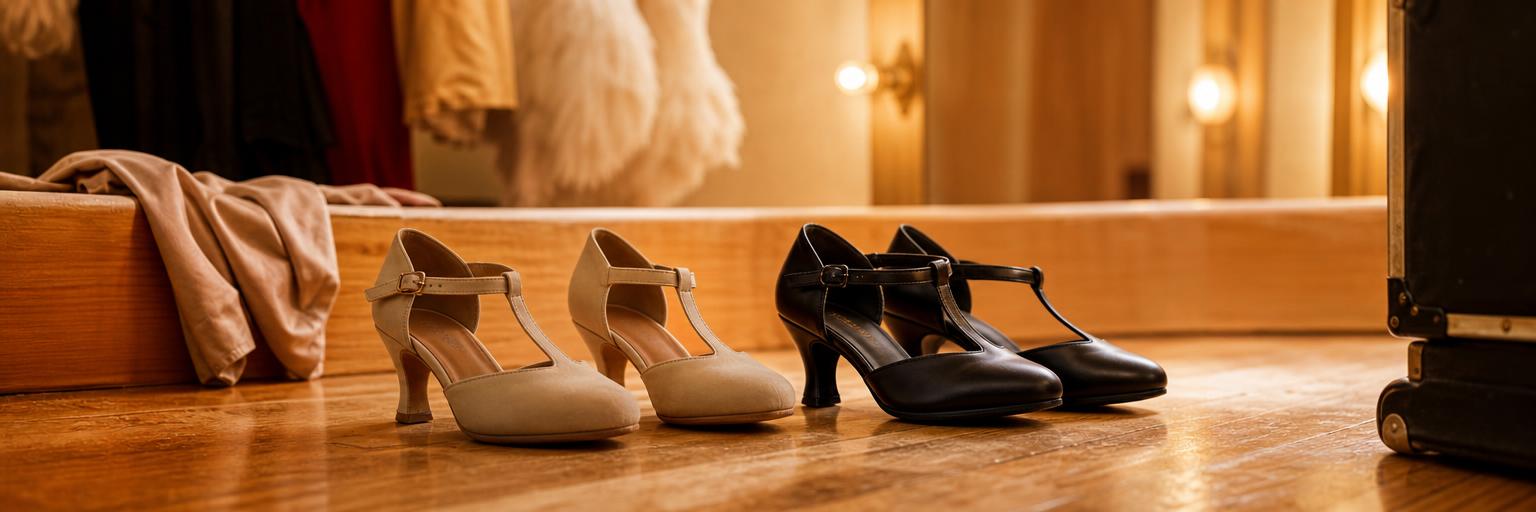
Heel slipping in character shoes on every relevé: Bunheads Gel Heel Cushion. Buy at the same time as the shoes so you can check the fit together.
Nothing else available and you're at a CVS: Dr. Scholl's Moleskin Plus. It works as a hotspot pad but doesn't stay on under tights as well as Compeed. Emergency use only.
Before you buy
Build the kit at home before the first competition. Test that Compeed stays on under your dancer's specific tights. Test that the Bunheads pad doesn't push the heel up and create a new fit problem.
Keep the kit in a separate labeled zip pouch, not mixed into the main bag. Four small items disappear fast in a competition bag. A labeled pouch means you can find what you need in under ten seconds.
This kit is for friction and slippage problems. If the pain is joint, ankle, or anything that feels like an injury, go to the venue first-aid station and follow up with a professional.
How to approach it
Don't build a 20-item first-aid kit and then wonder why half of it is missing by October. Build four items, keep them in a labeled pouch, and check the pouch is stocked at the start of every competition season. Four items means you can answer 'is the kit ready?' in under a minute. A 20-item kit means you need a checklist. And the checklist lives in the bag you can't find. The four items in this guide cover the four problems that actually come up backstage: active blisters, hotspot prevention, taping, and heel slippage. Everything else the venue first-aid station can handle.
What we would do
Build the kit in this order: Compeed first (active blister treatment, hardest to improvise with something else), Body Glide second (prevention, apply before shoes on the first competition day with new shoes), Elastikon third (taping, also useful for a dozen other things so it earns its slot), Bunheads gel heel pad last (only buy it the first time you actually have a slippage problem with a specific shoe: it's fit-specific enough that it needs to be tested with the actual shoe before you trust it on competition day).
How to work out which one
Start with the situation, not the product list. Is your dancer wearing new shoes for the first time at this competition? Buy Body Glide and apply it the morning of the event: before any blister forms. Did a blister form at load-in? Compeed is the one that actually stays on through a full competition day under tights. Does the heel slip every time the dancer goes up on releve in the character shoe? That's the Bunheads gel heel pad, and it's fit-specific enough that you should have tested it in the actual shoe at home before competition day. Once you've matched the problem to the item, the kit pays off. If you're just buying a 'kit' without knowing what problem you're solving, the products sit in the bag unused.
Mistakes to avoid
Don't reach for a fabric bandage when tights are going back on: it will crumple and slide off inside the shoe within minutes. Compeed is the alternative that stays put. Don't buy generic drugstore foam heel pads for dance shoes. They're cut for wider heel cups and often push the heel up and out, making fit worse. Don't tape a foot that doesn't need taping. A wrapped foot that didn't need it introduces new pressure points and changes how the shoe sits. And if the pain is joint, ankle, or anything that doesn't respond to friction or slippage solutions, this kit is not the answer. Get to the venue first-aid station.
Dance-specific geometry fits narrower heel cups. Generic drugstore pads are often too wide.
Buy at the same time as the shoes so you can verify fit together. A pad that makes the shoe too tight is worse than no pad.
The Four-Item Logic
Most 'dance first-aid kit' lists run to 20+ items. The problem is that a 20-item kit lives in a bag, gets disorganized after the first event, and by month three nobody knows what's still stocked and what ran out at regionals.
Four items means you can check the kit in under a minute. Every competition morning: are all four items present and not empty? Yes? Good. That question is answerable. 'Is the full kit stocked?' is not.
The items that didn't make the four: moleskin (works, but doesn't stay on under tights as well as Compeed. Use it only if you're on a tight budget and can't get Compeed), KT Tape (good tape but harder to tear by hand under backstage time pressure), generic foam heel inserts (compress inside character shoes and cause more problems than they solve).
How To Make Compeed Actually Stay On
Compeed only bonds to clean, dry skin, and backstage that is the step everyone skips. A sweaty or lotioned foot is why the pad you slapped on at load-in is balled up in the toe of the shoe by Stage 2. Wipe the spot with an alcohol pad or even a dry paper towel first, and if her feet run damp let it air a few seconds before the pad touches down.
Warm the pad before it goes on. Hold it between your hands or rub it in your palms for about fifteen seconds, because the hydrocolloid turns tacky with body heat and grabs far better warm than straight out of a cold venue bag. Then press it down with your thumb for a solid thirty to sixty seconds, edges included. That press is what makes it last through a full day of numbers instead of lifting after the first.
Round the corners and mind the tights. If you have a beat, snip the square corners off the pad with nail scissors so there is no hard edge for the tights to catch and peel. Put the pad on bare skin and pull the tights over it, never the pad over the tights.
Do not peel it off when it starts to lift at the edges, and do not swap it between every number. A Compeed pad is built to stay put for a day or more and it will take the new skin underneath with it if you rip it early. Leave it until it loosens and slides off on its own, usually in the bath that night or the next day. Picking at a half-lifted pad is how a manageable hotspot turns into a raw open sore on day two of a weekend.
The Blister You Should Not Pop
Leave an intact blister alone. That bubble of skin on top is the cleanest bandage your dancer will ever get, and backstage, with venue-floor hands and no real sink, is the worst possible place to pop one. Wipe the spot, warm a Compeed pad, press it over the whole blister, and let her dance on it. The pad takes the pressure and the roof underneath protects the raw skin while it heals.
If the blister has already torn open, do not pull the loose flap of skin off. It is still shielding the raw layer underneath, and ripping it away is what turns a sore foot into a foot that cannot take a shoe on day two of a weekend. Wipe it gently, lay the flap back down flat, and cover it with Compeed the same way. Save any decision about draining a big, painful blister for clean hands at home, never the backstage floor.
What Doesn't Work Backstage
Fabric bandages under tights slide off within a few minutes of walking, let alone dancing. If you've had the experience of watching a bandage crumple inside a shoe mid-performance, you already know this. Compeed is the alternative that actually holds.
Generic foam heel inserts from a drugstore, cut to fit from a wider template, often push the heel up and outward in a character shoe heel cup and make the fit worse than no insert at all. Bunheads is dance-specific geometry.
Skip pre-wrapping the entire foot 'just in case.' Taping a foot that doesn't need it can change how the shoe sits and introduce new pressure points. Tape the specific spot, not a general area.
The shortlist
Blister treatment, Compeed Blister Pads (~$10, medium size), Target, CVS, Amazon. This is the only blister product that actually stays on under tights. Regular fabric bandages slide off within a few minutes of movement. Compeed is a hydrocolloid pad that bonds to the skin and forms a cushioned second skin on top of the hotspot. If your dancer has a blister between load-in and Stage 1, this is the fix. Buy a medium pack and keep it sealed until you need it.
Blister prevention, Body Glide Original (~$10, 1.5oz or 2.5oz stick), Amazon, sporting goods stores. Apply to heel, ball of foot, and toe box before shoes go on. It goes on like a deodorant stick and reduces the friction that causes hotspots in the first place. Put it on clean, dry skin in a real layer, not a token swipe, and give it a few seconds to set before the tights and shoes go on. And it wears off. On a long competition day with several numbers, the heel you protected at load-in is bare again by the afternoon, so reapply before each number instead of trusting one morning pass. The prevention case is stronger than the treatment case: if Body Glide keeps the hotspot from forming, you never need the Compeed. Use both if you're dealing with new shoes for the first time at a competition.
Taping, Elastikon tape (1" roll) (~$9/roll), Amazon, physical therapy suppliers, some athletic stores. Stretchy, conforms to the foot without cutting circulation, tears by hand so you don't need scissors backstage. Used in dance and athletic training for decades, if a studio teacher or PT has tape on their shelf, this is usually it. Use it for heel cup padding, ankle taping, or as a barrier layer under a spot that's about to blister.
Heel slippage, Bunheads Gel Heel Cushion (~$10–$15), dance retailers, Capezio, DiscountDance, DancewearCorner. Dance-specific gel heel pad sized for the narrower heel cups of character shoes and jazz shoes. Generic drugstore heel pads often run wide and make the shoe fit worse. Bunheads is under Capezio and is the established dance-industry foot-care brand. It's sold where parents already buy dance gear, which is the point.
How to choose
Prevention or treatment? If the blister already exists, reach for Compeed. If you're putting shoes on before a number, reach for Body Glide. They do different jobs and both should be in the kit.
Friction or slippage? If the shoe causes rubbing anywhere on the foot, that's a Body Glide or tape situation. If the shoe fits fine but the heel slips on every relevé, that's the Bunheads gel pad.
Build the kit at home before the first competition, not during it. You want to know that Compeed stays on under your dancer's specific tights, and that the Bunheads pad doesn't push the heel so high the shoe is suddenly too tight. One test is worth more than all the product descriptions.
Keep the kit in a separate zip pouch, not mixed into the main bag. The four items are small and they disappear inside a competition bag. A pouch with a visible label means you can find the Compeed in under ten seconds when something goes wrong on deck.
Skip it if
If the pain is joint, ankle, or anything that doesn't feel like a friction-or-slippage problem, this kit does not address injuries. Stop the activity, get to the venue first-aid station, and follow up with a professional.
If your dancer has adhesive sensitivities or has reacted to bandages before, test Compeed on a small area before competition day. It's a hydrocolloid adhesive and some people react to the adhesive layer.
If the shoe is the wrong size, no amount of padding or gel inserts fixes a shoe that doesn't fit. A heel pad that fills a too-big shoe is just postponing a return.
Don't use this as a substitute for breaking in new shoes at home before a competition. Compeed and Body Glide help with shoes that are mostly broken in; they don't turn unworn shoes into broken-in ones overnight.