Quick answer
Performance makeup and hair emergency kit
When you would rather not be at the CVS at 6:15pm the night before her first regional, the studio's required-products list says 'two hair nets, three elastics, bobby pins' with no count and you cannot tell what is actually going to fail on stage.
Quick read
Build the kit from your studio's written requirement, not a generic 'stage makeup kit,' because the one shade it leaves out is the one that matters on show day. Keep two lanes packed: the required products in their exact shades, and a small backup pouch of the lightweight things that actually fail mid-show (spare lashes, an extra hair net, two elastics, and safety pins). Test any lash glue or heavy foundation at a regular class first, set hair at home rather than a backstage restroom, and restock the night you get home so the next event starts with a full kit.
Gear for this situation
What to do
- Start with your studio's written requirement, not a kit description. The requirement sheet names specific products by brand, shade, and formula. A competition makeup kit that covers everything except the one shade your studio requires is a wasted purchase. Read the sheet first.
- Build the kit in two lanes: mandatory items (specific required products in exact required shades and quantities) and backup items (a second pack of bobby pins, an extra tube of lash glue, a spare pair of tights). Pack them in separate clear pouches. Mandatory items live in a spot you don't dig through.
- Test lash glue and heavy makeup formulas at a regular class or rehearsal before the event. Some lash glues cause skin reactions under stage lights and sweat. A 3-minute patch test before competition day beats a mid-performance issue. Same with heavy coverage foundation: what holds for a 90-minute class may behave differently under hot lights for 8 hours. If a reaction does show up (redness around the lash line, eyelid swelling, a rash where the foundation sits, eye watering that does not stop), the skin-irritation playbook walks the immediate response and the swap-out kit before show day.
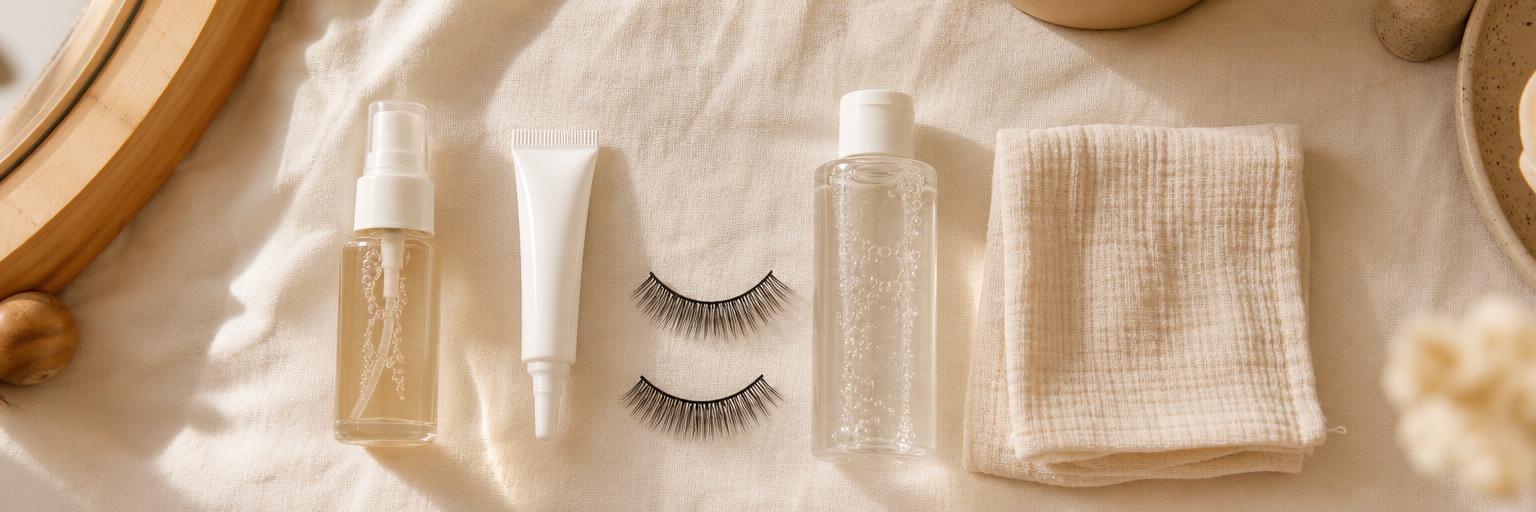
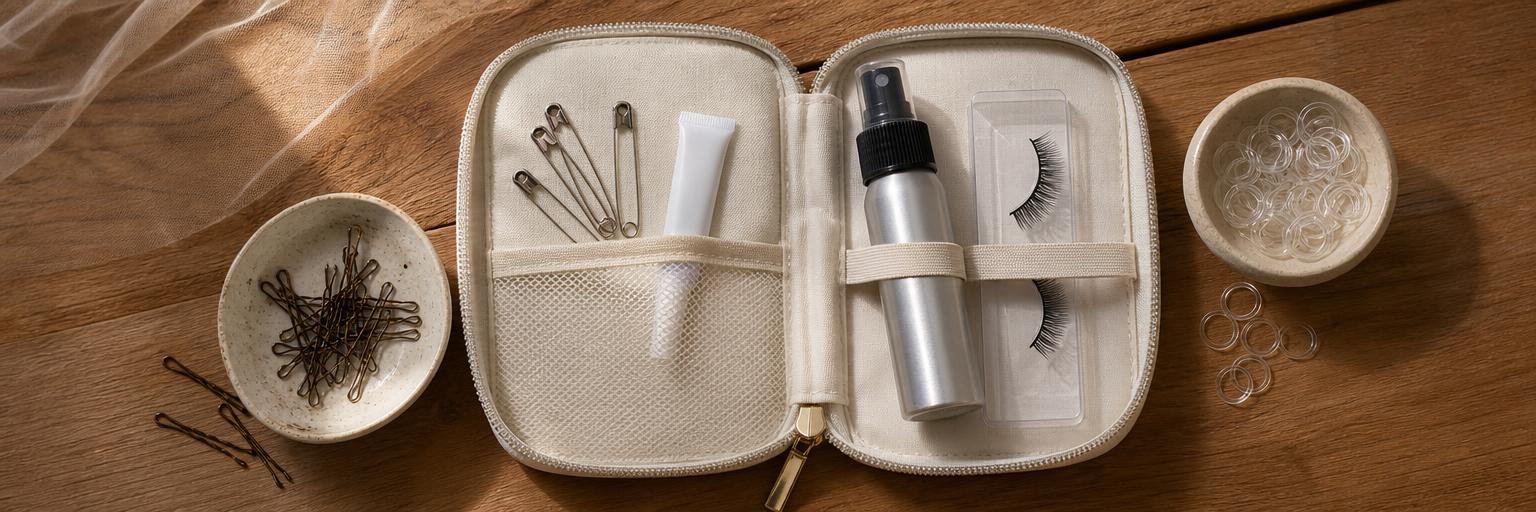
- Replacement items to pack even when they're already in the main kit: one extra pair of lashes (glue strips break), one extra hair net (they snag and run), two extra elastic hair bands (they snap at the worst moment), and safety pins in three sizes. These five items weigh almost nothing and save shows.
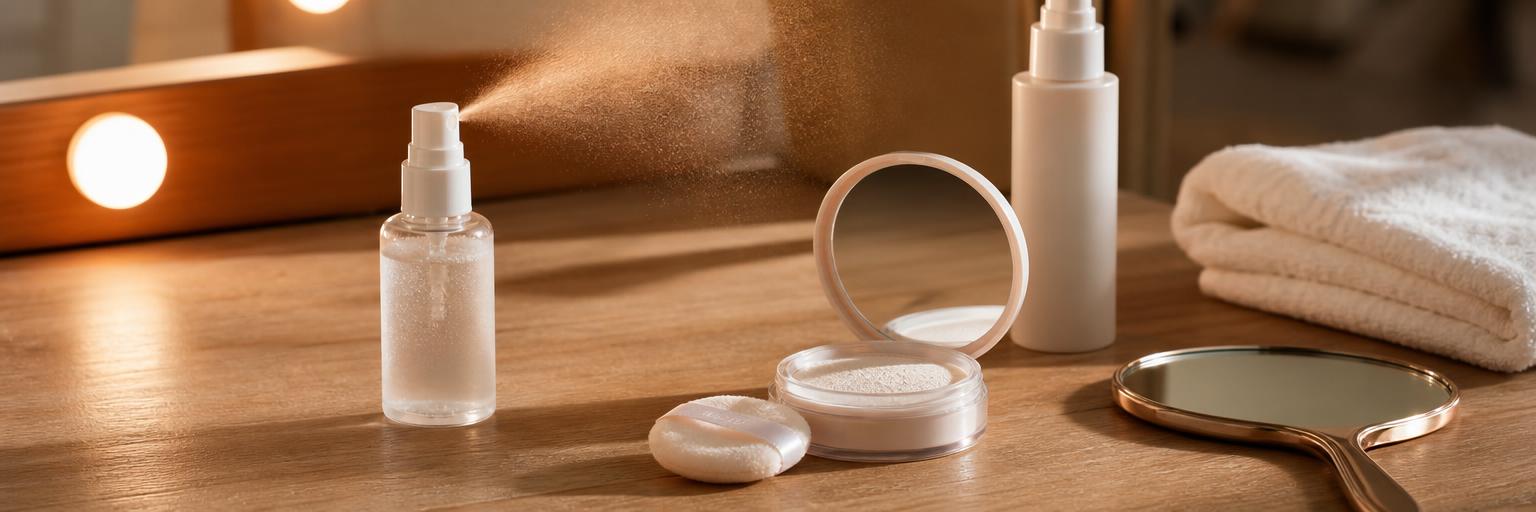
- Add a setting spray and a translucent setting powder, because matching the required shades only pays off if the makeup survives the day. The thing that takes a face off under hot lights is sweat, and a nervous kid under stage lights sweats. A light dusting of translucent powder over the finished look, then a setting spray to lock it, carries stage makeup through a full performance far better than the makeup alone. Set it at home with the rest of the look, and carry the spray for one quick re-lock before she goes on. For which sprays actually hold on a kid who sweats, see what setting spray actually holds stage makeup.
- Know the quick backstage makeup fixes so a small failure doesn't become a full redo. A lash lifting at the corner is the most common one, and the fix is not re-gluing the whole strip. Put a dot of lash glue on the end of a bobby pin, tuck it under the loose corner, and press for ten seconds. Shine breaking through under the lights gets blotted with a tissue and a light re-powder, never a fresh layer of foundation, which only cakes and shows on camera. The required lip worn off after a snack is exactly why that exact shade rides in the backup pouch, so she blots and reapplies rather than borrowing whatever is nearby. A mascara flake under the eye lifts off with a dry cotton swab once it has dried, so leave it until it sets instead of smearing it wet. Each one is a sixty-second fix with what is already in the kit, which is the whole point of packing it.
- For hair: set the style at home, not in a hotel room. Buns and elaborate styles done on a familiar mirror with your own lighting hold better and look more consistent than styles done in a cramped backstage restroom under fluorescent lights. Bring enough product to touch up, not to redo the whole look. And if the day has back-to-back numbers that need different hair, don't plan a backstage rebuild at all: build one base style and swap clip-on pieces over it, the system laid out in quick-change 101, which turns a four-minute restyle into a thirty-second swap.
- The hair emergency is almost always the bun, so know why it lets go and how to save it fast. A bun slides out for three reasons. Hair that was just washed is too silky to grip, too few pins went in, or there was no net holding it together. The first one you fix the night before by skipping the morning shampoo, because day-old or lightly gelled hair grips a bun far better than clean, slippery hair. Build the bun over a sock or donut with a strong elastic, anchor it with bobby pins crossed in an X against the scalp rather than pushed straight in, since crossed pins bite while straight ones slowly work loose, then cover the whole thing in a matching hair net and lock it with a firm-hold spray. When one does let go backstage, you re-pin rather than redo. Smooth the loose piece back with a wet comb or a swipe of gel, reset the X of pins at the base, re-net, and spray. That takes under two minutes and holds through the number. Pack a few extra nets, a dozen spare bobby pins, and a travel hairspray for exactly that, and the dance hair kit guide covers the nets, donuts, and strong pins worth buying.
- After every competition or recital, replace what was used and check what expired. Mascara should be replaced every 3 months. Foundation used in stage lighting needs a fresh check before the next event. A post-event 10-minute restock takes less time than a pre-event panic.
Common mistakes
- Don't buy a 'full stage makeup kit' based on kit description alone. Read the studio requirement first. A complete kit that includes the wrong foundation shade or a pink lip instead of a required red doesn't help you on show day. The kit has to match the requirement, not just the category.
- Don't use general beauty products as stage makeup substitutes without checking. Everyday foundation isn't built for stage lighting or hours of sweat. It creases, fades, and changes color under hot lights. Stage makeup formulas exist because they hold. If your studio specifies theatrical brands, use them.
- Don't skip the emergency backup items to save weight. The bobby pins, extra lashes, and safety pins are the difference between a five-minute fix and a costume malfunction. Backstage spaces at competitions are crowded and chaotic. Having your own supplies means you are not borrowing from another family's kit at the moment her number is being called.
- Don't reuse last year's kit without checking dates and replenishing. Mascara, liquid foundation, and lash glue all have real shelf lives. An old kit packed with expired products will perform worse than a fresh one, and you won't know until it's too late to fix it.
Keep reading