Quick answer
My child's dance shoes are wearing out too fast
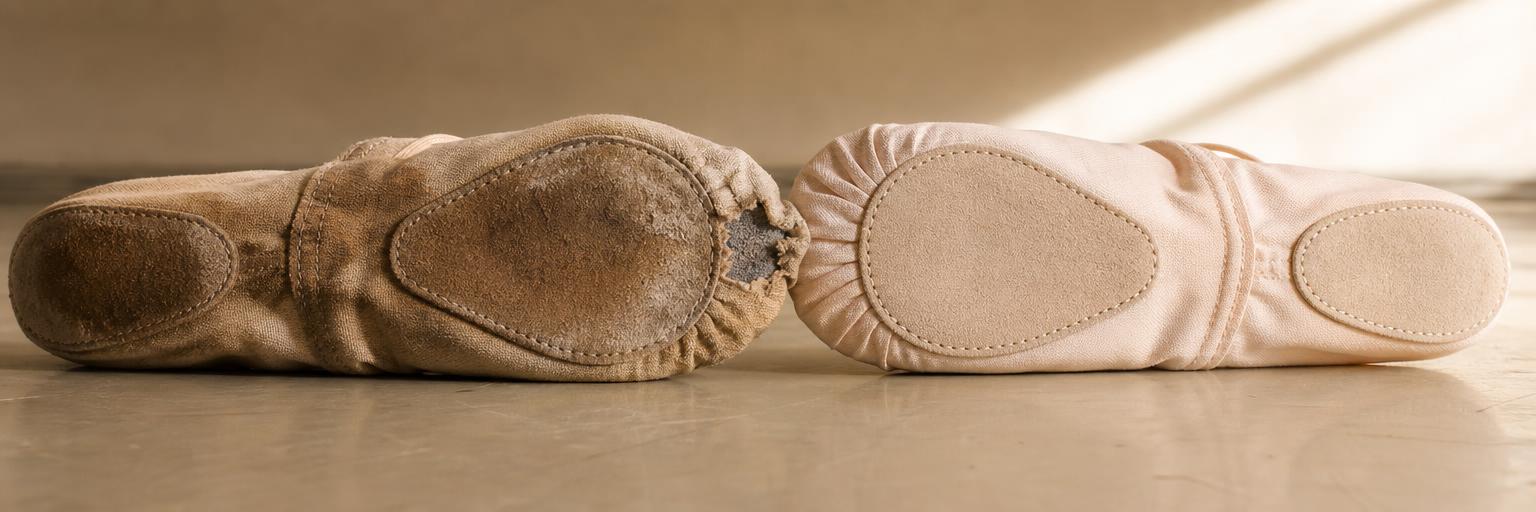
When this is the second pair of Capezio ballet slippers since September, both wore through at the big toe before March, and you cannot tell if she dances hard or you bought wrong.
Quick read
Most early-wear situations have a cause: outside use (the biggest accelerator), wrong fit (a too-big shoe flops and creates shear that destroys fabric at the toe box), or no sole maintenance (a glazed suede sole forces compensation that wears the shoe faster). Canvas slippers last 1-2 seasons; leather jazz and character shoes 2-4; tap shoes 2-3. High class frequency is arithmetic, not a defect. Find the cause first.
Gear for this situation
What to do
- First, rule out growth before you blame the shoe. For a kid in an active growth window (roughly 5 to 9 in spurts, then again 11 to 14), a dance shoe she is suddenly 'wearing out' is often a shoe she has grown out of, where the foot is now pressing the toe and stretching the upper because it is too short, not because the construction failed. Run a fit check on the worn pair (toes flat, half-thumbnail at the longest toe, heel snug on relevé) before you go diagnostic. If she has outgrown it, the wear pattern is the symptom and the fix is the next size, not the next brand. Once growth is ruled out, know the normal lifespan: canvas ballet slippers 1-2 seasons (6-18 months) of weekly class; leather jazz shoes and character shoes 2-4 seasons with care; tap shoes 2-3 seasons. Three classes per week wears shoes out roughly 3x faster, which is arithmetic and not a defect. If shoes are failing well before these benchmarks AND fit checks out, the cause is almost always identifiable in the items below. Not sure a worn pair is actually done? Our replace-or-not check reads the wear signs by shoe type and leads with the cheapest honest fix.
- Check whether the shoes have been worn outside. Outdoor wear is the biggest single accelerator of dance shoe failure. Street pavement and parking lots are abrasive in ways studio floors aren't. Grit and debris work into the sole and upper fabric and degrade both within weeks. A canvas ballet slipper worn from the car to the studio and back every week for a year takes 3-4x the abrasion of one that goes directly from bag to floor.
- Check the fit. A shoe that's too large creates shear: the foot slides forward during relevés and pushes, the excess material folds repeatedly at the toe box, and each fold cycle weakens the fabric or leather at that crease point. A canvas slipper that's half a size too large will develop toe box holes or seam failures in 2-4 months. A well-fitted shoe shows even, gradual wear; a poorly fitted one fails at one specific stress point. The dance shoe fit guide has the snug test and style-specific sizing rules.
- Check the dancer's toenails when a hole keeps opening at the toe. A nail left a little too long, or one with a sharp squared-off corner, presses into the front of the shoe on every releve and tendu and quietly saws at the toe box from the inside. On a soft canvas slipper that is often what wears a hole right at the tip in a couple of months, and a parent reads it as the shoe falling apart when the real culprit is a nail. The tell is a worn patch or hole on the inside lining lined up with one toe, usually the big toe or the second toe, instead of even wear across the whole front. Keep the nails trimmed straight across so they sit just behind the tip of the toe, file the corners smooth, and the same shoe that was blowing out every eight weeks often makes it through the season.
- Watch how she takes the shoes off, because that is where a lot of 'these just fell apart' wear actually comes from. The quickest way a kid destroys a soft dance shoe is prying it off without loosening it first, stepping on the back of one heel to push the other shoe off, or yanking a slipper off by the toe while the drawstring or strap is still snug. Both habits crush and fold the heel counter, the stiff back of the shoe, and that is the one structural part of a soft shoe that does not bounce back once the seam there pops. The same damage happens in reverse when a foot gets jammed in past a drawstring that was never loosened. The fix is a thirty-second habit worth teaching early. Loosen the drawstring or unhook the ankle strap first, then ease the heel off and on with a hand rather than the other foot, and that back seam outlasts the rest of the shoe instead of being the first thing to go.
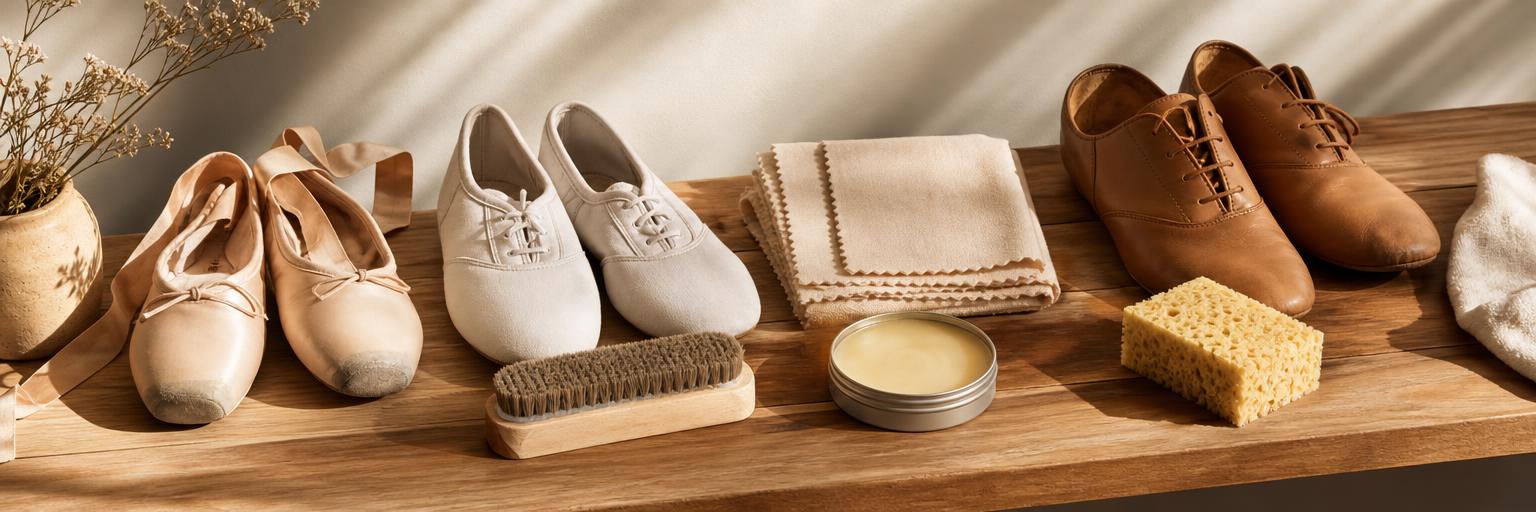
- Check sole maintenance for suede-sole shoes. A suede sole that's never brushed glazes over and loses grip. The dancer compensates by pushing harder on slides and turns to generate friction, which creates more heat and more abrasive contact on the sole fabric and stitching. Brushing the suede sole every 4-6 hours of floor time with a stiff-bristle suede brush extends sole life significantly and also makes technique easier. The shoe care guide covers the brush and full maintenance routine.
- Never dry dance shoes with heat. After sweaty classes, air-dry at room temperature in a ventilated area, not near a radiator, not in a bag, not with a hair dryer. Canvas and leather both degrade faster with heat drying. The canvas fabric breaks down at the flex point, and adhesives that bond the sole to the upper soften and fail. An air-dried shoe after class, left out of the bag overnight, will outlast an oven-dried one by a full season. Drying is one piece of a routine that differs by material; the dance shoe care by material guide lays out the full version, washing canvas, conditioning leather, brushing suede soles, and most of it costs nothing but the habit.
- For canvas shoes: accept that canvas wears faster than leather. It starts thinner and stays thinner. If replacement cost is a recurring problem, the ballet slippers guide and jazz shoes guide both note which options use heavier construction at a mid-range price. A $35 leather-sole ballet slipper lasts longer than a $18 canvas one at 2x weekly class; the per-hour cost may actually favor the more expensive shoe.
- If a sole keeps coming loose, look at how it's attached before you reorder the same pair. On many lower-cost shoes the sole is held on by adhesive alone, and once sweat and constant flexing break that glue bond the sole peels at the toe or heel. That's the six-month sole separation a lot of parents see, and it's the one place a wrong-brand hunch is often right. A sole that's stitched to the upper, or glued and stitched, holds up far longer because the thread keeps holding after the glue gives. You can check it in your hand: bend the shoe and look at the seam where the sole meets the upper for a line of stitching. On character and tap shoes especially, a stitched or nailed sole is the durability difference worth paying for, so ask the retailer or read the product description before buying the same glued-only shoe again.
Common mistakes
- Don't assume early failure is always a manufacturing defect. Most early-wear situations have a cause: outside use, wrong fit, or no maintenance. A dancer in four weekly classes with worn-out slippers at eight months is normal attrition. The same failure pattern in a dancer with once-weekly class almost certainly has a behavioral cause worth finding before buying the replacement.
- Don't extend a failing shoe past safe use. A sole detaching from the upper is a trip hazard on relevé. A canvas shoe with a hole at the toe box gives the dancer incorrect floor feedback and may affect technique by changing how the foot feels the floor. Replace when the shoe is failing: worn-out dance shoes don't hurt the foot the same way worn-out street shoes do, but they do hurt technique.
- Don't buy lower-cost replacements expecting similar durability. Entry-level canvas construction is genuinely thinner. If longevity is the priority, a leather-upper or mid-range version of the same style will typically last longer even at a higher initial price. The math changes once you're replacing cheap shoes twice a year.
- Don't store shoes in a sealed bag between classes. Sweat and moisture trapped in a closed bag creates the same degradation as heat drying. The fabric weakens and the adhesive softens slowly. A mesh bag or leaving shoes out overnight solves this.