Quick answer
My child's ballet shoes are too slippery
When she came home from Thursday's ballet class saying she nearly fell on a pirouette, the new Bloch canvas slippers are barely 3 weeks old, and you cannot tell if it is the shoes or her.
Quick read
Slippery ballet shoes almost always come from one of three causes: a brand-new sole that hasn't developed grip yet (normal, resolves in 2-3 classes), a glazed suede sole that needs brushing (a $5-10 suede brush fixes this in 30 seconds), or a studio floor that was recently waxed or cleaned. Identify the cause first, then the fix follows directly.
Gear for this situation
What to do
- Identify the cause before trying any fix. There are three: (1) new shoes with a smooth factory sole, (2) a glazed suede sole from heavy use, or (3) a recently waxed or cleaned studio floor. The fix is different for each, so diagnosing first saves time and prevents making the wrong thing worse.
- Before you run any of those three fixes, flip the shoe over and confirm the sole is actually suede, because all three assume it is. A class ballet slipper should have a suede sole, the soft napped leather that grips a marley or vinyl studio floor once it breaks in. Cheaper slippers and the satin ones sold mainly for costumes or photos sometimes come on a smooth full-leather or synthetic sole instead, and that kind slides on a studio floor no matter how much you brush or scuff it, because there is no nap to raise. If the bottom looks smooth and shiny rather than soft and fuzzy, the problem is the shoe itself and not its condition, so the fix is matching the studio's spec (most class floors want a suede sole) rather than any amount of maintenance.
- New shoes: the suede sole on a brand-new ballet slipper is smooth from manufacturing. It develops grip through friction with the studio floor over the first 2-3 classes. This is normal. If you need grip faster, lightly scuff the suede against a piece of carpet or a medium-grit nail file to rough up the nap slightly. Don't sand the whole sole. Just break the smooth finish.
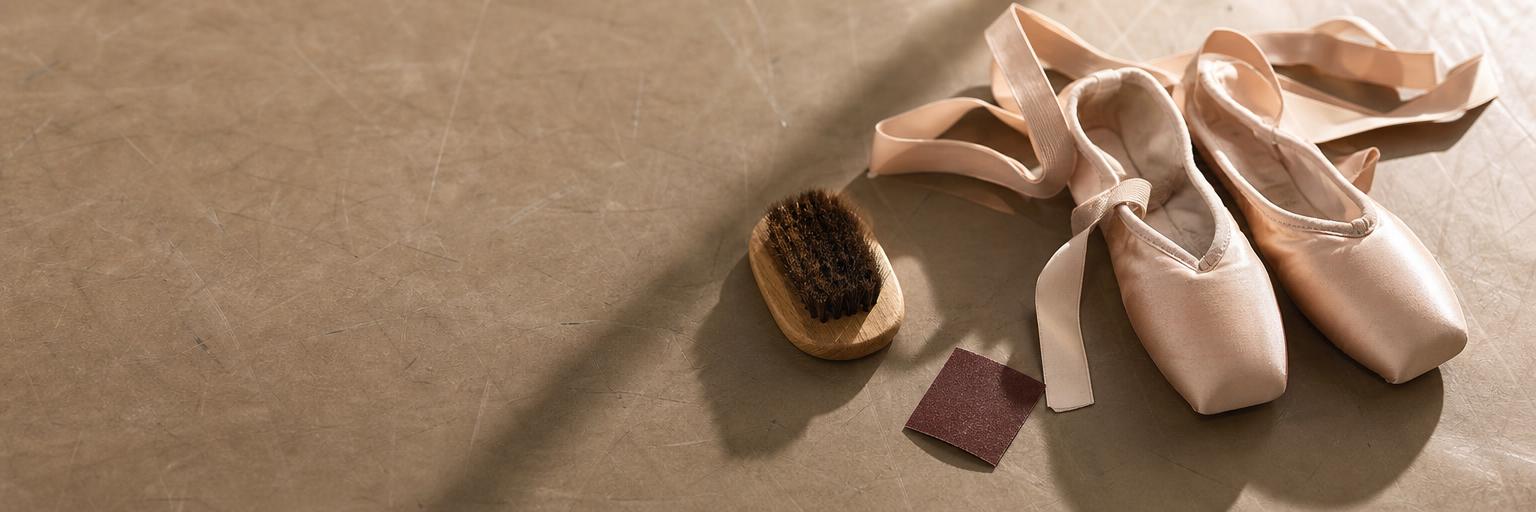
- Glazed sole: suede soles flatten with use and lose their grip. This is the most common cause of slipping in ballet shoes that aren't new. A stiff-bristle suede brush (Pillows for Pointe and Bunheads both sell one for around $5-10 at most dance retailers) brushed in one direction across the sole restores the nap in under a minute. Do it every 4 to 6 hours of floor use as routine maintenance, not only when slipping becomes noticeable. The dance floors and shoe care guide covers brushes and where to buy them.
- Waxed or cleaned studio floor: some studios buff or wax their floors on a schedule (most commonly at semester breaks, the start of a new comp season in August, or right before a major recital), which temporarily makes them more slippery for all dancers, not just your child. If multiple students are sliding, or if the slipping started suddenly after being fine for weeks (especially right after a long studio break), the floor is the likely cause. Tell the teacher in a way that's about the dancers, not the maintenance: 'My daughter and a couple of the other kids have been slipping more than usual the last week or two; is there something about the floor she should know to work around?' Keeps the conversation collaborative and the teacher usually appreciates the heads-up.
- If the slipping is happening at home, the floor is almost certainly the problem and not the shoe. A suede-soled ballet slipper is built to grip marley or studio vinyl, and on household hardwood, laminate, or tile it will slide no matter how new, how broken in, or how carefully brushed it is, because those surfaces give the nap nothing to bite. Brushing the sole will not fix a slick home floor, and neither will buying new shoes. For safe practice at home she needs the right surface under her, a square of portable marley or even a low-pile carpet to drill on, or she keeps the real technique work for the studio floor the shoe is designed for. Our home dance floor selector walks you to the right practice surface in a couple of taps, and the dance floors guide covers portable marley that rolls out over an existing floor for a few square feet of safe space.
- Fit check: a ballet slipper that's too large flops at the sole during relevé and doesn't grip reliably regardless of sole condition. The slipper should hug the foot with the drawstring snug. If the sole is bunching or the heel is lifting during floor work, the shoe may be too big. The ballet slippers guide has sizing notes including the standard 1-2 sizes smaller than street shoe guidance.
- Replacement signal: if the suede on the sole has worn through to the base material, brushing won't restore it. A bare-patch sole can no longer develop grip. That's a replacement, not a maintenance situation. At that stage it's also a safety issue: replace the shoes. And if you're standing there honestly unsure whether the sole is glazed (brushable) or worn through (done), our replace-or-not check walks the wear signs by shoe type and gives you a straight verdict in under a minute.
Common mistakes
- Don't apply rosin, grip spray, or tape to the studio floor. Rosin is used in some professional performance contexts, but applying it to a recreational studio floor changes the surface for every other dancer and teacher in the studio. It can also make the floor dangerously sticky for styles other than ballet. If the floor is consistently slippery, report it to the teacher or studio director rather than treating the floor yourself.
- Don't let your child wear the ballet shoes outside the studio, even just from the car to the door. Suede soles pick up grit, dust, and parking-lot grime that glazes them faster and leaves a slick film, so a pair that gripped fine last week can turn slippery after one walk across a sidewalk. Ballet slippers are indoor-floor shoes only. Change into them at the studio and out of them before leaving, and if a sole already looks dirty, a brush in one direction lifts the grime as it restores the nap.
- Don't buy new shoes expecting them to grip better than the current ones. New suede soles are actually smoother than properly broken-in ones. Buying replacements won't solve a glazed-sole problem. It just restarts the break-in period. Fix the underlying cause first.
- Don't use grip socks as a substitute for maintained ballet slippers. Grip socks are a barre workout accessory. They change the way the foot contacts the floor and disrupt the balance and proprioceptive feedback that classical ballet technique depends on. If the teacher hasn't asked for grip socks, don't introduce them.
- Don't ignore persistent slipping in a child who is scared to attempt turns. The fear compounds quickly: a dancer who associates turns with falling will avoid them in ways that affect technique development long after the shoe problem is fixed. Solve the equipment issue promptly.