Quick answer
How do I know what size leotard to order
When the Capezio chart says 'size 8 by age, mid-child by measurement' for your 8-year-old, the two cells point to different garments, and you have to pick one before the studio's group order closes Wednesday.
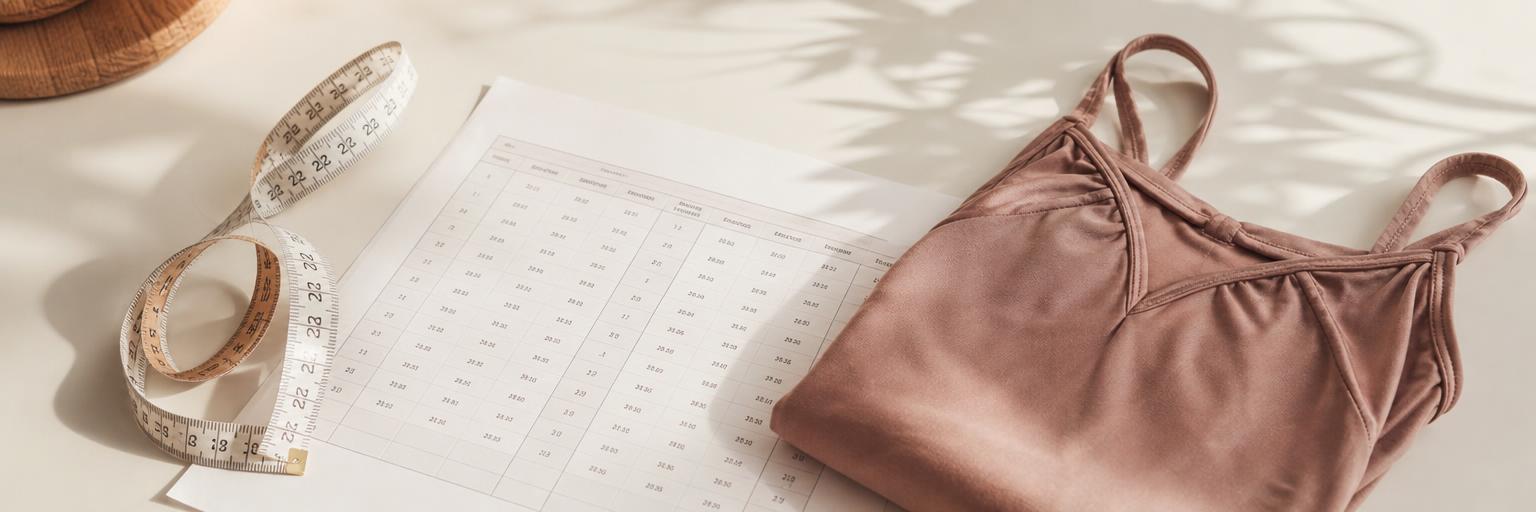
Quick read
Use measurements, not her age, and for a leotard the make-or-break one is girth: the loop from the top of one shoulder, straight down through the body, and back up to that same shoulder. Girth is what decides whether a one-piece fits her torso, so a long-torsoed dancer can match the chest, waist, and hip columns exactly and still get a leotard that rides up and digs in at the shoulders. Measure girth plus chest, waist, and hips, then read the brand's own chart for that exact product, because dance leotard sizing is not standardized: a medium at Capezio and a medium at Motionwear are not the same garment, and when girth and chest point to different sizes, trust girth. If a real measurement lands her between two sizes, size to the larger number so nothing cuts, but do not buy a size beyond that for growth room, because a leotard with extra room sags at the girth and slips off the shoulder, the opposite of the clean line the dress code wants.
Gear for this situation
What to do
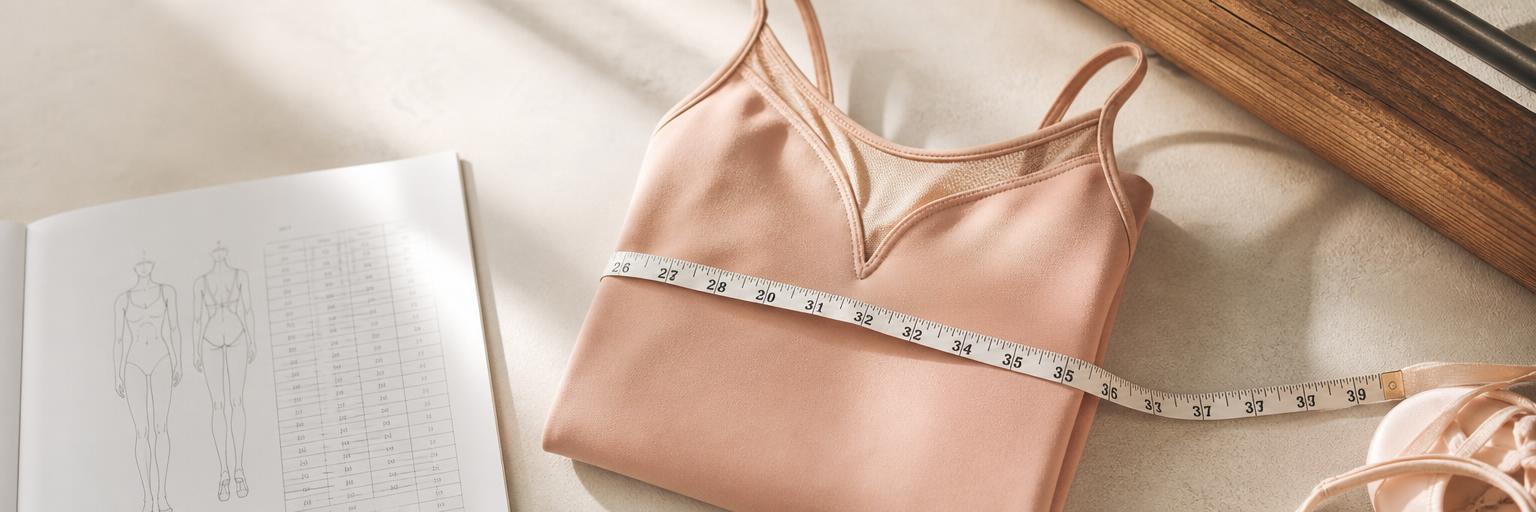
- Get a measuring tape and take three measurements before you open any brand website: chest (around the fullest point of the chest, under the arms), natural waist (the narrowest point above the hip bones, not where you wear pants), and hips (around the fullest point, usually 7-9 inches below the waist). These three numbers, plus girth (the next step), are what leotard size charts actually use. An age alone, or a general 'she's about a size 6 in kids' clothes' estimate, is not enough. Clothing sizes and leotard sizes don't line up, and guessing is the most common reason a leotard shows up the wrong size.
- Take the one measurement people forget, girth, because it is the number a leotard lives or dies on. Girth is the loop from the top of one shoulder, straight down through the body, and back up to that same shoulder. It is the dimension that sets how a leotard fits a long or short torso, and a long-torsoed dancer can match the chest, waist, and hip columns exactly and still end up in a leotard that rides up and digs in at the shoulders because the body of it is too short. Most brand charts publish a girth column right next to the others, and brands run a couple of inches apart on girth at the same labeled size, so when girth and chest point to different sizes, trust girth first. Take it over underthings or a thin tee, not jeans or a sweater, with her standing tall rather than slouched, and keep the tape snug but not tight, because a slouch or a bulky layer adds the couple of inches that bump her a full size. If your dancer is tall for her age or all torso, this is the one measurement that saves the order.
- Find the specific brand's size chart for the product you're ordering. Leotard sizing is not standardized across brands. A child's medium in Capezio is different from a child's medium in Motionwear, Body Wrappers, or Bloch. Most dance retailers publish the size chart on each product page; use the chart for that exact brand and product, not a generic dance size chart. Our dance leotard size chart gives consolidated child and adult chest/waist/hip/girth ranges, and the brand fit notes cover which brands run small and which run true.
- When measurements fall between two sizes, go up. A leotard that's one size too large moves well, doesn't restrict arms or legs, and can be worn for another season. A leotard that's one size too small pulls across the shoulders, gaps at the leg opening, and is unwearable after the first class, and likely non-returnable. If the chart shows the waist is a size 8 and the hips are a size 10, order the size 10.
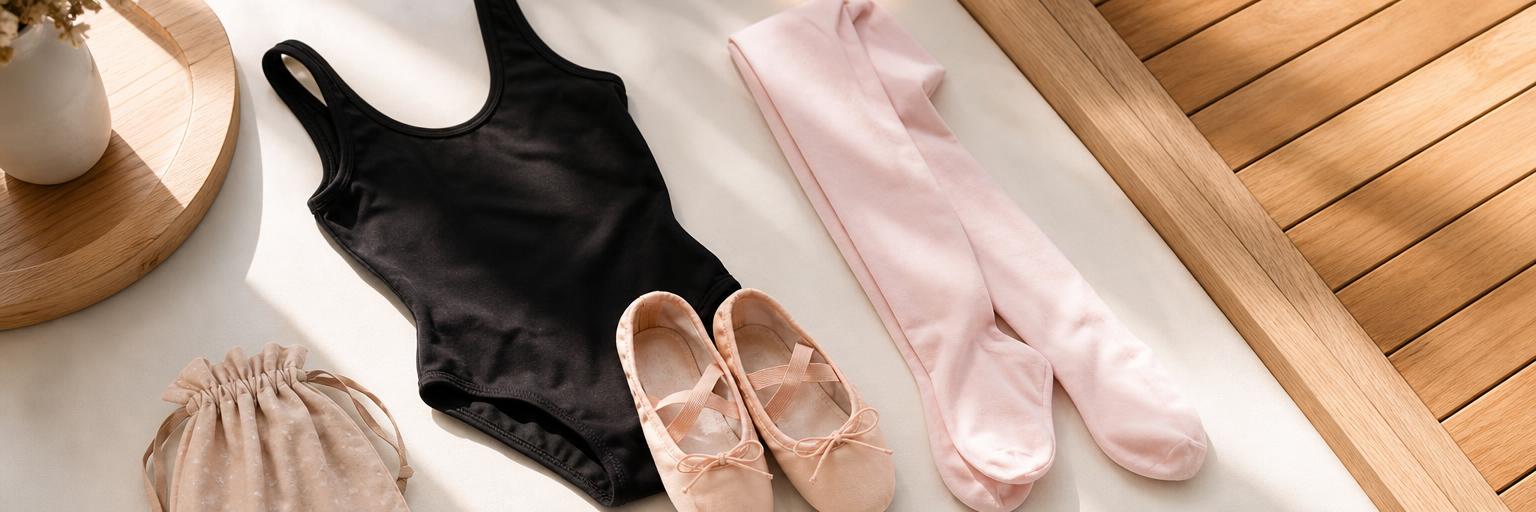
- Know what a right-sized leotard is supposed to feel like, because the most common first-timer mistake is sizing up from one that already fits. A dance leotard is built to sit like a second skin, noticeably snugger than play clothes, smooth against the body with no loose fabric pooling at the lower back and no bunching across the chest. The straps should lie flat and stay put without digging a groove into the shoulder, and the body should hold her without pulling down or riding up when she stands tall. Standing still it can feel a little tight, and that is usually correct, not a reason to go up a size, because a leotard that feels roomy and comfortable on the couch will bag, gap, and read as sloppy and out of uniform on stage. Go up only when a real measurement lands her between two sizes, not because snug feels unfamiliar. The true too-small signs are specific and different from ordinary snugness. The shoulder seams pull her into a hunch, the leg openings cut red lines into her thighs, or the crotch drags down because the girth is short, and those are the cues to exchange.
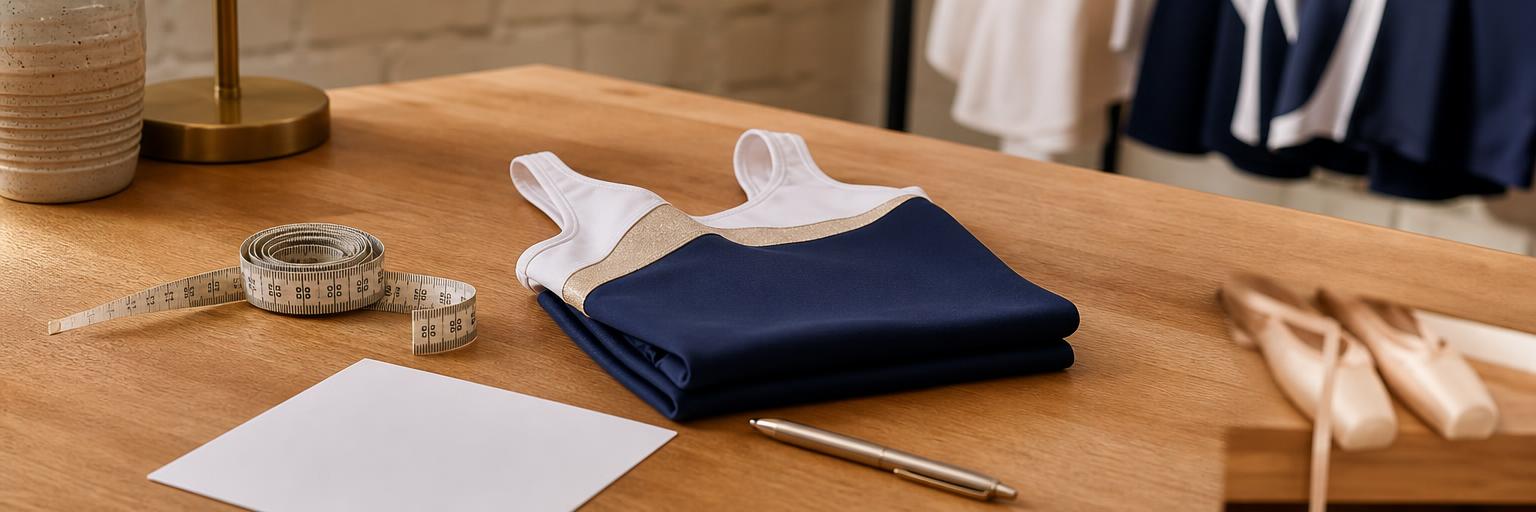
- Confirm the studio's dress code specifies more than just color. Before ordering anything, check: sleeve length required (sleeveless, short sleeve, long sleeve, cap sleeve), neckline style (scoop, square, tank strap), and whether the studio allows any brand or requires a specific studio-issue uniform. A spaghetti-strap leotard when the dress code says tank strap is the one she gets sent to change out of at the door, or that you replace before the next class. The dress code requirement is the spec. Buy to the spec.
- Check the retailer's exchange policy on the product page before adding to cart. Most dance leotards are final-sale or exchange-only once worn or washed. Some retailers (Dancewear Corner, Discount Dance) allow exchanges; direct brand sites (Bloch, Capezio) often do not take back wearables. Read the policy on that specific product's page, not just the retailer's general policy. Policies vary by item category within the same retailer. If you're unsure of the size, a retailer with an exchange policy is the right place to start.
- Try it on and move in it before you wash it or cut the tags, because that is your last chance to exchange. A leotard fits one way standing cold and another way in class, so run a quick motion check the day it arrives. Have her raise both arms overhead and reach across into a port de bras, then do a few pliés and one slow arabesque. You are watching for three failures a size chart cannot predict. If the leg openings ride up and she has to pick at them, it is cut too small in the hips or too short in the girth. If the straps or shoulders bite when her arms go up, same problem, the body is too short. If a pinch-front or camisole gaps away from the chest or back, it is usually a size too big up top. Do the check over clean dry skin or the underthings she will actually wear, keep the tags on and skip the wash until you are sure, and exchange while the package still qualifies, because most leotards turn final-sale the moment they are worn or laundered. If the motion check turns up a fit problem you cannot quite name, the leotard doesn't fit diagnostic maps each failure (rides up at the hips, pulls down at the shoulders, gaps at the chest) to the specific size dimension that is off and what to exchange for.
- For a studio uniform reorder (your child outgrew the required leotard mid-season): go to the brand site first and look for the same colorway in the next size up before checking third-party retailers. Studio-required colorways go out of stock at peak season timing. If the brand site doesn't have the size, call the studio before ordering a substitute: some studios accept a size-up in the same colorway; others require the exact SKU. The studio team uniform reorder playbook covers the exact steps.
Common mistakes
- Don't size by age. Age ranges on size charts are a rough guide printed for buyers who don't have a measuring tape handy. Dancers grow at different rates, and a size that fits by age often misses the chest or waist measurement that actually determines fit. A 2-minute measuring session removes the guesswork entirely.
- Don't assume one brand's size translates to another. If your dancer wears a size 10 in Capezio, that doesn't mean every brand's size 10 fits the same. Each brand uses its own block (the form the garment is built on), and sizing varies enough to matter. Check the chart every time you order a new brand.
- Don't confuse a shade name across brands. If the studio says 'lavender,' and you're comparing two lavender leotards from different brands, they are not the same color. Dance wear colors have names like 'lavender,' 'lilac,' 'orchid,' and 'violet' that are all purple-ish but look different on stage under lighting. If the dress code specifies a brand or shade name, match it exactly. If it only says 'lavender,' ask the studio which product they mean before ordering.
- Don't skip the exchange policy check. A leotard that doesn't fit and can't be returned or exchanged is a full-price mistake. This is common enough that experienced competition families have a rule: always order from a retailer with a clear exchange policy for the first purchase in any new brand or size.