Review

Dance Shorts And Leggings For Class

Dance shorts, leggings, and jazz pants are the most overlooked part of the class-wear purchase. The leotard gets all the attention, and the tights show up on the costume sheet. But the bottoms worn over the leotard in class are often left to the parent to figure out, with no guidance about what length, style, fabric, or color the teacher actually expects. The result is kids showing up in yoga leggings that are see-through under the studio lights, or jazz pants so loose they trip on the hem during turns. Both traps come down to the same two habits. Ask what the class actually expects before you buy, and check whether a legging is see-through before your kid wears it. The rules are the same for boys and girls, just a different cut.

Updated 2026-06-10 · Independent research, editorial standards here

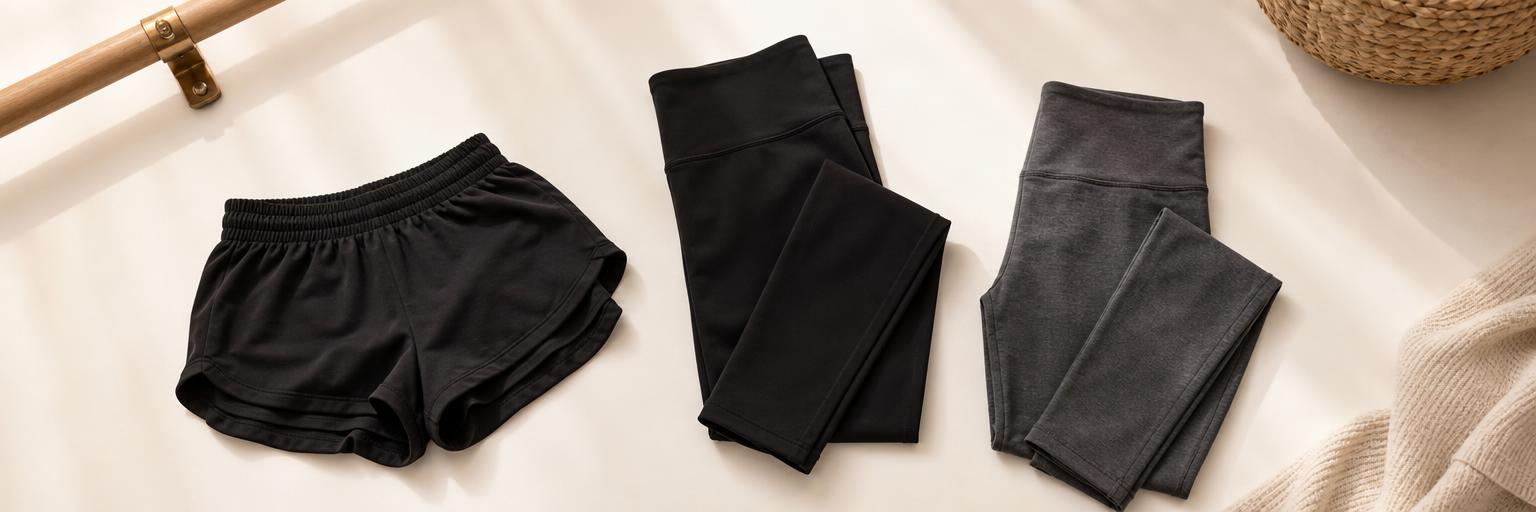
Folded dance class bottoms, a pair of athletic shorts, high-waist leggings in black, capri-length leggings in charcoal, arranged on a clean light surface.

Best Picks By Situation

  • Girl in tap or combo class: fitted class shorts (mid-thigh, biker style) in black over the leotard. ~$12-25. Most versatile starting choice across styles.
  • Girl in jazz technique or musical theatre: jazz pants in black, flared or straight leg depending on teacher preference. ~$20-35. Confirm style (flared vs. straight) before buying.
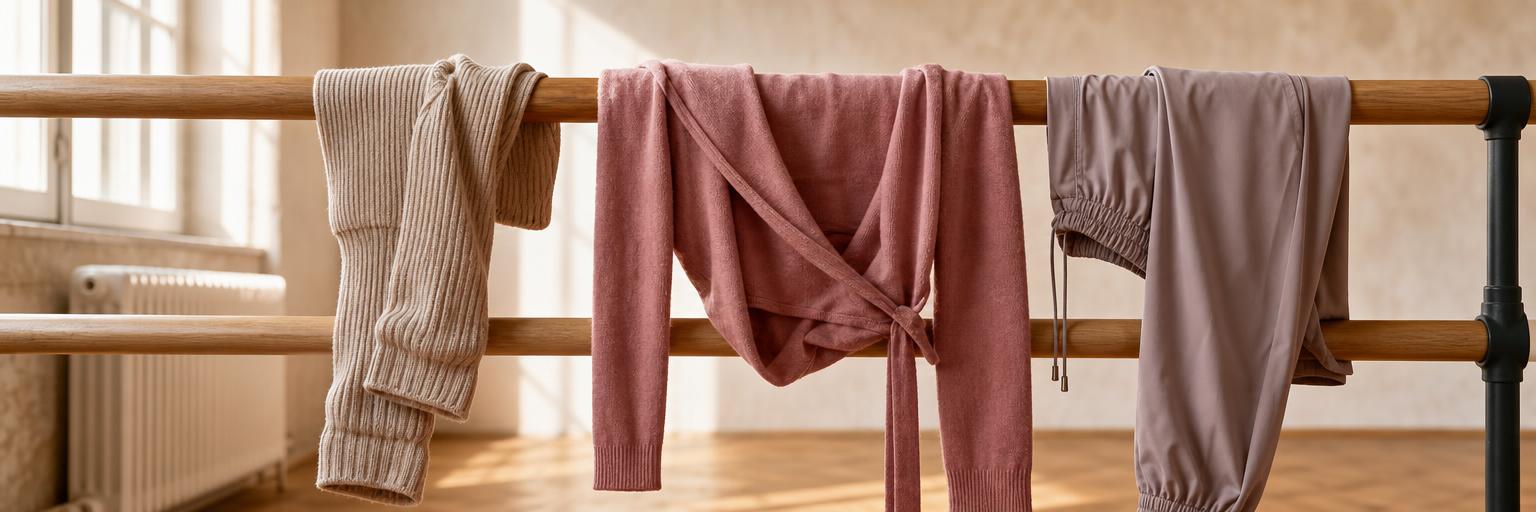
  • Girl in contemporary or lyrical: usually leotard only, or black leggings for warmup that come off before class. Check whether the studio allows leggings during class or uses them only as a layer.
  • Boy in ballet or tap class: fitted black dance shorts, knee or just above the knee. Not loose mesh gym shorts. The teacher needs to see leg and hip placement.
  • Boy in hip-hop class: looser athletic shorts or joggers. This is the most relaxed dress code in dance.
  • Adult dancer in any class: same rules as above, applied to adult sizing. For class shorts, DancewearCorner's adult dance shorts are cut for longer torsos and carry exchange policies.

Before You Buy

  • Call the studio and ask what bottoms the teacher expects, or look at the studio's dress code page if one exists.
  • Check legging opacity before wearing to class: lay flat, put your hand inside, look in normal room light. If you can see your skin, stage lights will be much worse.
  • Buy black first. Black shorts, jazz pants, or leggings are universally acceptable in almost every studio. Patterns and colors are great after you know what the teacher allows.
  • Size by measurement, not street clothing size. Dance shorts and pants from dance brands have their own size charts.

Buying Strategy

This is the only class-wear category where calling the studio first is not optional: it's the whole strategy. Leotard color can be standardized. Tights color can be read off the costume sheet. But class bottoms vary by teacher, by studio culture, and sometimes by which track (beginner vs. technique) your dancer is in. A parent who buys black jazz pants in advance may show up to a studio where the class wears fitted shorts, or to a program so focused on line that no bottoms are worn over the leotard at all. The shortest path to the right purchase is one question to the studio. After that, the buying is easy: black, fitted, from a seller with an exchange policy.

What We Would Do

Email or call the studio before buying anything. Ask: does my child's class wear shorts, jazz pants, leggings, or nothing over the leotard? If the studio has a dress code page or welcome packet, check it first. If the answer is 'anything black and fitted,' start with class shorts from DancewearCorner. They're the most versatile and affordable option. If the teacher specifies jazz pants, buy one pair in black, confirm the style (flared or straight), and use the brand's size chart, not street size. For boys: buy one pair of fitted dance shorts. For leggings in contemporary or lyrical, test opacity before wearing to class. None of this is complicated once you know what the studio expects.

Buyer Walkthrough

Before shopping, answer one question: what does the teacher expect? If the studio sent a welcome packet or has a dress-code page, check it. If not, send a one-line email or ask at the first class. The answer tells you whether you need shorts, jazz pants, leggings, or nothing. After that, the purchase is simple: buy black, use the brand's size chart (not street size), and buy from a seller that allows exchanges. For boys: black fitted dance shorts are the starting point for any class style. For leggings: test opacity before the first class: hold the fabric up to the light with your hand behind it. If you can read the shadow of your fingers, stage lighting will be worse.

Mistakes To Avoid In Plain English

Don't buy class bottoms before confirming what the studio expects. This is the most avoidable return in dancewear. Don't buy yoga leggings for dance class: they are cut for yoga poses and are often sheer when stretched into ballet or contemporary positions. Don't buy girl-cut shorts for a boy. Don't assume the class bottom worn for warmup is also what's worn for class: in many studios they are not the same. And don't size by street clothing. Dance brand sizing runs its own chart and 'medium' in yoga leggings is not 'medium' in Capezio jazz pants.

Where to start by buyer type

Best For

Tap and jazz class shorts

Start Here

DancewearCorner dance shorts: ~$12-25

Why

Mid-thigh fitted shorts are the most versatile class bottom for tap and jazz. Black is always safe.

Check First

Confirm inseam length works for your class type. Very short (2 inch) may not be appropriate for all programs. Check exchange policy for first-time fit.

Check at dancewearcorner.com
Best For

Jazz and musical theatre pants

Start Here

DancewearCorner jazz pants: ~$20-35

Why

Classic jazz pant in flared or straight leg. Confirm which style the teacher expects before buying.

Check First

Ask the teacher: flared or straight leg? Some programs are specific. Confirm exchange policy before buying.

Check at dancewearcorner.com
Best For

Contemporary and lyrical leggings

Start Here

DancewearCorner leggings: ~$18-30

Why

Dance-specific leggings engineered for opacity and full leg movement. Yoga leggings often fail the opacity check under stage lighting.

Check First

Test opacity before class. Buy black. Confirm whether leggings are worn during class or only used as a warmup layer.

Check at dancewearcorner.com
Best For

Boys' class bottoms (all styles)

Start Here

DancewearCorner dance pants: ~$15-28

Why

Fitted dance shorts or pants for boys. Teacher can see leg placement. Not loose gym shorts.

Check First

Confirm cut is fitted (not loose) and appropriate for the class style. Hip-hop allows more relaxed cuts.

Check at dancewearcorner.com

Picks at a glance

Current Shortlist

  • Class shorts for girls in tap, jazz, or combo class: DancewearCorner dance shorts collection (~$12-25). Look for fitted biker-style shorts at mid-thigh or above-knee length. Cheer shorts and cheerleader-style short-shorts are usually too short for studio class; hip-hop and contemporary classes allow more length variation.
  • Jazz pants for jazz or hip-hop class: DancewearCorner jazz pants collection (~$20-35). The classic flared-leg jazz pant is a staple for jazz and musical theatre classes. Straight-leg styles also work. Confirm with the teacher whether jazz pants are allowed or required before buying.
  • Leggings for contemporary, lyrical, or warmup: DancewearCorner leggings collection (~$18-30). Buy black. Check opacity: lay the legging flat, put your hand inside, and check whether you can see your skin through the fabric in a bright room. If you can, stage lighting will be much worse. Dance-specific leggings from brands like Capezio, Body Wrappers, and Bloch are made for opacity and movement.

How To Choose

  • Ask the teacher first, then buy. Studio dress codes vary more for bottoms than for any other class-wear item. Some programs require specific styles (black fitted shorts, or the studio's uniform jazz pants). Others allow anything. Buying a specific style before you know what the studio expects is the most avoidable mistake in this category.
  • Match the bottom to the style. Ballet: no bottoms worn over the leotard in most programs. Tap: shorts or fitted capris are common; confirm with studio. Jazz: jazz pants or shorts depending on program level and teacher preference. Hip-hop: looser shorts or joggers are usually accepted. Contemporary and lyrical: often performed in a leotard only or with leggings for warmup that come off before class begins. Combo class: ask which part of class the bottoms are for.
  • Know the layering order before the first class, because the short is the last layer on. Leotard first, then tights, then the short or legging over both. The one studio-specific call is whether the tights go under or over the leotard, and that one is worth a direct question to the teacher: classical ballet programs usually want tights under the leotard so a dancer can slip them down for the bathroom without undressing, while a lot of competition and rec studios put tights over the leotard for faster costume changes. The short or legging, though, always goes on top. That order earns its place two ways. It hides the seam where a footed tight meets the leg of the leotard, which is the spot that bunches and catches the light, and with convertible tights it lets your dancer reach up under the short, roll the foot off, and go barefoot for a lyrical number without stripping down to redo the whole outfit.
  • Boys wear shorts or pants, not skirts. Boys in dance class wear fitted athletic shorts or dance pants (similar cut to jazz pants but male-cut). For ballet, dance shorts or convertible athletic pants are standard. For tap and jazz, shorts or straight-leg jazz pants. For hip-hop, looser athletic shorts or joggers are often fine. Do not buy girl-cut shorts for boys.
  • Check legging opacity before class, and check it stretched, not just flat. The flat test catches the worst offenders: lay the legging on a table, slide a hand inside so your palm faces up, and look under normal room light. But fabric that passes flat can still go sheer when it stretches across the seat and thigh, which is exactly where it shows. The decisive test is on the body: have the dancer put them on and bend all the way over, then check the seat in a mirror or have someone look. If skin tone shows through in bright room light, stage lighting will be worse. Black is the safest color, and yoga leggings from non-dance brands are the most common to pass flat and fail stretched.
  • Inseam length matters by class type. Very short shorts (2-inch inseam) are fine for some jazz classes but look wrong in a ballet setting and are uncomfortable for contemporary floor work. Mid-thigh biker shorts (3-4 inch inseam) are the most versatile for tap, jazz, and combo. Jazz pants and full-length leggings work for most styles except ballet.
  • Mind the rise, not just the inseam, especially for floor work. A class bottom has to stay put while your dancer rolls across the floor in lyrical and contemporary, drops to her knees in hip-hop, or arches back in a layout. A low-rise short or legging that looks fine standing at the barre slides down and gaps at the lower back the moment she goes to the floor, baring a stripe of skin between the bottom and the leotard exactly when she is bent away from the mirror and cannot feel it. A high-rise bottom that sits at or above the natural waist and overlaps the leotard keeps the two layers together through the whole range of motion. This is a big reason a dance-specific legging beats a fashion pair that fits the same in the dressing room. Dancewear is cut with a higher, wider waistband for exactly this. If you are stuck with a lower-rise pair, choose a longer-torso leotard so the overlap survives the floor.
  • Size by measurement, not street size. Dance bottoms from brands like Capezio and Body Wrappers use their own size charts. Measure waist and hip, compare to the brand chart, and size up when between. Do not use street clothing size as the starting point.

Avoid If

  • Don't buy yoga leggings from a non-dance brand and assume they work for dance class. The fabric stretch and opacity are engineered for yoga and gym movement, not the extended leg positions and floor work of dance. Many are sheer under stage lighting even when they look fine in a changing room.
  • Don't buy before confirming what the studio allows or requires. A parent who buys black jazz pants in advance may find out the class wears white shorts. This is the most common avoidable return in this category.
  • Don't buy girl-cut shorts or skirts for a boy in dance class. Boys' class bottoms are athletic shorts or dance pants. Girl-cut shorts and skirts look wrong and send the wrong signal in class.
  • Don't buy flared jazz pants for a class that requires a clean line for technique. Beginner and combination classes often allow jazz pants; advanced jazz and musical-theatre technique classes sometimes want a slimmer silhouette so the teacher can see leg placement. Confirm before buying.
  • Don't buy recital tights as a substitute for class leggings. Recital tights (usually tan/suntan) are made for performance color, not class use. Class leggings are black, opaque, and built to be worn multiple times per week.

Ballet, Jazz, Tap, Hip-Hop: What Each Expects

  • Ballet: most programs wear only a leotard and tights in class. Adding shorts or leggings on top of the leotard is usually not done in classical programs. Some adult and teen recreational programs allow warm-up layers at the barre, but those come off. When in doubt, no bottom layer is the safe choice for ballet.
  • Tap: class shorts or fitted capris over the leotard are common and often expected. Tap class involves a lot of leg movement and teachers want to see the leg, so jazz pants that cover the ankle are less common for tap than for jazz. Confirm with the studio.
  • Jazz and musical theatre: jazz pants and class shorts are both widely used. The specific style depends on the program level and teacher preference. Classic jazz pants (fitted waist, flared leg) are the traditional choice for jazz. Many programs now also accept fitted ankle-length pants or biker shorts.
  • Hip-hop: the most relaxed dress code in dance. Shorts, joggers, and athletic pants are all common. Some programs specify the studio's branded gear. The key is non-restrictive movement. Very fitted ballet-style shorts look wrong in hip-hop; that's about the only mismatch to avoid.
  • Contemporary and lyrical: often performed in a leotard only. Leggings are common for warmup and come off before the class or rehearsal starts in many programs. Check whether the leggings are worn during class or only used as a layer before class begins.

Boys' Class Bottoms: What The Shopping Looks Like

  • Boys in dance class wear fitted athletic shorts or dance pants. The equivalent of 'class shorts' for boys is a fitted knee-length athletic short or a slightly shorter fitted dance short. These are not the ultra-short booty shorts from the girls' section. They are closer in cut to athletic or gym shorts.
  • For ballet and tap: fitted dance shorts in black or dark colors are typical. The teacher can see the leg and hip placement, which is the point. Loose mesh gym shorts do not serve the same function.
  • For jazz and contemporary: fitted shorts or straight-leg jazz pants in a men's or boys' cut work well. The same flared-leg jazz pants girls wear are available in boys' cuts from brands like Capezio. Check DancewearCorner's dance pants collection and filter for boys' or unisex sizing.
  • For hip-hop: athletic shorts or joggers work well. This is the one style where street-adjacent clothing is genuinely appropriate. Non-marking soles on the shoes and non-restrictive pants are the main requirements.
  • For a first-year boy in combo class: one pair of fitted black dance shorts is the safe starting choice across all styles. Buy from a seller with an exchange policy; measure first; size per the brand chart.

Keeping Black Bottoms Opaque Past The First Season

The opacity test you run at the store is not a one-time pass. Dance bottoms are mostly nylon or poly with a little spandex, and that spandex is what holds the knit tight enough to stay opaque. Wash them like regular laundry and the spandex breaks down, the fabric thins across the seat, and the black pair that passed in September shows skin under the lights by spring. The care is simple, and it is the difference between buying once and buying twice.

  • Wash them inside out in cold water on a gentle cycle. Heat is what breaks down the spandex that holds the knit tight, and once that goes the fabric thins where it stretches most and the opacity you checked at the store is gone. Cold and gentle is not fussy, it is what keeps a black pair both black and solid.
  • Skip the fabric softener. It leaves a coating on synthetic fibers that traps body oils, dulls the color, and wears down the stretch faster. Softener is built for cotton, and it is the wrong tool for a nylon-spandex dance bottom.
  • Air dry, do not put them in the dryer. Dryer heat is the single fastest way to fade black to a washed-out grey and kill the stretch. Lay them flat or hang them, and because the fabric is thin they dry quickly anyway.
  • Do not leave a sweaty pair balled up in the dance bag. Wadded wet overnight, they hold odor that never fully washes out and the fabric breaks down at the seams. Pull them out to dry the minute class is over.
  • Own at least two pairs once your dancer is in class more than once a week. A pair needs a full day to dry and recover its stretch, and re-wearing a damp pair is what wears bottoms out fastest. Two pairs in rotation outlast three worn back to back.
  • Retire by the light test, not by holes. These rarely tear, they thin. Pilling on the inner thigh and a waistband that no longer snaps back are the tells. Re-run the bend-over opacity check at the start of each season, and demote any pair that now shows skin to warmup-only or the bin.

Keep reading

More reviews worth your time