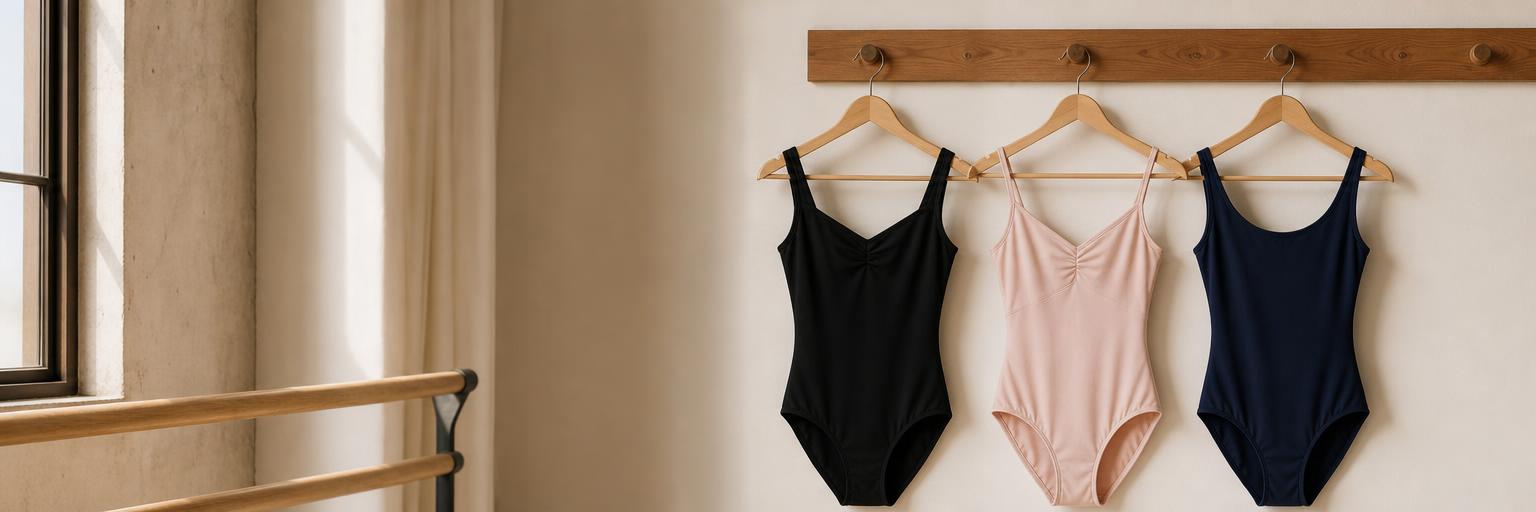
Class leotards are a fit problem disguised as a shopping problem. Street size doesn't predict leotard fit. Girth, torso length, coverage, and lining all change the answer. And then there's your studio's dress code, which probably specifies color, sleeve, neckline, and sometimes an exact SKU. Buy from a seller that lets you return on the first pair. Once you know your size in your studio's required style, the rest is just reordering.
$21.60 to $27.00 depending on color and size, verified 2026-08-02
Why it wins
Adjustable straps are the single most useful feature on a growing dancer's leotard, and this is the rare dancewear purchase you can actually send back.
Where it falls short
Basic. If the studio uniform calls for a specific cut or a specific shade of pink, this range may not have it.
Check before buying
All 40 color and size combinations were in stock at check time. 30-day returns on eligible items direct, but closeout tagging makes some items final sale, so check the specific one before buying.
Made to order, so pricing varies by style and fabric. No single price applies.
Why it wins
A dancer who likes what she is wearing shows up differently to class, and that is not a small thing over a long season.
Where it falls short
Custom orders are usually final, lead times run weeks, and none of it is cheap. Wrong choice for a first season or a fast-growing dancer.
Check before buying
Custom and made-to-order items are typically non-returnable. Confirm the return rules on the specific item, not the site's general policy, before ordering.
Studio has a strict uniform: buy exactly what's specified: color, sleeve, neckline, brand. Don't substitute because something else is on sale. The compliant leotard is the cheapest one in the long run.
Beginner or first-time dancer: stick with Capezio classwear basics or a similar returnable retailer. Don't start with boutique or custom. You don't know what fits yet.
Long-torso, adult, or hard-to-fit dancer: measurement-first. Use Motionwear's sizing chart (it publishes back length, which most don't) or any other brand that publishes girth. Order from a seller that takes returns.
Studio team or group order: pick a brand that maintains size consistency and stocks reliably for reorders. Boutique brands sometimes can't backfill when a kid moves up a size mid-season.
Before you buy
Measure girth (shoulder to crotch over the body), bust, waist, hips, and back length. Match to the brand's chart. Street size is irrelevant.
Read the studio's exact dress-code wording: color, sleeve length, neckline type, logo placement. Photograph an example pair if the studio has one.
Skip custom or final-sale on a brand you've never worn. If it doesn't fit and you can't send it back, you have just paid full price to find out the brand runs small.
Don't substitute a 'similar-looking' leotard when the studio specifies a uniform. The kid in the wrong leotard is the kid who gets called out at dress rehearsal.
How to approach it
Two leotards from the same brand in the same size can still fit differently. One sits fine across the chest, the next one rides up at the leg or pulls at the shoulder, and the product photos look the same either way. So work in this order: studio dress code first (color, sleeve, neckline, logo, sometimes exact SKU), measurements second (girth and back length, not just bust/waist/hips), seller's return policy third. Style and brand come last. The cheapest leotard that breaks your studio's uniform is more expensive than the more expensive one that doesn't.
What we would do
For a strict-uniform studio, we'd buy exactly what's specified, even if it's not the brand we'd otherwise choose. For a beginner or first-time dancer, we'd start with Capezio classwear basics from a returnable seller; learning the brand's sizing is part of the first purchase. For long-torso, adult, or hard-to-fit bodies, we'd use Motionwear's long-torso leotard or another brand that publishes complete sizing data (girth AND back length, not just bust/waist/hips). For a studio team order, we'd prioritize reorderability: a boutique brand that runs out of size 8 in February when your kid grows is a real problem.
How to work out which one
Read the studio dress code. Write down: color, sleeve type, neckline shape, fabric, logo placement, and any specific brand or SKU. Then get a measuring tape and check girth, bust, waist, hips, and back length. Once you have both lists: the studio's requirement AND your dancer's measurements: match them to a brand whose sizing chart is complete enough to compare. Buy from a seller that takes returns on the first pair. Once you know your dancer's size in that brand and style, reordering is easy.
Mistakes to avoid
Don't use street size as the only sizing input. Dancewear is its own sizing system. Don't buy boutique or custom leotards before you know how that specific brand fits your dancer. Don't substitute a 'similar-looking' leotard when the studio specifies a uniform: the kid in the wrong shade gets called out at dress rehearsal. A class leotard succeeds when your dancer can move freely AND the teacher doesn't pull you aside afterward to talk about the dress code.
Where to start
Best For
Start Here
Why
Check First
Studio has a strict uniform
The exact color, sleeve, neckline, and brand the dress code specifies
Compliance beats style. The leotard that breaks the uniform is the wrong leotard, even if it's cuter.
Written dress code wording. Whether substitutions are allowed in writing.
Street size lies. Brands that publish complete sizing charts give you a real shot at first-pair fit.
Girth and back length measurements. Whether the brand's sizing chart matches your dancer's actual body.
Best Leotards And Class Uniforms · Size charts
dancerdeals.com/reviews/leotards-and-class-uniforms · cross-referenced from Capezio, So Danca, Bloch/Mirella, and Body Wrappers
How To Measure For A Leotard
Leotard sizing runs on body measurements, not your dancer's clothing size, and the four numbers below are what every brand chart actually uses. Take them in a thin layer or just underwear with a soft tape, write them down, then match them to the [consolidated size chart](#dance-leotard-size-chart-child) and the [brand fit notes](#how-leotard-brands-differ-in-fit) further down this guide. When two measurements land in different sizes, order to the larger one. Girth is the number to trust first.
Measurement
How to take it
Why it decides fit
Girth (the one that matters most)
Loop the tape from the high point of one shoulder, straight down the front, through the crotch, and back up to the same shoulder. Keep it snug, not tight.
Girth decides whether a one-piece rides comfortably or pulls down and cuts in. It is the make-or-break leotard measurement, and the one most charts bury or leave off.
Chest or bust
Around the fullest part of the chest, under the arms, with the tape level across the back.
Sets the bodice and front coverage. Too small gaps at the armhole and pulls across the chest.
Waist
Around the natural waist, the narrowest point above the hip bones, not where pants sit.
Decides where the leotard nips in. A mismatch here bunches or digs at the middle.
Hip
Around the fullest part of the seat, usually 7 to 9 inches below the waist.
Sets the leg opening and seat. Too small cuts in at the leg line and shortens the look of the leg.
Dance Leotard Size Chart (Child)
These are typical child dance leotard measurements in inches, cross-referenced across the brands most studios use (Capezio, Bloch, Mirella, Body Wrappers, So Danca, Motionwear, and Eurotard). Match your dancer's chest and girth first, then check waist and hip. Age is only a starting hint, not a fit guarantee. Girth runs roughly 2 to 4 inches different between brands at the same labeled size, so for the exact leotard you are buying, confirm against that brand's own chart. The brand-fit table further down shows who runs long and who runs small.
Size (typical age)
Chest (in)
Waist (in)
Hip (in)
Girth (in)
Toddler (2 to 4)
20 to 22
18 to 20
21 to 23
33 to 38
Small (4 to 6)
21 to 23
19 to 21
23 to 25
37 to 42
Intermediate (6 to 7)
23 to 25
20 to 23
25 to 27
40 to 45
Medium (8 to 10)
25 to 28
22 to 25
27 to 29
44 to 49
Large (10 to 12)
28 to 31
23 to 26
29 to 32
48 to 52
X-Large (12 to 14)
30 to 33
25 to 29
31 to 34
51 to 55
Pre-teen (14 to 16)
32 to 35
28 to 32
33 to 36
53 to 56
Dance Leotard Size Chart (Adult)
Typical adult and women's dance leotard measurements in inches, cross-referenced across the same brands. As with the child chart, match bust and girth first. Most brands run XS through XL on one block; Body Wrappers and Eurotard carry the widest plus range (up to 6X). Tall and long-torso adults should read the brand-fit table below before ordering, because torso length, not waist or hip, is the usual reason an adult leotard feels wrong.
Size (US dress)
Bust (in)
Waist (in)
Hip (in)
Girth (in)
X-Small (0 to 2)
28 to 32
20 to 24
30 to 34
53 to 57
Small (4 to 6)
31 to 34
23 to 26
33 to 37
55 to 59
Medium (6 to 8)
34 to 37
25 to 28
35 to 39
57 to 62
Large (10 to 12)
36 to 40
28 to 32
38 to 41
61 to 64
X-Large (12 to 14)
39 to 43
30 to 34
41 to 44
62 to 66
Plus, 1X to 2X (14 to 18)
44 to 48
35 to 39
45 to 50
64 to 68
How Leotard Brands Differ In Fit
Two leotards both labeled child medium are not the same garment. The biggest differences are in girth and torso length, which is why a dancer can be a clean medium in one brand and need a large in another. Here is how the common brands run.
Generous girth and longer torso; publishes full measurement charts.
Growing kids and long-torso dancers.
Stay at your measured size.
Eurotard
Wide size range including plus sizes; fit differs by fabric line.
Adults who need 2X and up.
Confirm the specific style's fabric (cotton basic versus nylon and spandex) and read that product's own chart.
Leotard sizing is not standardized across brands. These are typical cross-referenced ranges. Always confirm against the exact brand and style chart before ordering, and when two measurements fall in different sizes, order the larger one.
Buying A Leotard In Plus Sizes (2X And Up)
A plus dancer has two problems the guidance above does not solve: most brands stop at XL, and the few that go higher often just scale up the same pattern instead of cutting for a fuller body, so the leotard rides up at the girth, the straps cut in, and the line breaks right where a teacher is looking. The fix is buying from a brand that actually cuts for the body, ordering by girth, and going to the retailers that stock the range.
So Danca's This Is Me curvy collection is the standout, because it is cut for a rounder shape rather than just sized up, in 2XL through 4XL, so it sits without the ride-up a scaled-up standard leotard gives. Body Wrappers and Eurotard reach the furthest, up to 6X, and are the fallback for a size or a style This Is Me does not carry, though they run more sized-up than re-cut.
Order by girth, not by your dress size, because on a one-piece the girth, the loop from the shoulder down through the body and back, is what decides whether it rides up or sits. Measure it with a soft tape over a thin layer, match it to the brand's own chart, and when girth and bust land in different sizes, take the larger one. A leotard that fits the bust but is short in the girth is the classic plus-size ride-up.
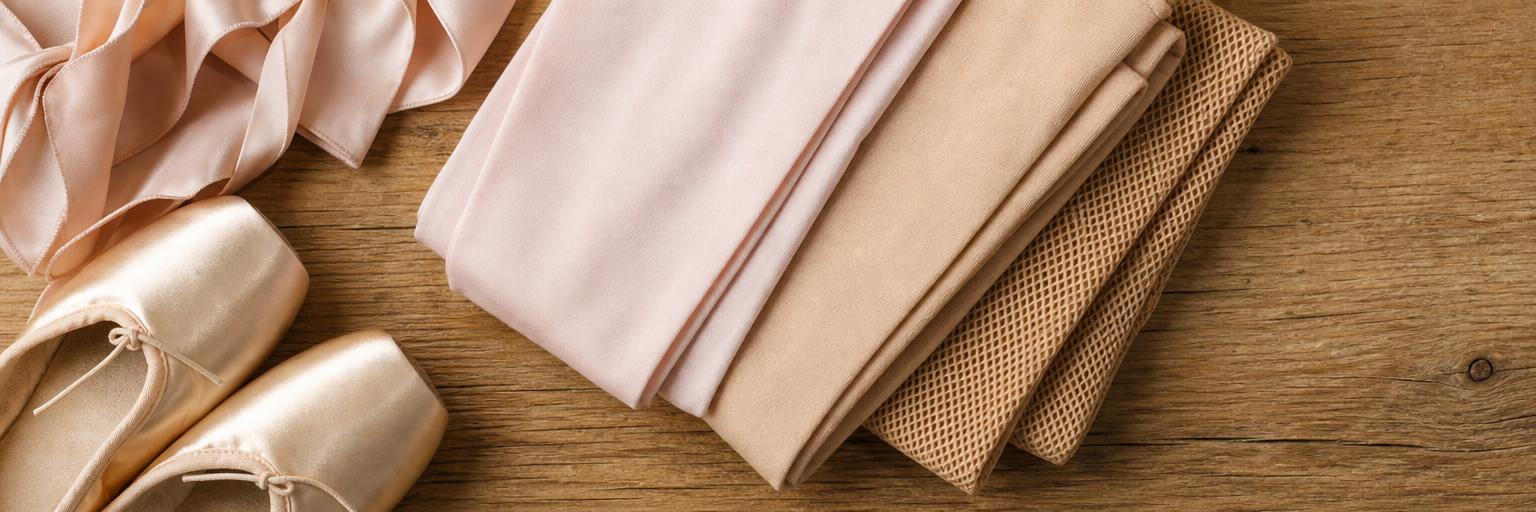
Pair it with a stretch tight built for the range. Body Wrappers totalSTRETCH plus tights go to 4X, stretch to twice the size and snap back, and have an invisible run guard, so they move with the body instead of rolling down at the waist the way a maxed-out standard tight does. The dance tights guide covers convertible versus footed for the rest of the kit.
Shop the retailers that actually stock the sizes, because a brand listing a 4X does not mean your size is in stock by competition season. You Go Girl Dancewear is the plus-focused specialist, and Dance Gear Etc. and Dancewear Solutions carry real plus collections, so that is where the range and the restocks live. If nothing off the rack fits the line you want, a made-to-measure leotard is the route, priced higher but cut to you. Order early either way, because 3X and up sells out first.
When You Want Something Other Than A Studio Uniform
Everything above is about class leotards, where the job is fitting a dress code and surviving a season of washing. There is a second tier that the big brands do not really serve: small design houses and one-person ateliers making leotards as garments, in cuts, mesh panels, and colours a Capezio catalogue never carries. These are for the dancer choosing for herself rather than filling a uniform list, usually an adult or a teen buying with her own money, and the honest thing to say is that they cost more, they mostly ship from overseas, and the return maths matters more than the price.
Just A Corpse is the easiest of these to buy from in the US. Couture-leaning ballet and contemporary pieces, and the useful part is the logistics: as of September 2025 US orders ship duty-paid, so the total at checkout is the total, with nothing owed to the courier at the door. Dispatch is from Slovenia, 7 to 12 business days by post or 2 to 4 by DHL Express. Returns run 14 days from the day after delivery and you pay the return postage.
Danse De Paris sells its own designed ballet leotards, skirts and tutus, and prices show in USD, which makes it look like a domestic order. It is not. The returns address is a PO box in Sydney, so a return is an international parcel you pay for. The window is 30 days, the leotard has to come back unworn and in its original packaging, and sale items cannot be refunded at all. Buy from here when you are confident of the size, not to try two and send one back.
Atelier della Danza MP is the smallest of the three, everything handmade by the owner in Milan, and it is the one to go in with your eyes open. Prices are in euros only, so you carry the conversion and whatever your carrier charges on import, and no returns policy is published on the site. It also closes for several weeks each summer. Lovely work, but treat it as a considered purchase for yourself rather than a way to hit a studio deadline.
Size these the same way you size anything else on this page, off the brand's own chart and off girth, and give yourself more margin than usual. A 14-day window that starts ticking while a parcel crosses an ocean is not much room to swap a size, and none of the three is somewhere you want to be guessing.
Ballet Leotard Size Chart
Ballet leotards use the same measurement-based sizing as the charts above. A ballet leotard is simply the camisole, tank, short-sleeve, or long-sleeve cut a class or exam asks for, usually in ballet pink, black, navy, burgundy, or a school color. So size a ballet leotard off chest and girth from the child or adult chart, not by age. Two ballet-specific things matter more here than for any other style. First, the fit should be snug with a clean, flat line: no gaping at the chest or leg opening, straps that lie flat without digging or slipping, and a girth that holds the leotard in place through releve and port de bras. A girth that is even slightly short pulls the leotard down and breaks the line at the hip, which is exactly what a ballet teacher is watching for. Second, graded and exam classes (RAD, ISTD, Cecchetti, and many schools) often require a specific color, style, and sometimes brand by level, commonly Bloch, So Danca, Freed, or a named uniform supplier. If your school names a brand, size off that brand's chart from the table above rather than a generic one, because that is the garment the dancer will be marked in.
Ballet style
Where it is used
Fit note
Camisole (thin straps)
The most common ballet class and exam leotard from about age 6 up.
Straps should sit flat on the shoulder without slipping; girth is what keeps the leotard from riding down.
Tank (wider straps)
Younger classes and dancers who want more shoulder coverage.
The wider strap hides bra straps better; size it the same girth-first way.
Short sleeve or cap sleeve
Pre-primary and primary levels, and cooler studios.
Check the arm fit on its own. If only the sleeve is tight, change sleeve style rather than sizing up the whole leotard.
Long sleeve
Winter classes, some exam syllabi, and auditions.
Sleeve length tracks torso length, so long-torso dancers should favor the brands that run long.
The One-Piece Bathroom Problem (Little Dancers, Read This)
A leotard is one piece, and the dress-code talk almost never mentions what that one piece means for a four-to-seven-year-old. To use the bathroom she has to take the whole thing off, tights and all, usually mid-class with one teacher and a room full of kids. It is the unglamorous reason new dance parents end up with an accident or a wet leotard the first month of class. You can solve most of it before the season even starts.
A snap-gusset leotard saves the youngest dancers. The crotch snaps open so she can use the bathroom without peeling the leotard off her shoulders, and for preschool and primary classes that one feature prevents more accidents than anything else you can buy. Capezio and most classwear brands make them in the basic colors. Just confirm your dress code allows snaps before you count on it, because some graded and exam styles don't.
Find out whether tights go under or over the leotard, because it decides the whole bathroom routine. Tights worn under the leotard mean both layers come off every time, which is the setup most likely to end badly for a little one. A lot of ballet classes put tights under, so ask rather than guess, and if your studio leaves it up to you, footed tights worn over a snap-gusset leotard are far easier for small hands.
Teach the roll-down at home before the first class. Instead of pulling the whole leotard off, she slips the straps off her shoulders and rolls the top down to her waist, and then everything comes back up together. Five minutes of practice on the bathroom floor at home saves a panic in a studio with a closed door and a line behind it.
This stops mattering as she gets older, and that is fine. By the time she's in graded or company classes she manages a one-piece on her own, and those styles rarely have snaps anyway. The skill is what you're really after, not the snap, so even with a snap-gusset leotard, have her practice the roll-down too, so she isn't stuck the first time a competition costume hands her a snapless one-piece.
How To Make A Class Leotard Last A Whole Season
A basic class leotard rarely wears out. It dies in the wash, and usually within a month, because the same heat and fabric softener that are fine on a t-shirt are exactly what break down the elastane that gives a leotard its stretch. Once that stretch is gone the leotard sags at the girth, the straps slip, and it never sits right again, so you replace a $25 leotard you could have kept all season. None of this takes special soap or much effort, just a few habits that go against how everyone washes everything else.
Wash cold and turned inside out, by hand or on a gentle cycle in a mesh lingerie bag. Heat is what actually kills a leotard, and hot water starts the damage before the dryer finishes it. Cold water with a normal small amount of regular detergent gets dance sweat out fine; you are not scrubbing mud.
Skip the fabric softener completely, even though it feels like the gentle choice. It leaves a waxy film that flattens the stretch and stops the fabric from wicking, so the leotard ends up both baggier and clammier. If you want the thing softener pretends to do, a splash of white vinegar in the rinse cuts odor and helps hold color without coating the fibers.
Never put a leotard in the dryer. The dryer is the single fastest way to wreck one, because tumbling heat is brutal on elastane. Lay it flat or drape it over a hanger and let it air dry, which takes a couple of hours for something this thin. A leotard that has only ever air dried keeps its shape for a year; one that sees the dryer a few times goes loose and pilled by recital.
Rinse sweat and chlorine out the same day when you can, especially after a long class or a pool-adjacent summer intensive. Salt and chlorine sitting in the fabric overnight dull the color and stiffen the spandex. A thirty second cold rinse in the sink, then hang to dry, buys you the wash you don't have time to run that night.
Where The Mistakes Happen
The Mistake
Why It Costs You
What To Do Instead
Buying a 'similar' leotard when the studio specifies an exact brand or SKU
Studios that publish a uniform rule will call out the dancer who doesn't match, and you'll buy twice.
Confirm the studio's exact spec in writing. Buy the listed product. Compliance is the cheapest option.
Sizing by your dancer's street size
Leotard fit depends on girth AND torso length, neither of which appears on a normal size chart. A 'medium' top doesn't predict a 'medium' leotard.
Get a measuring tape. Measure girth (shoulder to crotch over the body), bust, waist, hips, and back length. Match to the brand's chart.
Assuming an adult class is flexible because the kids' classes aren't
Adult classes still need teacher-readable, form-fitting attire. Loose oversized stuff hides technique.
Ask the teacher what's expected. Often 'whatever fits' is the answer, but ask, don't guess.
Buying boutique or custom on the first order
Premium leotards are beautiful and usually non-returnable. Wrong fit means stuck with the leotard.
Use boutique brands ONLY after you know your dancer's size in their measurement system. Capezio first, Eleve second.
Studio-team ordering through a low-stock seller
If your studio orders 30 leotards in one size, mid-season reorders need to actually be in stock. A boutique brand that runs out kills the uniform.
For team/studio orders, prioritize reorderability (consistent stock across sizes). Big retailers usually beat boutique brands on this.
The shortlist
Studio allows Capezio basics? Start with Capezio classwear. Capezio direct accepts returns within 30 days, which beats almost every other classwear seller. Watch the closeout tagging. A closeout leotard is final sale.
Your dancer's body is between sizes, long-torso, or growing fast? Motionwear long-torso leotard (~$39.50). Their sizing chart actually publishes girth, bust/chest, waist, hips, AND back length, most leotards don't tell you back length. Measure first; buy second.
Studio is flexible and you want premium fit? Eleve custom or ready-to-wear. Beautiful product, but treat it as a careful-fit purchase. Custom usually means no return.
Want boutique style with a small-brand vibe? Mara Dancewear. Smaller catalog, cute prints, but READ their return policy yourself before buying. We haven't verified it on every product.
Building one cart with shoes and tights? Dancewear Corner and Discount Dance carry broad classwear inventory alongside everything else. SKU coverage varies. Confirm the studio-required model is actually in stock there.
How to choose
Read the studio dress code first. Color, sleeve, neckline, fabric, logo rules, coverage, all of that is usually written down. The leotard that breaks any one of these gets called out in class.
Separate everyday class uniform from convention/audition/gift apparel. A class uniform is a repeat purchase. A convention leotard is a one-time wear. They're different shopping problems.
Measure BEFORE you order. Girth, bust/chest, waist, hips, and torso. Street size lies. A measuring tape is $3 and saves $40.
Check whether the front is lined, especially in light colors. Plenty of basic class leotards are unlined, and a thin ballet-pink or white one can read semi-sheer under stage lights or when it stretches over a fuller chest. A lined or double-front leotard fixes that, and it gives an older dancer enough coverage to skip a bra that a thin-strap camisole can't hide anyway. If the product page doesn't say 'lined' or 'front lining,' assume it isn't. Lining is coverage, though, not support: if a fuller bust needs actual hold to dance without bouncing or a bra strap showing, which leotard actually supports a fuller bust without a bra covers the built-in-bra construction worth paying for.
If your dancer is growing fast or between sizes, pick a returnable seller (Capezio direct, Motionwear) for the first order. Once you know what fits, reorder anywhere.
Resist sizing up a uniform leotard to stretch it across a growth spurt. A coat can be roomy. A leotard can't, because a loose one sags at the girth, the straps slip off the shoulder, and it defeats the form-fitting, teacher-readable line the whole dress code exists for. The good news is that a basic class leotard is one of the cheapest things in the dance bag, often $20 to $30, so fit it to her now and reorder the next size when she grows into it. Buy two at her current size while you are at it, because one leotard worn to every class never survives the week's laundry, and the spare is what keeps wash day from benching her.
Save custom or boutique for AFTER you know what size fits. Custom + wrong fit = stuck with the leotard.
Skip it if
Don't buy a uniform leotard without checking the studio's exact requirement first. 'A black camisole' from one studio means 'tank-style with thin straps'; from another it means 'thicker straps with high neckline.' Same name, different shapes.
Don't buy custom or final-sale on a brand or style you haven't worn before. You don't know that brand's sizing yet.
Don't pick by style if your studio specifies a uniform. The compliant leotard wins every time, no matter how plain it looks.
Don't assume your dancer's street size translates to leotard size. Dancewear sizing is its own system. Measure.