Review

Best Dance Warmups And Layers

Buy warmups for a specific moment, not as a wardrobe. The booties that save your dancer's feet between runs at competition are wrong for a class where the teacher wants to see alignment. The cozy wrap that's perfect at a 5:30am rehearsal makes her overheat in the studio. And then there are studios that don't allow warmups during instruction at all. Name the moment first. Then buy the layer that solves it.

Updated 2026-06-30 · Independent research, editorial standards here

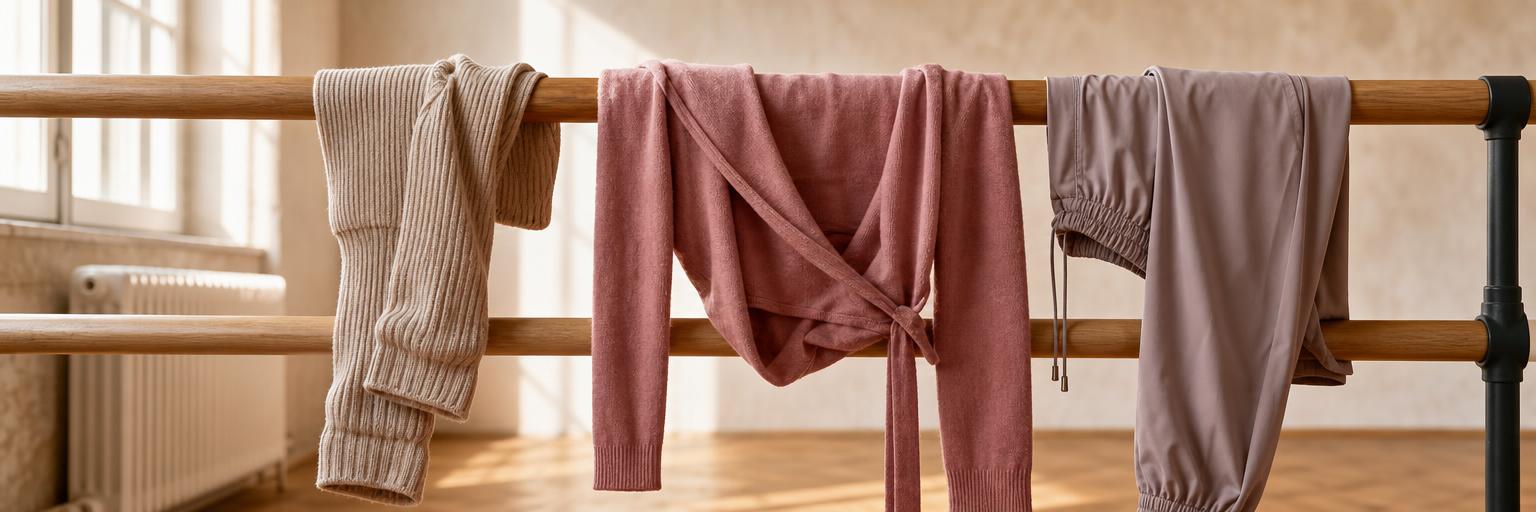
Dance warmup layers artfully draped over a ballet barre: knit leg warmers, a crossover cardigan in dusty rose, warm-up pants.

Best Picks By Situation

  • Cold studio class: simple removable layers that come off in seconds when the teacher needs to see alignment. Acrylic legwarmers or a thin shrug, not a heavy hoodie.
  • Between-runs at competition: booties (Bloch or Capezio) plus an easy-on coverup. Don't waste 90 seconds putting on a complicated outfit between dances.
  • Buying a warmup as a gift: pick a low-risk accessory (legwarmers, simple wrap). Avoid premium apparel. You don't know the dancer's exact size or what the studio allows.
  • Building a warmup wardrobe: split it into a daily beater set (cheap, replaceable) and a competition set (cleaner, photo-ready). Don't try to use the same pieces for both.

Before You Buy

  • Ask the teacher when warmups must come off. Some studios require them off at center work; some allow them only during the actual warmup; some don't allow them at all during instruction.
  • Check whether the bootie or layer is rated indoor-only. Most dance-specific booties are. Wearing them outside ends the warranty AND the non-slip sole.
  • Skip final-sale when the size is uncertain. Class warmups get worn weekly: wrong size = wasted purchase.
  • Don't buy heavy non-breathable layers for high-output classes. Overheating mid-combination is a bigger problem than a slow start.

Buying Strategy

Warmups are a moment-based purchase. The right layer for cold-studio pre-class is wrong for between-runs at competition. The cozy bootie that's perfect on a Saturday in November is the wrong choice in a 75-degree summer convention hallway. So work in this order: name the moment (cold class? between-runs warmth? backstage waiting?), check what your studio allows during that moment, then buy the specific layer that solves it. Trying to buy 'a warmup wardrobe' in advance is how dance bags fill up with stuff your dancer never wears.

What We Would Do

For cold-studio class warmth, we'd grab simple removable layers (acrylic legwarmers and a thin wrap) that come off in two seconds when the teacher needs alignment. For competition between-runs, we'd buy a pair of Bloch or Capezio booties and an easy-on coverup: easy to throw on, easy to take off. For gifts, we'd skip premium apparel and pick a low-risk accessory; you don't know the dancer's exact size or studio dress code. And we'd build two-tier kits: a daily beater set for class, a cleaner set for competition photos. Don't try to use the same pieces for both.

Buyer Walkthrough

Name the moment first. Cold-studio pre-class? Pick a wrap or shrug that comes off in two seconds when center work starts. Between-runs warmth at competition? Booties + an easy-on coverup. Backstage waiting at a convention? Layers that don't disturb costume or hair. The specific moment dictates the specific layer. Gift buyers should default to easy-to-size, easy-to-return accessories (legwarmers, simple shrugs): premium apparel is too risky without knowing the dancer's size and the studio's rules.

Mistakes To Avoid In Plain English

Don't buy heavy non-breathable layers for high-output classes. Overheating mid-combination is worse than a slow start. Don't wear dance booties outside; the 'indoor only' label is real, and walking to the car destroys the non-slip sole. Don't buy final-sale apparel when the size is uncertain. And don't try to buy one warmup that works for class, competition, AND backstage. They're different moments asking for different layers.

Where to start by buyer type

Best For

Cold studio class

Start Here

Simple removable layers (acrylic legwarmers, thin shrug, or a basic wrap)

Why

Once class starts, the teacher needs to see alignment. Heavy layers hide it.

Check First

Your studio's rule on when warmups must come off.

Best For

Competition between-runs warmth

Start Here

Bloch booties or Capezio WB100 + an easy-on cover

Why

Waiting backstage creates chill. The right kit warms her up without disturbing costumes or hair.

Check First

Indoor-only labels. Whether the bootie fits over the shoe she's wearing.

Check at Bloch
Best For

Buying as a gift for someone else's dancer

Start Here

Low-risk accessory (legwarmers, simple shrug) rather than premium apparel

Why

Sizing and studio rules vary too much for a confident apparel gift.

Check First

Whether the dancer overheats easily, and whether the gift can be returned if size is wrong.

Picks at a glance

Product / Route

RubiaWear wraps, shrugs, and legwarmers

Best use

The style pick for studios that allow more expression in class.

Price signal

Check the RubiaWear site for current pricing; varies by item

Check before buying

Confirm your studio's dress-code limits before buying. Check the brand's return policy.

Check at RubiaWear

Current Shortlist

  • Need feet-over-shoes warmth between runs at competition? Bloch Adult Warm Up Booties (~$61) or Capezio WB100 (~$57). Both are dance-specific, indoor-only, with secure closures. These are the two booties every dance retailer carries.
  • Full-height booties feel like too much? Capezio WB200 Mini (~$43). Same idea, less coverage. Good for dancers who want warmth without bulk.
  • Daily class warmup on a budget? Classic acrylic legwarmers, Harmonie and similar generic brands (roughly $10 to $20 a pair for the short classic knits, more for full length). They stretch out eventually and you replace them. That's the point.
  • Studio allows style and your dancer wants to express it? RubiaWear legwarmers and shrugs (legwarmers about $48 a pair direct, these are premium knits, not $12 acrylics). Multiple lengths and knits with real dance-specific design. Check the studio's dress code first, some studios cap how 'styled' warmups can be.
  • Building one cart with shoes and tights? Dancewear Corner and Discount Dance carry the dance-specific warmup brands alongside everything else. Saves you from bouncing between four sellers.

How To Choose

  • Studio rules FIRST. Some studios only allow simple black layers. Some require warmups off the moment center work starts. Some don't allow them at all during instruction. Ask before buying.
  • Pick by the specific moment: pre-class warmup, between-run recovery at competition, or hallway waiting at a convention. Each moment wants a different layer.
  • The real job of a layer is keeping muscles warm, not just keeping your dancer comfortable. The danger at competition is the long gap between the backstage warmup and actually going on. Muscles cool fast while you wait, and cold muscles going full-out is how a dancer pulls a hamstring or rolls an ankle. Put the layers on the moment she stops moving, and take them off right before she goes on, not after.
  • If only the feet get cold, legwarmers or ankle layers handle it. You don't need a full-body warmup. Booties over shoes earn their price for one job, keeping feet warm between runs at competition, not for everyday class.
  • When the whole studio is cold, not just her feet, warm the big muscles first. A 5:30am rehearsal or a cold theater at Nutcracker week is a different problem than chilly toes at competition, and booties do nothing for it. The muscles that pull when they go full-out cold are the big ones, the hamstrings, hips, and lower back, and those sit under the leotard where a bootie and a legwarmer never reach. For that moment reach for a layer that traps heat over the core and upper legs, a wrap sweater or shrug across the back and shoulders, warmup pants or shorts over the hips, legwarmers pulled up over the thigh rather than stopped at the calf. Toasty feet over a cold seat is the exact setup the injury comes from.
  • Pick layers that come off in two seconds. A warmup that takes a minute to remove will stay on too long and disrupt class.
  • Read the 'indoor only' warning on booties. Most dance-specific booties will tell you NOT to walk to the car in them. Doing it anyway destroys the non-slip sole.
  • Size a bootie to her shoe size and don't size down. The XS to XL bands map to shoe-size ranges, and the bootie pulls on OVER her ballet or jazz shoe, so it has to clear the shoe rather than hug the foot. If she lands between two bands, go up. A slightly roomy bootie still traps heat and cinches shut at the ankle toggle, but one that's too small won't close over the shoe and crushes the toe box, which is the moment a dancer kicks them off and leaves a $61 pair in the wings. Check the brand's own chart, because Bloch and Capezio split the bands at different shoe sizes.
  • Build a two-tier kit: a daily beater set for class (cheap, replaceable) and a cleaner set for competition weekends.

Avoid If

  • Don't buy heavy non-breathable layers for high-output classes. Overheating is a bigger problem than a cold start.
  • Don't buy premium branded warmups before you know your studio allows them. Some studios cap how 'styled' warmups can be during class.
  • Don't wear dance booties as street shoes. They look like slippers and they're labeled 'indoor only' for a reason. The non-slip sole isn't built to survive pavement.
  • Don't rely on one warmup piece for the whole season. Things wash, stretch, get lost in dance bags. Have a backup.

How To Work The Competition Wait So Nobody Pulls A Hamstring

This is the moment the booties were bought for, so here is how to actually use them. The danger at competition isn't a cold dressing room, it's the unpredictable gap between her backstage warmup and stepping on stage. Muscles cool within minutes of stopping, and going full-out on cold muscles is how a dancer pulls a hamstring or rolls an ankle on the first leap. The layer only does its job if you work the wait around it.

  • Find the running order, not just the start time. Competition schedules slide constantly, and knowing she's third after the break tells you when to re-warm, not when to sit down. The dancer who warmed up at the posted time and then waited 90 minutes goes on cold.
  • Layers ON the second she stops moving, OFF the second before she goes on. Put the booties and legwarmers on when she sits, peel them in the wings, not after she's already marked the first eight-count. Waiting until she's on deck is too late.
  • Wearing the layers isn't the same as staying warm. A bootie holds heat in the feet, it does nothing for a cold hamstring. Have her keep the muscles awake while she waits with quiet calf raises, slow leg swings, and a few roll-downs. The layer traps the heat, the movement makes it.
  • Re-warm if the wait runs long. Twenty minutes is a top-off, keep the layers on and keep gently moving. An hour-long hold, and competitions run long, means a real re-warm before she goes on, not just leaving the jacket on over a body that's gone cold.
  • Decide where the layers GO before she's in the wings. Backstage at competition there's nowhere to set anything down and warmups vanish into the chaos. Hand each piece to one parent or drop it in one labeled bag the moment she peels it off. A $61 bootie left in the wings is a $61 bootie gone.
  • Check that every piece is all the way off before she hits the wing. Sounds obvious until you watch a legwarmer slide down mid-number on a six-year-old who didn't notice. Off means off, eyes-on by an adult, every single time.
Keep reading

More reviews worth your time