Quick answer
How do I break in new dance shoes
When the new Capezio jazz shoes still feel like cardboard at her third class, the heel is rubbing red on her right foot, and you cannot tell if she should push through or send them back.
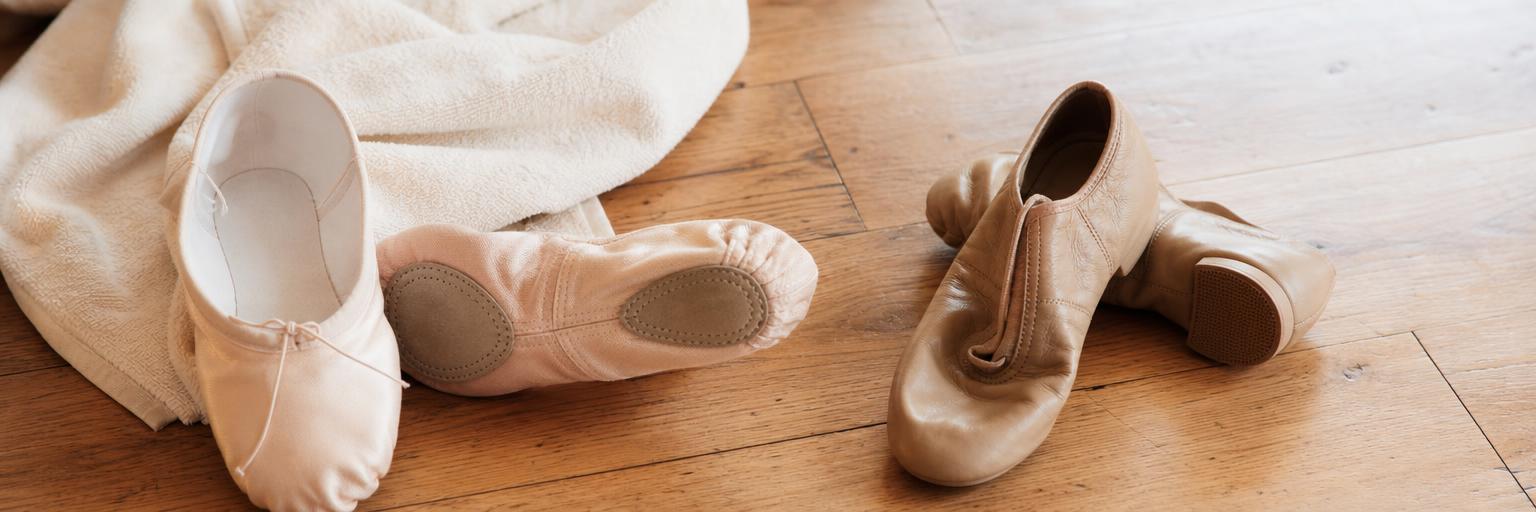
Quick read
Almost every dance shoe has a short break-in period. Start by wearing them around the house for 10-15 minutes before the first class. Canvas softens in 1-3 classes. Leather jazz and character shoes take 3-7 classes depending on the upper construction. A shoe that's firm is normal; a shoe that's sharp-painful at the same pressure point after 3 classes may be the wrong fit. Never use heat or water to force the break-in.
Gear for this situation
What to do
- Before the first class, wear the shoes around the house for 10-15 minutes. Walk, flex the foot, go up on the ball of the foot a few times. This starts the break-in process at home where it doesn't matter if the shoes feel stiff. Canvas softens with warmth and movement; leather gives with consistent pressure over time. Showing up to the first class in completely unworn shoes means the dancer is focused on their feet instead of the teacher.
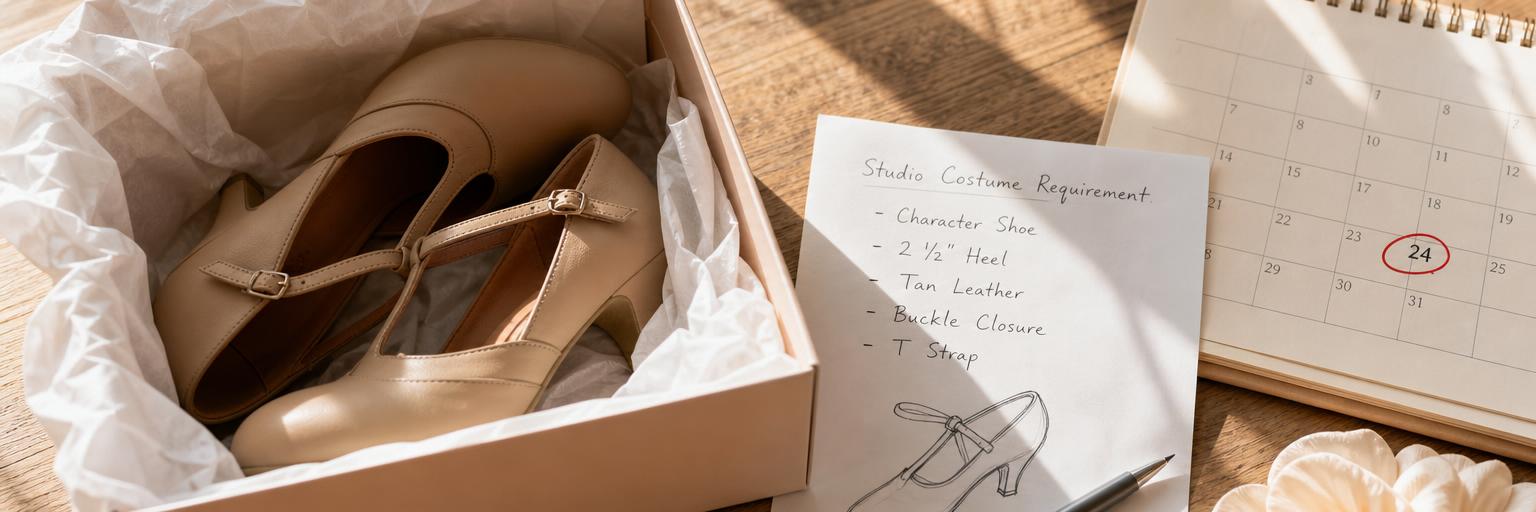
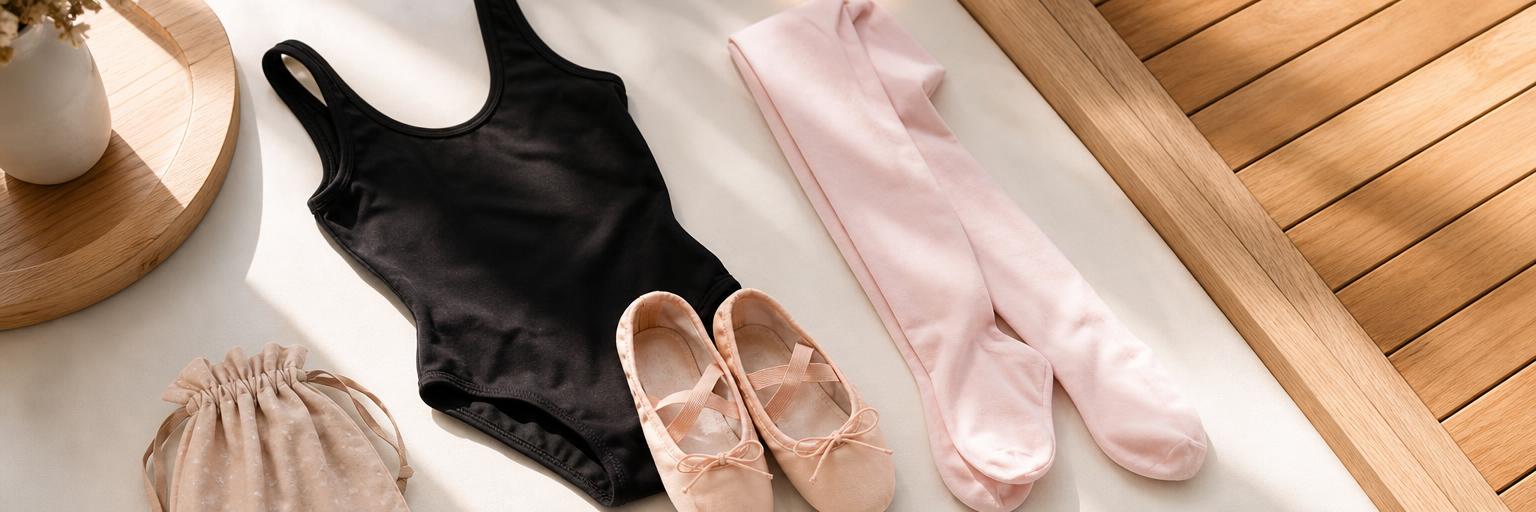
- Break-in timelines by style: canvas ballet slippers (1-3 classes, the canvas and drawstring soften quickly, and the split in the split-sole version releases with floor work); canvas jazz shoes (2-4 classes); leather jazz shoes (3-5 classes, the sole stiffens through the first few classes then becomes the right flex); character shoes with leather uppers (3-7 classes, the strap area and heel counter take longest); tap shoes (3-5 classes, heel and toe box both stiffen initially); ballroom shoes (3-5 classes, the heel and ball of the foot area need the most attention).
- Know the difference between 'firm' and 'wrong fit.' A new shoe should feel snug and firm. It should not feel sharp, pinchy, or painful at the same spot class after class. Firm means the material hasn't conformed to the foot yet. That resolves with use. Sharp pain at the same spot every class means a pressure point that won't improve with break-in. The 3-class rule: if it still genuinely hurts at the same spot after 3 classes, it's a fit issue, not a break-in issue. And when the verdict is fit, don't reorder the same size and hope: run the fit test in how do I know if my dance shoes fit correctly to pin down what's actually wrong, then let our shoe fit finder turn her street size into the brand-correct starting size for the replacement.
- Set the foot up before you blame the shoe, because a lot of break-in pain starts above the leather. Trim her toenails short and straight across first, since long nails jam the toe box and bruise during the rises and relevés that break a shoe in. Break the shoe in wearing what she will actually perform in rather than whatever is handy, because if she dances in convertible or footed tights, bare feet at home and tights in class change both the fit and the friction. Keep the foot dry, since a damp, sweaty foot blisters far faster than a dry one, which is exactly why hot spots show up in the first warm class and not on the living-room rug. And treat a hot spot the moment it feels warm rather than after the skin breaks, because that early window is where a thin pad saves the week, while a blister that has already opened turns a routine break-in into a painful one.
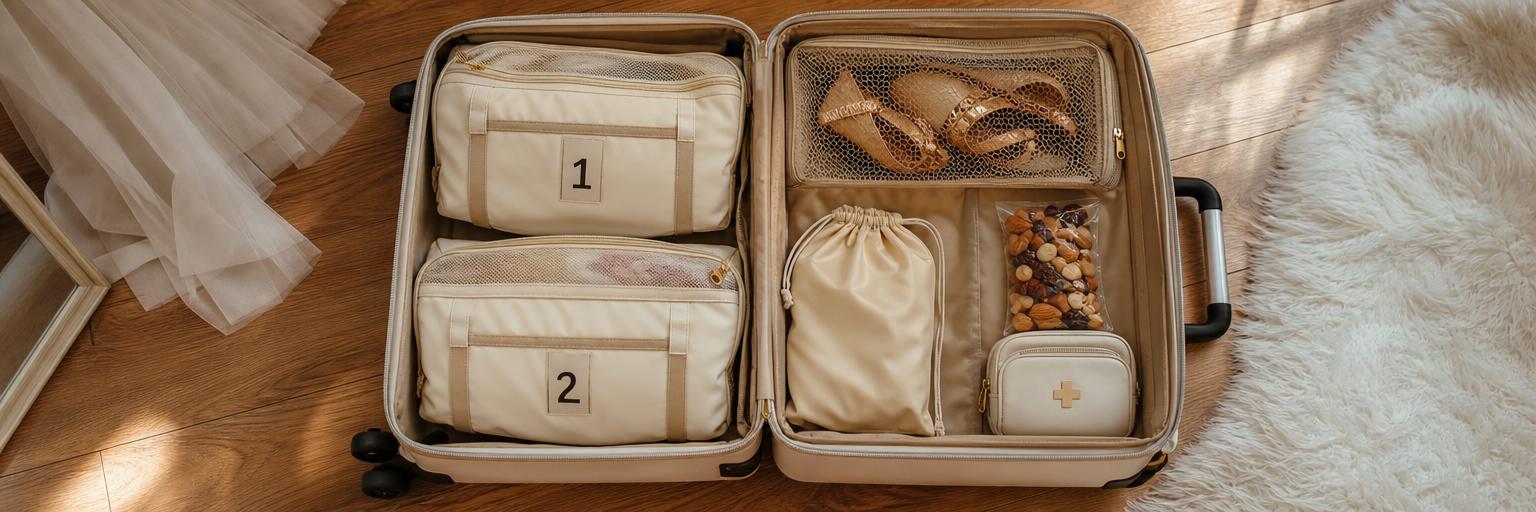
- If a specific spot is rubbing, apply a Compeed blister pad or thin moleskin patch to that exact spot on the foot before the next class. This protects the skin while the shoe adjusts. It's a short-term tool, not a permanent fix. If the same spot is rubbing after 3-4 classes, the shoe may be the wrong width or last shape for that foot. A blister pad on the shoe works too: apply it inside the heel cup or at the toe box where the friction is. If a blister has already opened, do not pop or peel it further; cover with a hydrocolloid bandage (Compeed Advanced Blister Care, Band-Aid Hydro Seal) that absorbs fluid and forms a protective gel cushion, and leave it on through showers for two to three days while the skin underneath heals. Skip class only if the blister is on a weight-bearing spot AND the bandage cannot stay sealed; otherwise the bandage lets her keep dancing. The competition first-aid and foot-care guide covers Compeed, hydrocolloids, and anti-chafe options. The pain that needs more than a bandage (sharp pain in one spot, pain when not weight-bearing, redness or swelling that spreads beyond the blister) is a pediatrician call, not a Band-Aid problem.
- Never use heat, water, or force to accelerate the break-in. Hair dryers, wet towels wrapped around the shoe, and bending the shoe backward over a knee are common suggestions that damage the construction. Dance shoes are built with specific flex points and adhesives that heat and moisture degrade. The natural break-in period is short: 3-7 classes for most styles. Forcing it ruins the shoe before it ever gets a chance to conform correctly.
- If the recital is close and class meets only once a week, count the break-in in weeks, not classes. Three to five classes can mean three to five weeks, which is how a dancer ends up in a stiff, unbroken shoe at dress rehearsal. The safe way to speed it up is not heat or force, it is repeating that gentle 10 to 15 minutes of at-home wear daily between classes, a few minutes to walk, flex, and rise, then off. A canvas slipper worn a little each evening is usually ready within a week. A stiff leather character or tap shoe still wants real floor time, so for those especially, start wearing it the day it arrives, not the week of the show. If the shoes have not even arrived yet and the recital sheet has a heel-height and a color spec, dance recital shoe shopping on a deadline maps the brand-direct vs. local-dancewear-store ladder by how many days you actually have, so the break-in window does not get eaten by the order-and-exchange cycle.
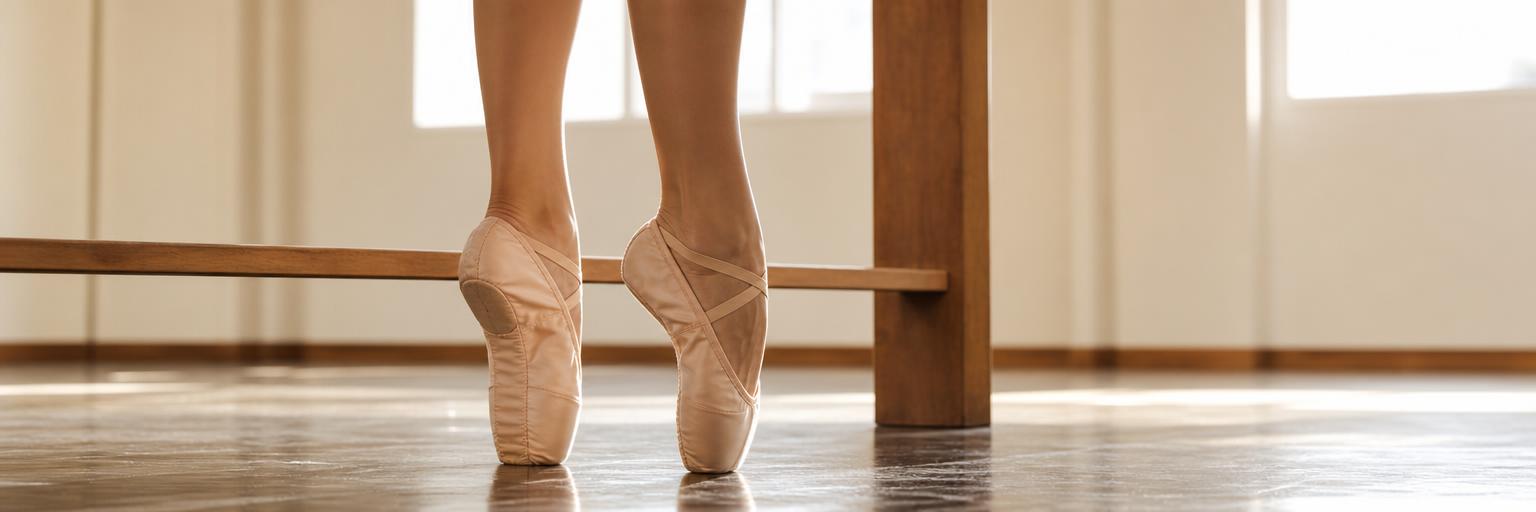
- For split-sole ballet slippers and jazz shoes: the first few classes on a real floor release the split-sole hinge in a way that house walking doesn't replicate. Tendus, dégagés, relevés, and demi-pliés (the foot-articulation movements at the barre) complete the break-in faster than anything you can do at home. Let the class work do it.
- Know what 'broken in' actually feels like, so you stop worrying at the right point instead of fussing with a shoe that is already done. A finished shoe bends where her foot bends and nowhere she has to make it, so the sole creases at the ball of the foot rather than across the arch, and the upper moves through a slow relevé and a demi-plié with no stiff spot, no gap opening at the heel, and no pinch that was not there a minute in. Canvas slippers reach that in a few days of gentle wear, while a leather character or tap shoe announces it when the heel counter and the strap stop feeling like cardboard. Once she is there, ease off the at-home sessions and let regular class keep the shoe supple, because past the finish line extra wear is just wear, not break-in, and it spends the life of the shoe for nothing.
Common mistakes
- Don't wear new dance shoes outside to break them in. Outdoor wear doesn't help. It ruins the shoe. The sole picks up grit that marks studio floors, and the upper flexes in ways that don't match dance movement. From the moment dance shoes arrive, they stay indoors.
- Don't confuse firm with too small. New leather and canvas feel firm. That's expected. The shoe should still pass the fit test: finger's width at the heel when the toes are flat, toes not curled, heel counter snug without digging. If it fails the fit test in the store it will fail it forever. Break-in softens material; it doesn't add size.
- Don't skip the at-home wearing step before the first class. Ten minutes walking around in the shoes before class removes the 'totally new shoe' sensation so the dancer can focus on technique instead of their feet. It's a small thing that pays off in a noticeable way.
- Don't apply leather conditioner or oil to a brand-new leather shoe to soften it faster. New leather doesn't need conditioning. It needs use. Conditioner on a new shoe can over-soften the upper before it has a chance to form to the foot, and the extra moisture can affect the adhesive in the sole.