Quick answer
What tumbling mat should I buy for acro practice at home
When she is doing walkovers on the living-room carpet and you want to give her a real surface, the options run from a thirty-dollar foam mat to a three-hundred-dollar air track, and you do not know which is the safe, sensible buy.
Quick read
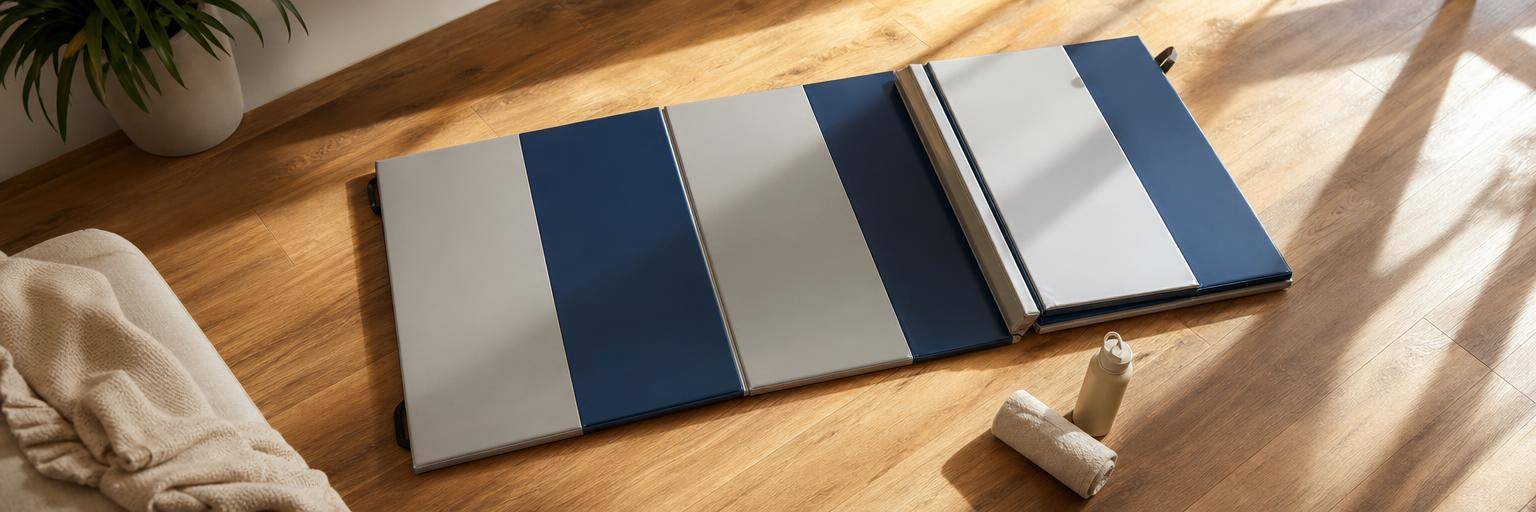
For most acro-dance practice at home, a folding panel mat is the one to buy. It is the flat, hinged foam mat, usually around an inch and a half to two inches thick and four by eight feet or so, and it covers what acro actually needs at home: bridges, walkovers, handstands, rolls, and conditioning on a real surface instead of the carpet or the kitchen tile. An incline or wedge mat, the triangular one, is a different tool, a skill-builder she travels down so the slope helps her learn a back walkover or a handspring, so it is a great progression add once a coach is guiding her, but it is not a general floor. An air track, the inflatable bouncy one, is the upgrade for serious tumbling passes, ten to sixteen feet long and four to eight inches thick with six the most versatile, but it runs a few hundred dollars, needs a pump and the space, and is more mat than most acro-dancers need, so do not start there. The safety part matters more than the mat: acro skills are coach-taught, not learned solo off a video, and a skill she can only do down a wedge or off a bounce is not one she actually has yet, so she practices the real version on the flat panel mat under supervision. And never let her learn tumbling on a backyard trampoline, because the bounce does the work and hands her rotation she cannot control, which is exactly how necks and wrists get hurt.
Gear for this situation
What to do
- Start with a folding panel mat, because it is what acro at home actually needs. The flat hinged foam mat, around an inch and a half to two inches thick and roughly four by eight feet, gives her a real surface for bridges, walkovers, handstands, rolls, and conditioning, which is the bulk of home acro work. It is the cheapest and most versatile of the three and the right first and often only buy.
- Add a wedge only as a coach-guided skill-builder, not a floor. The incline or cheese mat is triangular, and the point is to travel down the slope so the lever helps her learn a back walkover, a kickover, or a handspring before she can do it flat. It is a great progression tool once her coach is directing it, but it is not a general practice surface and it is not where the skill gets finished.
- Treat an air track as a serious-tumbler upgrade, not a starter. The inflatable bouncy track is for tumbling passes and advanced skills, runs ten to sixteen feet at four to eight inches thick (six is the most versatile), and costs a few hundred dollars plus a pump and the space. For most acro-dancers it is more mat than the work calls for, so do not lead with it.
- Match the thickness to the skill and the floor. An inch and a half to two inches of folding foam is plenty for floor-and-bridge acro on carpet or over a hard floor. Thicker only matters for real tumbling impact, and a thin three-inch air floor needs padding under it on a hard floor while a four-inch-plus one can sit directly on the floor. Buy the thickness for what she actually does, not the most cushioned thing on the page.
- Keep the skills coached and finished on a flat surface. A skill she can only land down a wedge or off a bounce is not one she owns yet, so the real version belongs on the flat panel mat under a teacher's eye, not solo off a video. The acro and lyrical kneepad guide covers the other half of protecting her on the floor.
Common mistakes
- Don't buy the air track first because it looks like the most fun. It is the priciest option, the bounce flatters a skill she has not earned, and most acro-dance work does not need it. A folding panel mat does the everyday job for a fraction of the cost.
- Don't let her learn tumbling on a backyard trampoline. The bounce does the work and adds rotation she cannot control, which is exactly how a walkover or a handspring turns into a neck or wrist injury. A trampoline is not a substitute for a coached skill on a flat mat.
- Don't treat a mat as a substitute for a coach. Acro skills are taught in progression by someone who can spot and correct her, and a mat plus a video is how a kid grooves in an unsafe habit. The mat makes coached practice safer; it does not replace the coaching.
Keep reading