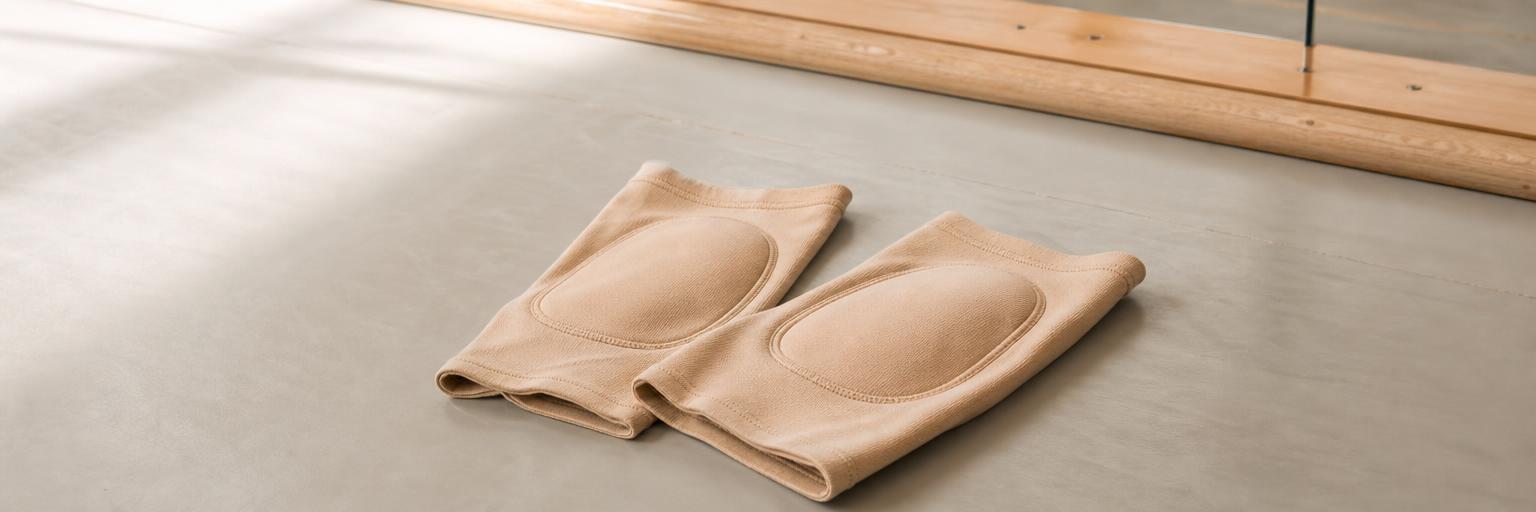
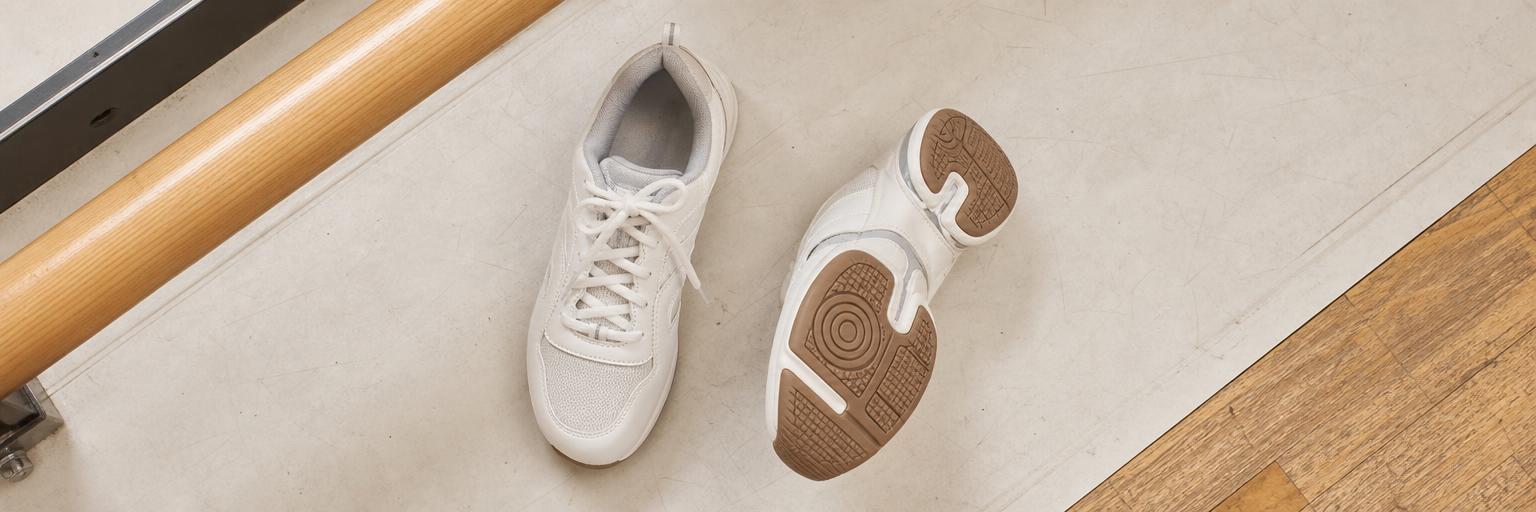
Most kneepad purchases happen after the first floor-work class. The teacher will usually have an opinion, and sometimes a specific requirement. The biggest mistake is buying a bulky volleyball or sports kneepad that bunches under tights and shows through costumes. Dance kneepads are thin, low-profile, and designed to disappear under the costume while protecting the knee during slides, drops, and floor sequences. If the teacher has not said anything about kneepads yet, ask before buying.
First class, teacher has not mentioned kneepads: Wait. Ask the teacher at the end of the first class. Many acro programs don't require them until floor sequences begin.
Teacher said to bring kneepads, no specific brand: Eurotard 994 at $24.95. Start with the basic option until you know how often your child needs them.
Teacher mentioned gel pads or Bunheads: Bunheads Gel BH1650 (S/M) or BH1651 (L/XL). This is the product that comes to mind when dance teachers say 'gel knee pads'.
Intensive acro program or student who wears through pads quickly: Bloch A1100 at $59.95. Multi-shock design holds up to heavy floor contact better than thin knit.
Buy two pairs: one to wear and one clean pair for the next class. Kneepads need washing after every use.
Before you buy
Ask the teacher before buying anything. Acro teachers often have a specific brand preference or a studio-required color. Buying the wrong color and getting turned around at class is common.
Size by knee circumference measurement, not age or clothing size. Use the brand's own chart. A kneepad that slides down mid-class does not protect the knee.
Color: Black is the safer default if the teacher has not specified. Nude (skin-tone) disappears under light costumes but does not work for all skin tones.
Don't buy sports, volleyball, or skateboard kneepads. They are too thick, restrict ankle movement, and show through tights. Dance kneepads are a completely different product.
How to approach it
The kneepad buying problem is an 'I didn't know I needed these until after the first class' problem. Most parents show up to the store reactive: the teacher said the child's knees need protection, and now they need something today. The two mistakes in that moment are buying the wrong product (volleyball or sports kneepads) and buying the wrong size (too large because 'they'll grow'). The right product is thin, elastic, and dance-specific. The right size is by knee circumference measurement, not age. The teacher's color preference is the third variable: Black is the safe default; Nude works better under light-costume performances.
What we would do
Ask the teacher at pickup about brand and color before buying anything. If they say 'just gel pads' or 'Bunheads,' buy the Bunheads Gel BH1650/1651 from DancewearCorner and be done with it. If they don't have a preference, start with the Eurotard 994 at $24.95 and see how your child uses them. If the pads start wearing out quickly or the teacher upgrades the floor work, move to the Bloch A1100. Buy two pairs. One to wear, one clean. Wash after every class.
How to work out which one
After the teacher mentions kneepads, the sequence is: (1) ask the teacher what color and whether they have a brand preference before you leave pickup, (2) measure your child's knee circumference with a tape measure at home, (3) match the measurement to the brand's size chart (not age, not clothing size), (4) order from DancewearCorner where all three picks are verified in stock, (5) check the color when the pads arrive before removing packaging. If the teacher said Bunheads or gel pads, the Bunheads Gel BH1650 or BH1651 is the correct product. If they said thin sleeve and no brand, start with the Eurotard 994. Don't let your child wear the pads outside class or practice. Outdoor surfaces wear through the fabric much faster.
Mistakes to avoid
Don't buy volleyball, basketball, or skateboard kneepads. They are too thick to wear under tights, restrict ankle movement, and do not fit the profile of a dance kneepad at all. A sports kneepad from a sporting goods store is a different product from a dance kneepad. Don't size up for growth room: a kneepad that is even slightly too loose will slide down mid-class. Size by measurement. Don't buy one pair: kneepads need washing after every class, and one pair means missing class while they dry. Two pairs is the correct quantity. Don't skip the teacher question. Some studios require a specific brand or color, and buying the wrong color wastes money.
Black/Cocoa/Sand in XS/S or M/L. Multi-shock construction.
When Does Your Child Actually Need Kneepads
Not every dance class needs kneepads. The answer depends on the floor, the choreography, and the teacher's requirements.
Situation
Kneepads needed?
What to buy
Beginner acro class, first session
Ask first
Nothing yet. Ask the teacher at the end of the first class.
Acro or tumbling with floor sequences
Yes
Eurotard 994 to start; Bunheads gel if teacher recommends gel
Lyrical contemporary with drops and floor work
Often yes
Bunheads gel BH1650/1651 for a teen-and-up leg; for a young child the Eurotard 994 XSmall fits where the Bunheads S/M is too big
Ballet, tap, jazz, or character shoe class
No
Kneepads are not used in these styles
Competition performance with floor sections
Teacher decides
Match whatever color the studio uses for practice
Make The Pads Last, And Know When They're Done
The buy-two-pairs rule up top only works if you don't wreck both pairs in the wash. A gel kneepad is the single easiest piece of dance gear to ruin by accident, and a worn-out pad is more dangerous than no pad because it looks like protection that isn't there anymore. Here's how to keep them working and how to tell when one is finished.
Hand-wash gel and silicone pads, or run them on a gentle cycle in a mesh laundry bag, and air-dry them flat. Never put a gel pad in the dryer. The heat breaks down the silicone and cooks the elastic, and that's how a $48 pad goes flat and loose inside a month. The knit Eurotard pads forgive more, but enough hot-dryer cycles stretch them out until they slide too.
Wash them more often than feels necessary. The pad sits against sweat and a studio floor for hours, and one that smells is one that's been holding bacteria against skin that's already getting rubbed. The two-pairs habit exists for exactly this, so one set is always clean and dry while the other is in the wash.
A gel pad is done when the gel has gone flat, hard, or stiff instead of squishy, because flat gel passes the shock of a drop straight through to the knee. A knit pad is done when it slides down no matter how you size or layer it, which means the elastic is shot. Either way, replace it. Don't let her keep dancing on a pad that only looks like protection.
Treat pads as rehearsal gear first, then ask how the routine is actually performed. Plenty of lyrical and acro pieces are drilled in pads and performed in nude ones that vanish under the lights, or danced bare-kneed because the floor work was cleaned up to land soft. Find out which well before dress rehearsal, because a dancer who has only ever practiced the drop in cushioned pads can be caught off guard by how it feels bare-kneed on a stage floor.
The shortlist
Starting out with floor work, or unsure how often your child will need kneepads: Eurotard Knee Pads 994 (~$24.95). Available in Black and Nude, XSmall through Large. Thin knit construction, low-profile under tights, the lowest-cost verified option. If the teacher has not specified a brand, start here.
Most acro and lyrical students, teen and up: Bunheads Gel Knee Pads BH1650 (S/M) or BH1651 (L/XL) (~$47.99). Bamboo knit fabric with silicone gel pads for cushioning on hard drops and slides. Two pads per pack. The Bunheads name (owned by Capezio) is well-known in acro programs, and if the teacher mentions gel pads this is what they mean. One real catch before you order it for a younger child: the Bunheads comes in only two sizes, Small/Medium and Large/X-Large, with no youth size and no knee-measurement chart, so the smallest pad is built for a teen or adult-sized leg. On a 7-to-10-year-old in a combo acro class that S/M often slides, and the Eurotard 994 below, which sizes straight off the knee down to an XSmall at an 11 to 13 inch knee, is the one you can actually fit to a small dancer. Move up to the Bunheads once she has the leg to fill the S/M.
More intensive floor work or students who go through kneepads quickly: Bloch Pro-Dance Knee Pads A1100 (~$59.95). Multi-shock cushioning panels with stretch construction. Available in Black, Cocoa, and Sand in XS/S and M/L. The most protective option among the three, at the highest price point.
How to choose
Check with the teacher first. Acro teachers often specify a brand or at minimum a color. Buying the wrong color or style and getting turned around at the first class is a real thing that happens.
Size by knee circumference, not age, but know that only some pads let you. Measure around your child's knee, then use a pad that actually publishes a knee chart. The Eurotard 994 does: XSmall fits an 11 to 13 inch knee, Small 13 to 15, Medium 15 to 17, Large 17 to 20, so you can match it exactly. The Bunheads gel pad does not; it comes in just Small/Medium and Large/X-Large with no youth size, which is the real reason it is the wrong pick for a small child even though it is the gel-pad standard for teens and up. A too-loose kneepad slides down mid-class; a too-tight one restricts movement.
When tights are worn, put the pad on first and the tights over it. The tights hold a thin dance pad in place and hide the seam, which is exactly why a bulky sports pad worn on top bunches and shows. If a correctly-sized pad still slides mid-class, check that it is under the tights, not on top of them.
When there are no tights to hold the pad up, the pad has to grip on its own. Lyrical and contemporary costumes are often bare-legged, and a knit pad that leaned on tights to stay put will creep down the shin the first time she slides. For bare-leg work, size it exactly to the knee measurement (a hair snug beats loose), and look for a pad with a silicone gripper band at the top edge, since that band is what keeps it from migrating when there are no tights over it. A pad that sits fine under tights in class can still slide in a bare-leg costume, so test it bare-legged before dress rehearsal, not at it.
Color: most studios want Black or Nude (skin-tone). If the teacher has not specified, ask. Nude disappears under costumes better for light-skin tones; Black is the safer default for performance and does not show soiling.
For occasional acro in a combo class: the Eurotard 994 at $24.95 is the right call. Save the gel pad investment for students who are in acro or lyrical specifically and doing regular floor work.
For a dedicated acro or lyrical student: the Bunheads gel pad is the standard recommendation. The silicone gel absorbs impact on hard drops in a way that thin knit fabric cannot.
Acro and lyrical don't punish the knee the same way, so a gel pad is not automatically right for both. Acro is impact, the hard drops and knee landings where silicone gel earns its money by soaking up the shock. Lyrical and contemporary are mostly slide and drag, the long knee slides and spins across the marley where what matters is that the pad glides instead of grabbing. A thick, grippy gel pad can catch on a slide and either stall the movement or wrench the knee, so a lot of lyrical dancers prefer a smoother, lower-profile knit pad like the Eurotard that lets the knee travel. If she does both seriously, the honest answer is she may carry a gel pad for acro drops and a slicker pad for lyrical floor work, not one pad that does both perfectly. And if she is drilling acro at home, the surface matters as much as the pad: what tumbling mat should I buy for acro practice at home sorts the panel mat, the wedge, and the air track, plus the safety line on never learning tumbling off a trampoline.
Buy two pairs once you know the correct size. Kneepads need washing between classes. Two pairs means your child always has a clean set available for class.
Skip it if
Don't buy volleyball, skateboard, or sports kneepads for dance class. They are too thick, too bulky, and show through tights. A sports pad is built around a hard cap or a fat foam donut; a dance pad is a thin sleeve that vanishes under the costume. Not the same thing.
Don't buy kneepads before the first class unless the studio supply list specifically requests them. Many studios only require them once the student advances to floor sequences. Show up to the first class and ask.
Don't buy one size up 'so they last longer.' A kneepad that slides down during class is useless for protection and will distract your child. Size for the current knee, not a growth buffer.
Don't let the student wear kneepads outside class or practice. Outdoor use wears through the fabric and gel faster, and outdoor debris contaminates the pad surface.