Quick answer
My child was just invited to join the competition team. What do I need to buy?
When the studio director's call landed at 6:14pm Wednesday, she made the junior comp team for next season, and you realize you have no competition bag, no stage makeup, and the first team practice is in 12 days.
Quick read
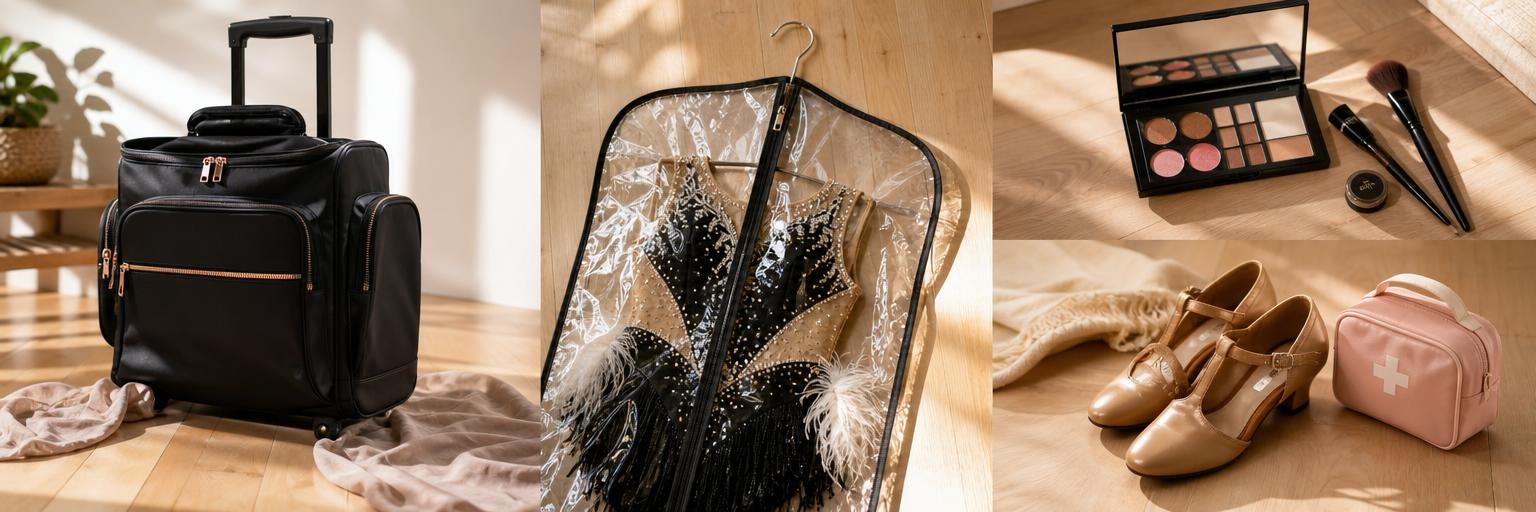
Don't buy anything until the studio gives you the first-year new member packet. Competition teams provide required uniform orders, shoe specifications, tights colors, and deadlines. That list drives everything. Once you have it, the big Year 1 categories are a competition bag that holds multiple costumes, shoes per routine, stage makeup in the required team look, backup tights in every required color, and labeled garment bags for each costume.
Gear for this situation
Dance Bags For Competition WeekendsRead the reviewGarment Bags For Recital CostumesRead the reviewStage Makeup Kits For Dance CompetitionsRead the reviewDance Tights For Recital And CompetitionRead the reviewCompetition Backstage Foot Care And First-Aid KitRead the reviewCharacter Shoes For Recital And Musical TheatreRead the reviewJazz Shoes For Class And CompetitionRead the review
What to do
- Wait for the studio's new member packet before buying anything. Competition teams distribute a first-year guide with required uniform orders (often with specific deadlines and no substitutions), shoes required per routine, tights colors, and mandatory team warmup or jacket. Buying before this packet arrives almost always means buying the wrong item or the wrong color. The studio director or team coordinator can tell you when the packet goes out if you just found out today.
- While you are waiting on that packet, ask the studio for the full fee schedule in writing, because the gear is the visible cost and the fees are the bigger one. Competition is not a one-time shopping trip, it is a season of recurring charges a gear list never shows. Expect a costume fee for each routine she dances (often one costume per number, and a competitive kid can be in several), per-competition entry fees billed by routine, a choreography fee to set each dance, and usually higher monthly tuition because team members carry more required class hours than recreational students. Many studios also fold in a convention or two and travel to out-of-town events. The exact numbers swing a lot by studio and level, so the studio's own written schedule is the only one that counts, but seeing the whole season number before you commit is what keeps the costume-and-shoes spend in perspective. Run those fees next to the gear in our Hidden-Cost Dance Season Planner so the full year lands as one plan instead of a string of surprise invoices. The studio team contract is where all of those line items get spelled out (and where a few clauses sit that families regret signing past); the team contract walkthrough covers what to read closely before signing.
- When the packet does arrive, treat the studio's costume and team-warmup order as the one true deadline on the list. Everything else you can buy on your own schedule, but the team costume and jacket are ordered through the studio's vendor on a fixed date with no substitutions, and there's no second store to run to if you miss it. Get your dancer's measurements taken (the studio or vendor will tell you which ones) and the order form back the day it opens, not the day it's due. A missed tights order is a quick reorder. A missed costume-vendor deadline can mean your dancer is the only one out of uniform at the first competition, or paying a rush fee to catch up.
- The major Year 1 expense categories, in rough order of urgency: competition bag that holds multiple costumes, shoes for each routine type, stage makeup in the required team look, backup tights in every required color, labeled garment bags per costume, and a small first-aid and foot-care kit for the team bag, because blisters and torn skin show up at the first competition, not the fifth. None of these needs to be purchased the week you get the call. You typically have 4-6 weeks before the first competition. The competition dance bag guide has current picks by budget. To see the whole Year 1 number before the bills land, run the categories through our Hidden-Cost Dance Season Planner, which puts the costume, shoes, bag, makeup, and tights spend on one timeline instead of a string of surprises. The list above assumes an older dancer in multiple routines; if your dancer is 5 to 7 on a mini team with one routine, the gear list is scoped down dramatically (a $40 duffle, not a rolling rack) and the year-one over-buy is the bigger trap to avoid: six-year-old first competition season walks through the mini-specific version.
- Check what shoes she already has before ordering anything new. A jazz routine needs jazz shoes; a tap routine needs tap shoes; a character routine needs character shoes; lyrical often uses bare feet or half-soles. The studio will specify exact colors (usually black or tan) and sometimes exact brands. A dancer who's been in class for a year or two likely already has several of these. Audit first, then fill gaps.
- Before you buy any of it new, ask whether the team runs a hand-me-down pipeline, because competition gear cycles hard. Every spring a graduating senior or a kid who jumped a size is selling a barely-used competition bag, spare garment bags, a team warmup in good shape, and shoes with half their life left. That gear usually surfaces in the studio's parent group for a fraction of retail, in the exact required style a random online listing can't promise. Two things keep it safe. Confirm the piece still matches this year's spec, since a warmup or jacket style can change and last year's is not always current, and never buy used anything the team orders through its own vendor (the costume, sometimes the current warmup), which has to come through the official order no matter what. The bag, the garment bags, the shoes she has grown into, and a still-current jacket are all fair game, and the team is often the cheapest, most spec-correct store you have.
- Stage makeup for competition is different from school or everyday makeup. It needs to survive stage lights, sweat, and a full performance day. The studio usually specifies the required team look, which dictates what products you need. Don't buy a full professional kit before you know the look. Start with exactly what the team list requires. Stage makeup guide covers what stays on under competition conditions.
- Buy at least two backup pairs of every required tight color before the first competition. Stage tights run without warning. 'I'll buy more if something happens' ends with you searching for matching tan tights at 7am before call time. Two extra pairs per color costs about $20-30 and prevents a real emergency. Dance tights guide has color-matching and seller notes.
- Label everything. Competition dressing rooms hold 50-200 families in a tight space. Every bag, every shoe, every garment bag, every makeup case needs your child's name on it. A label maker is worth buying before the first competition (a Brother P-touch with laminated tape runs about $30-50 and the tape survives sweat, water, and a season in a bag), because mixing up another family's costume is a memorable and avoidable problem. One labeled garment bag per costume, organized by routine number, is the system that works at any competition level.
Common mistakes
- Don't order the team costume or uniform from a third-party seller. Competition uniforms are often contracted through a specific vendor the studio works with. A 'similar' costume from elsewhere is not the team costume and the difference will be visible on stage.
- Don't buy a full professional stage makeup kit before the studio publishes the required team look. A $200 kit with 40 shades doesn't help you if the team look requires two specific colors your kit doesn't include.
- Don't skip the backup tights. One pair fails, and the competition keeps going. Two backup pairs in the right color cost $20-30 and prevent the most common competition-morning emergency.
- Don't underestimate labeling. Everything goes into a shared dressing room. Every item needs your child's name. A label maker before the first competition is worth more than most accessories you'll consider buying.