Quick answer
Master class and convention prep
When you registered for Radix Orlando, the schedule is 4 days of master classes from 8am to 6pm across ballet, jazz, contemp, and hip-hop, and you have one rolling suitcase that has to hold everything.
Quick read
Pack a separate pair of shoes for every style on your schedule, because four days of back-to-back class will not forgive the wrong shoe, and bring a real foot care kit (blister pads, Body Glide, tape) since eight hours of class a day creates more friction than any performance. Read the convention's dress code before you pack anything, carry a light day bag so you are not hauling a rack bag room to room, and treat sleep and recovery as real gear, because the dancers who look good on day 4 are the ones who went to bed early and rolled out their feet every night.
Gear for this situation
What to do
- Before packing anything: read the registration confirmation or welcome packet all the way through. Conventions specify dress code by style and sometimes by level: some require ballet pink or class color for certain rooms. A dress code violation at check-in is fixable; one that pulls you from class is not.
- Expect a dancer number at check-in, and pack what you need to wear it. Almost every convention assigns each dancer a number you keep all weekend and wear on the front of your top, where faculty can read it from across the room when they call dancers for scholarships, improv, or audition rounds. Bring a handful of safety pins, because the number is usually a paper or cardstock card with no clip of its own, and keep it visible at all times, since a jacket zipped over the number means you don't get called. If being singled out by number makes you nervous, know going in that it is routine and every dancer in the room is wearing one.
- Know how the scholarship audition actually works before you go, because it is the reason many families pay for a convention and the part the welcome packet explains the least. Most conventions run a scholarship audition, often the very first session, and at a lot of events it is a separate sign-up or a small extra fee with its own deadline, so read the registration to learn whether your dancer is automatically entered or has to opt in, and do not let that deadline slip by unnoticed. The audition itself is almost never a prepared solo. It is a combination taught fast on the spot, usually ballet or jazz, danced in small groups while faculty watch and narrow the room, so the skill that actually matters is picking up choreography quickly and committing to it full out, not having a routine ready. And it does not stop at the audition, because faculty watch the regular classes all weekend and call dancers by number for callbacks, improv, and awards, which is the whole reason that number has to stay visible from the front. Winning usually means tuition toward the event's nationals or a future convention, sometimes a company spot or a cash award, so even a dancer who came mostly to train should treat the first morning as if it counts, because it does. Before you celebrate a scholarship as found money, read what do dance convention scholarships actually cost, because most pay tuition toward a future event and leave travel, hotel, and meals on the family, and the all-in cost of accepting one is usually larger than parents expect.
- Get your money's worth by capturing what she learns, because a convention is a firehose of corrections and combinations that is mostly gone by Tuesday unless someone writes it down. Most events ban filming in class, since the choreography belongs to the faculty and a phone held up is a fast way to get corrected, so the real method is a small notebook or the notes app and five quiet minutes after each session: the combination while her body still remembers it, the exact correction a teacher gave her, and which faculty and studios she connected with. That last part matters more than families expect, because the relationships made at a convention are how dancers hear about summer intensives, company auditions, and which teachers to seek out again. A dancer who leaves with three pages of notes and a couple of names to follow up on got far more from the weekend than one who took the same classes and remembers none of it by midweek. When you start deciding which conventions to follow that faculty to next, the dance convention landscape maps which circuits each major faculty actually teaches, so you can plan the next weekend around the relationships you built at this one.
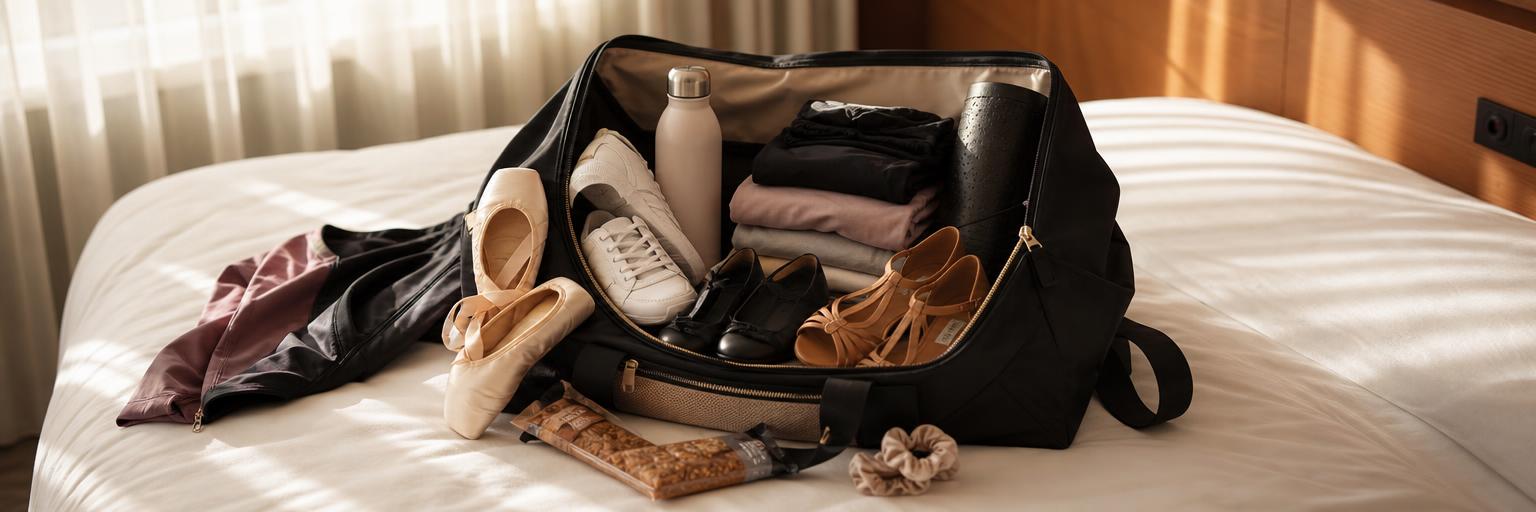
- Pack footwear for every style you're taking. A 4-day convention with ballet, jazz, hip-hop, and heels classes requires four different shoes. And those classes are back to back. Do not try to cover ballet in jazz shoes or hip-hop in character shoes. The wrong shoe for that floor will have her in blisters by the end of day one.
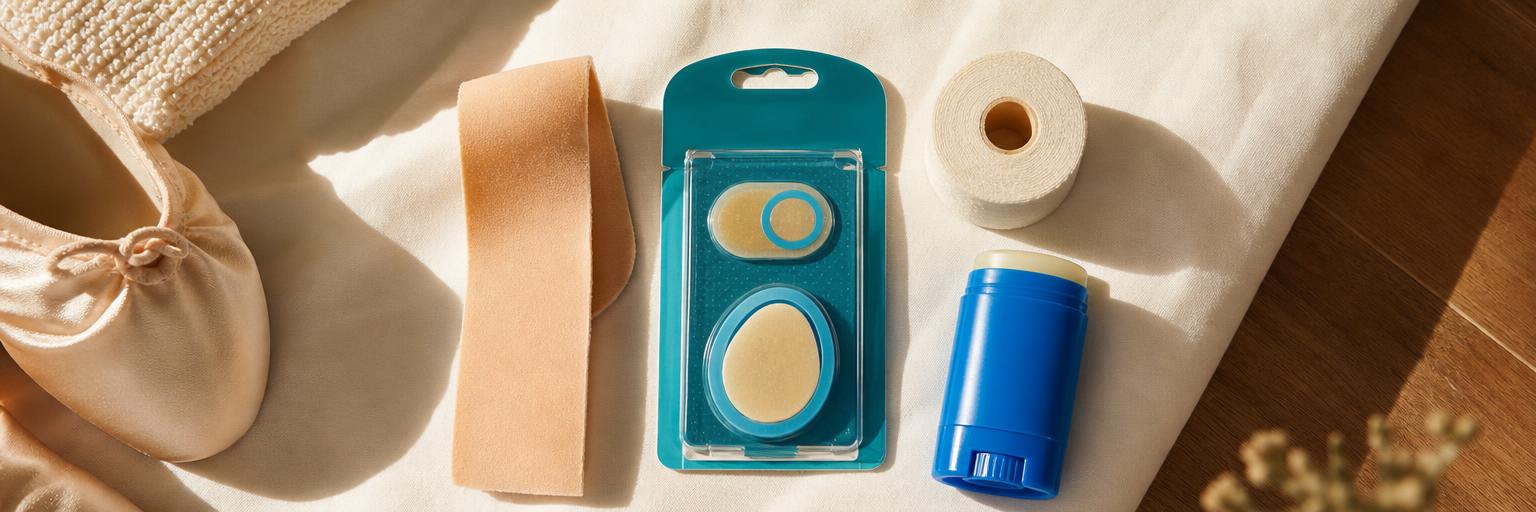
- Pack the foot care kit: Compeed blister pads, Body Glide, and Elastikon tape. Eight hours of class per day for four days generates more friction than a 3-minute performance. This is not optional. It's the item most first-time convention goers wish they had on day 2. If a hot spot does turn into a blister mid-weekend, the blister rescue playbook walks the tape-pad-and-pop decisions so day 3 is still danceable.
- Bring recovery tools for the evenings: a foot roller or massage ball for nightly recovery, compression socks to sleep in, and ibuprofen or Tylenol for muscle soreness on days 2–4. The dancers who perform well on the final day are the ones who did 20 minutes of recovery work after every long day.
- Carry a light secondary bag for within the venue: a backpack or tote that holds water, all your shoes, snacks, a change of clothes, and your foot care kit. Your main competition bag or rolling luggage stays in the car or hotel room. Hauling a 40-pound rack bag from room to room all day is a convention tax nobody needs. The convention day vs. comp day bag walkthrough covers what gets cut, what stays, and which existing bag in your closet already does the job.
- Sleep, hydrate, and eat real food. This belongs in the playbook because it determines your day 4 performance more than any gear choice. Convention fatigue peaks on day 3. Most of the dancers who feel good on the last day went to bed before midnight on days 1–3.
Common mistakes
- Do not try to minimize your shoe bag by wearing one pair for multiple styles: foot problems that develop on day 1 compound over 4 days. Bring the right shoe for every class and rotate.
- Do not skip the foot care kit because you're not performing: convention-level class volume produces as much or more friction than a competition. The kit is lighter than dealing with blisters on day 2.
- Do not pack your best tights and practice wear: conventions are hard on gear. Bring things you'd replace next season anyway. Save the good pair for performances.
- Do not let her cover the dancer number with a jacket or warm-up between sessions. Faculty calls by number for callbacks, improv, and scholarship rounds, and a number hidden under a layer is a number that does not get called. Pin it to whatever is on top, every layer she puts on, and move the pins when she changes.