Review

Best Dance Gear For Conventions And Intensives

A competition weekend and a dance convention are not the same trip. At a competition you perform for three minutes, then you wait. At a convention you're in class for six to eight hours a day, four days in a row, in hotel ballrooms on whatever surface they've got. The gear mistakes are different too. Competition parents forget foot care; convention attendees forget shoes for the other styles, wear out their best gear, drag a full rack bag through hotel corridors, and don't start the nightly recovery routine until day 3, which is too late to feel good on day 4. The four gear decisions below are the ones that make the most difference at a multi-day convention or summer intensive. Everything else on your packing list, you already have handled.

Updated 2026-06-30 · Independent research, editorial standards here

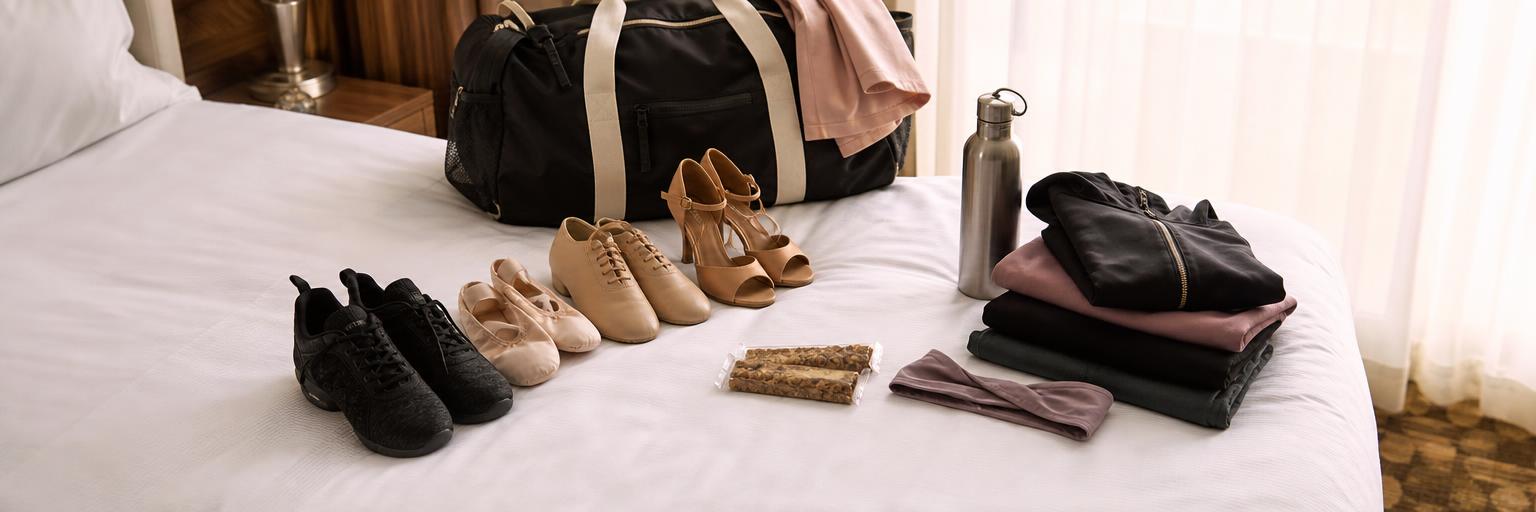
Dance convention essentials laid flat on a hotel bed: multiple shoe styles, a water bottle, snack bars, layers folded neatly, a headband.

Best Picks By Situation

  • Shoes for every taught style: check the convention schedule before you leave home; pack dedicated shoes or pack the cross-trainer as backup for styles you don't have covered.
  • Between-session carry: Dream Duffel personal bag or any light dance backpack with a shoe compartment. Convention veterans carry small; first-timers haul the rack bag and regret it.
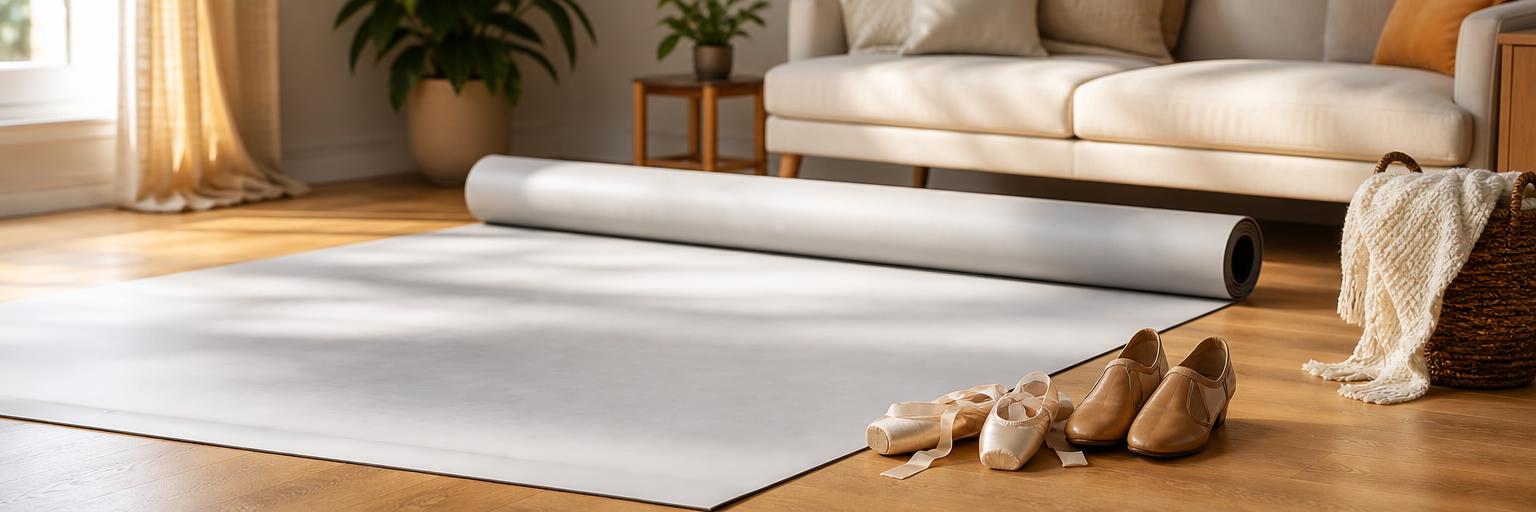
  • Hotel-room practice surface: dot2dance portable Marley floor (Petite 24"×24", 8 lbs): Marley on one side, non-slip mat on the other; fits in a large rolling suitcase. No gaff tape needed on hard floors.
  • Nightly recovery: compression socks within an hour of last class, foot roller while seated. Do this nights 1 and 2 or you will be doing it nights 3 and 4 when it's too late.
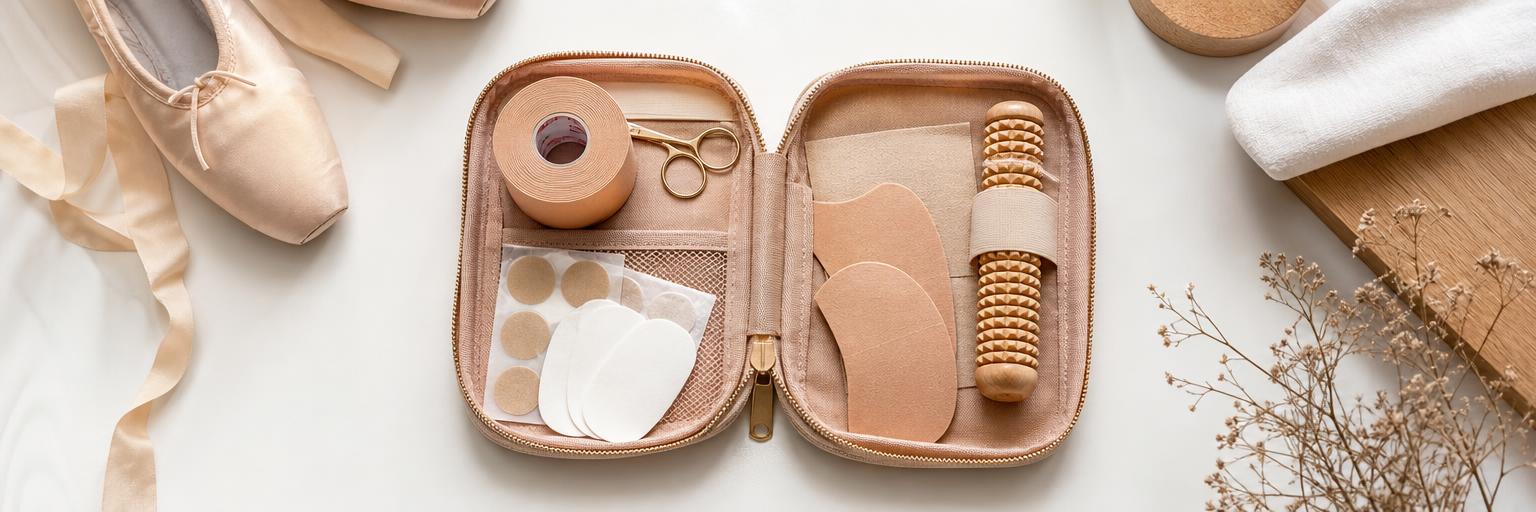
  • Acute blister care: see the competition foot care guide for the four-item kit. Same products apply at a convention.

Before You Buy

  • Check the welcome packet before packing. Most conventions specify dress code by style, and some require specific shoe types or studio colors for certain rooms. A dress code violation at check-in is usually fixable; one that pulls you from class is not.
  • Pack shoes for every style on the schedule, not just your main style. The vendor floor has gear but limited sizing and no return path.
  • Compression socks are recovery support, not medical treatment. If something hurts beyond normal muscle fatigue: joint pain, swelling, or structural discomfort: go to the event's physical therapy station, not the vendor floor.

Buying Strategy

Convention gear is a layer on top of what you already have for class, not a replacement for it. The shopping question isn't 'what do I need for a convention?': it's 'what does a regular class bag not have that a four-day event requires?' The answer is four things: a way to carry gear between sessions without hauling a full competition bag, shoes for every style on the schedule, a practice surface for the hotel room, and a nightly recovery habit that starts on day 1. Everything else: your class bag, your tights, your hair kit, your warmups: is already packed. This guide covers the four-item delta.

What We Would Do

Before the convention: print the schedule and mark every style being offered. Buy shoes for any style without a dedicated pair. Order the dot2dance portable floor at least a week out. Dazzle Distributors typically ships within a few business days but convention season can slow things. The day before you leave: pack the compression socks in the night bag, not the class bag. They're post-class items, not class items. Day 1: whatever time your last class ends, compression socks go on. Not on day 3 when you're sore. On day 1. The dancers we've seen struggle on day 4 at conventions started recovery on day 3. The dancers who felt good on day 4 started on day 1.

Buyer Walkthrough

Work through the gear in this order. First: pull the convention schedule and mark every style being offered. For each style without a dedicated shoe, add that shoe to the list, or decide that the cross-trainer covers it. Second: check your current class bag. Does it have a way to carry one or two pairs of shoes and a water bottle through hotel corridors without bringing the whole bag? If not, decide before you pack whether you're adding a small tote or reconfiguring what you already have. Third: order the dot2dance portable floor early. Dazzle Distributors usually ships within a few business days, but convention season slows things down, so leave a week minimum. Fourth: pack the compression socks in the room bag, not the class bag. They go on after class, in the hotel room, not in the studio. Once all four items are in place, the rest of the packing list is the same class bag you already know.

Mistakes To Avoid In Plain English

Don't pack only the styles you're strongest at. If the convention has a hip-hop track and your dancer only owns jazz shoes, that problem is fixable at home before you leave and very expensive on the vendor floor. Don't bring your best gear: four days of back-to-back classes ages practice wear faster than a month of regular class. Don't start the recovery routine on day 3 because you feel fine on days 1 and 2; the point is to stay fine through day 4, and that decision is made on nights 1 and 2. And don't skip the welcome packet: dress code violations at conventions are real, and some events specify exact shoe types or studio-uniform colors for certain rooms.

Where to start by buyer type

Best For

Within-venue carry between ballrooms

Start Here

Dream Duffel personal/small bag: ~$40–60

Why

Dance-specific organization in a compact form; fits under convention chairs; brand-familiar to competition families.

Check First

Verify current model name and whether a dedicated small/personal model exists vs. accessory bags.

Check at Dream Duffel
Best For

Shoe backup for unfamiliar styles

Why

Suede spin spot; works across jazz, lyrical, contemporary, hip-hop; studio-appropriate last.

Check First

Sizing runs 1–1.5 sizes up for women. Confirm size before ordering. Check return policy for your seller.

Check at Bloch Boost
Best For

Hotel-room practice surface

Start Here

dot2dance portable Marley floor: Petite ~$188.50

Why

Authentic Marley on one side, non-slip mat on the other; Petite (24"×24", 8 lbs) fits in a large suitcase. Eliminates hotel-carpet limitations for warmup and technique work.

Check First

Verify current Dazzle Distributors stock and pricing; confirm Petite size as the convention-travel recommendation.

Check at dot2dance
Best For

Nightly lower-leg recovery

Start Here

CEP Compression Socks: ~$35–55

Why

Graduated compression in 15–20 mmHg range for post-class recovery; pairs with a foot roller.

Check First

Not for medical compression needs. Recovery support framing only; consult a professional for injury-related compression.

Check at amazon.com

Picks at a glance

Product / Route

CEP Compression Socks

Best use

Recovery pick: nightly post-class use

Price signal

~$35–55 per pair (May 2026)

Check before buying

Available at Amazon, running specialty stores. 15–20 mmHg recovery range. Not medical compression.

Check at amazon.com

Current Shortlist

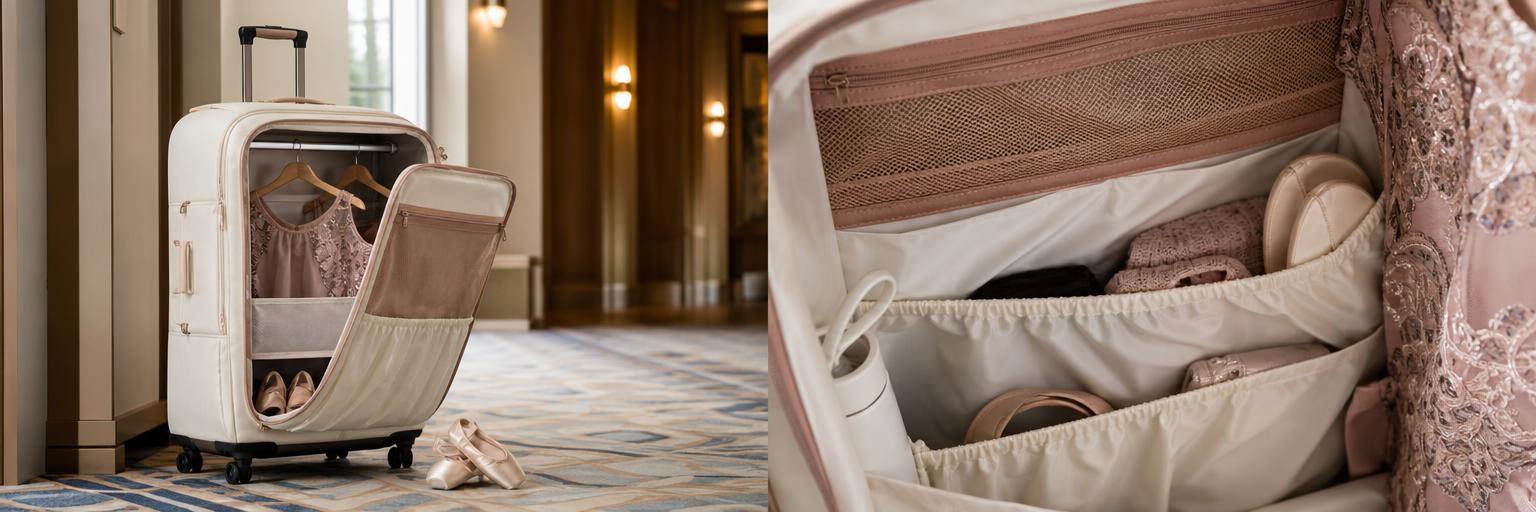
  • Within-venue day bag, Dream Duffel small/personal bag (~$40–60), Your full competition rack bag stays in the room. This is what you carry between ballrooms, to the vendor floor, into class, and back to the hotel. Dream Duffel makes smaller accessory bags designed to clip onto or work alongside their rack bags. They have separate shoe compartments, fit under a convention chair, and carry the day's essentials without the weight of the full competition setup. If you don't own a Dream Duffel at all, a light backpack with a dedicated shoe sleeve works fine. The principle is the same: one small bag, one pair of shoes, water, towel, and foot care kit. Not the rack bag.
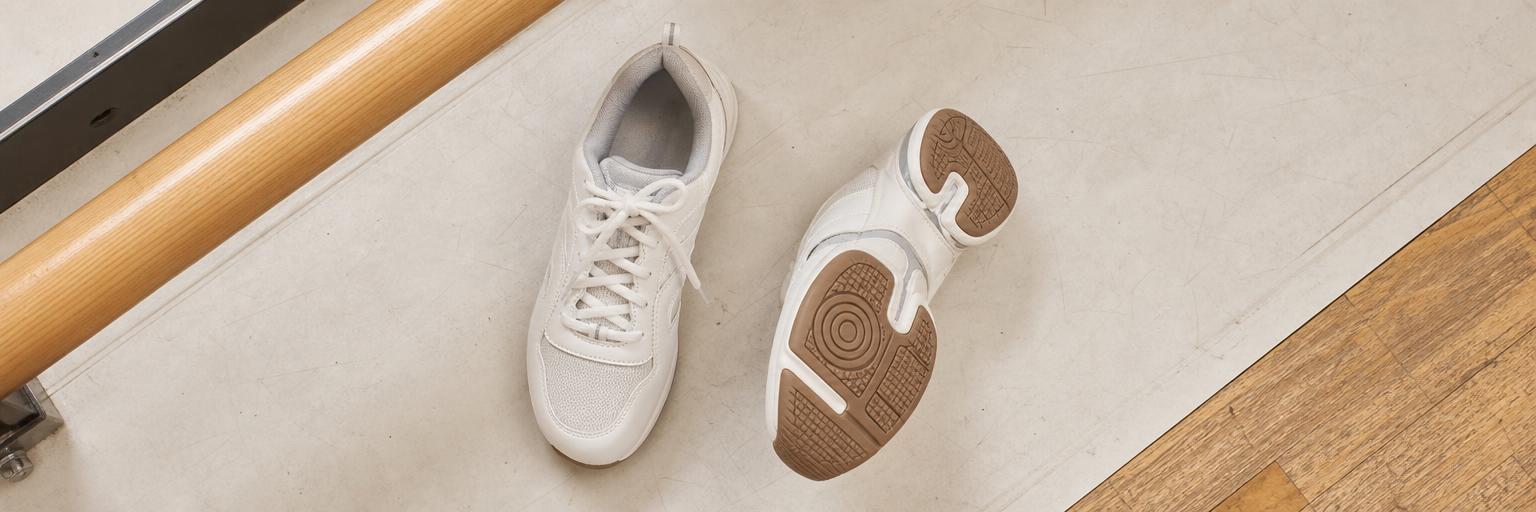
  • Multi-genre cross-trainer, Bloch Boost Mesh Split Sole (~$97), Conventions teach every style. If you own dedicated shoes for every style, pack them all. If you don't, the Bloch Boost Mesh works across jazz, lyrical, contemporary, and hip-hop with a suede spin spot that handles turns on ballroom floors. It's more studio-specific than a street sneaker, which is a feature at conventions where the teacher may flag non-dance footwear. The rule is: pack shoes for every style being offered, not just the styles you're strongest at. The cross-trainer is the contingency, not the plan.
  • Portable practice floor, dot2dance portable Marley floor (Petite 24"×24", ~$188.50 from Dazzle Distributors), This is the most under-packed convention item among dancers who haven't done one before. Convention hotels have carpet in rooms and sometimes in the corridors between ballrooms. The dot2dance Petite is 24"×24" and weighs 8 lbs, authentic Marley on one side, non-slip gym mat on the other, and it fits flat in a large rolling suitcase. That surface is enough to do a combination or work on turns without fighting the carpet. You don't need the floor for every hotel room activity; you need it for the 30 minutes before 8am class when your feet need to know what marley feels like before you go in.
  • Nightly recovery, compression socks + foot roller (~$35–50 combined), The dancers who feel good on day 4 started the recovery routine on day 1. Put compression socks on within an hour of your last class, CEP or Pro Compression in the 15–20 mmHg recovery range, and wear them for two to three hours while your feet are elevated. Add the Capezio Footsie Roller or a basic foot roller for sole relief. Both items travel easily. The blister kit from our competition foot care guide is worth packing too, but the compression and rolling are the daily maintenance items. Acute blister treatment is the exception; nightly recovery is the routine.

How To Choose

  • Pack shoes for every style being taught, not just your strongest one. Check the convention schedule before you leave home. If the event includes hip-hop and you don't own hip-hop shoes, a cross-trainer is the fallback. If it includes ballet and you don't have ballet shoes, pack them or buy them before the event. The vendor floor will have options but limited sizes and no return path.
  • Check the welcome packet or registration confirmation before packing anything. Most conventions specify dress code by style and sometimes by level. Dress code requirements vary from 'studio color only' to specific shoe types for certain rooms. A dress code violation at check-in is usually correctable; one that gets you pulled from class is not.
  • The day bag is a logistics decision, not a gear upgrade. Convention veterans carry a small bag to every session; first-timers drag the full competition setup and switch systems by day 2. If you don't own a compact dance bag, a light backpack with a shoe sleeve works. The principle is: carry less, not more.
  • Start the nightly recovery routine on day 1, not after you're sore. Compression socks and a foot roller on night 1 affect how you feel on days 3 and 4. Most convention-goers start on night 3 because nothing hurts yet on nights 1 and 2, which is exactly backwards.
  • If your dancer is eyeing a college dance program, treat the bigger summer intensives as audition prep, not just training. They double as a look at a program's faculty, and the strongest prescreen audition footage tends to get filmed right after one while she is in peak shape. Our path from studio dancer to college dance lays out where intensives fit in the four-year timeline.

Avoid If

  • Don't pack your best gear. Conventions are hard on practice wear. Four days of back-to-back classes and hotel laundry will age your gear faster than a month of regular class. Bring things you'd replace next season anyway. The competition-day outfit is the exception, but your class clothes are not.
  • Don't rely on the convention vendor floor to fix what you should have packed. Vendor floors at major conventions have good gear but limited sizing, high pressure from a crowd of people, and typically no return path once you leave the event.
  • Don't treat compression socks as a cure for an injury. Compression in the 15–20 mmHg range is athletic recovery support. If your ankle is swollen, your joint is sore, or something doesn't feel right after a class, see the event's physical therapy station or a professional. Do not push through joint or structural pain with compression gear.
  • Don't skip the marley tile because it seems like too much to pack. Most dancers who use one at a convention bring it to every convention afterward. The ones who skip it spend the first 20 minutes of class recalibrating to the floor.

Convention vs. Competition: Different Gear Logic

  • A competition weekend is logistically intense but physically short. Your dancer performs for three minutes in four numbers, then waits for hours. The gear question is organization and backup supplies. A convention is physically sustained, 6-8 hours of class per day, 4 days, mixed styles, mixed teachers, mixed floors.
  • The mistakes follow the difference. Competition families overprepare on backup supplies and under-prepare on organization. Convention attendees overprepare on the wrong shoes and under-prepare on recovery. Neither is wrong about what matters; they're just different events.
  • The four items in this guide, day bag, cross-trainer, portable floor, recovery socks, are specifically the ones that change the convention experience. You probably already know to pack your regular class gear. This is the layer on top of that.

What Most Convention Attendees Forget

  • Shoes for a style they haven't taken seriously in class. If the convention has a hip-hop track and your dancer has only done lyrical for two years, she does not own hip-hop shoes. She will find out on day 1. Confirm the convention's style offerings before packing and add a cross-trainer or a second pair if any style is unequipped.
  • The morning warm-up routine. Convention classes start early and the teachers assume you're warm. If your dancer or you are used to arriving at a studio 10 minutes before class and doing your warm-up in the room, that habit doesn't work in a hotel corridor. The portable floor is partly about technique; it's also about having a surface for a real warm-up before you walk into class.
  • Sleep and hydration. This isn't gear, but it's in the guide because it determines day 4 outcomes more than any product choice. Convention fatigue peaks on day 3. The dancers who feel sharp on day 4 went to bed before midnight on days 1–3 and drank water before they were thirsty.

The Floor You'll Actually Dance On

  • The hotel-room tile is for your warm-up; the ballroom floor is the gamble. Conventions run in hotel ballrooms, and the surface changes from room to room. Some lay professional marley and tape every seam, some put a thin marley over ballroom carpet that gives underfoot, and the overflow room added at the last minute is sometimes bare parquet or carpet with nothing down at all. Walk the floor and slide a foot across it before class starts, so the first time you learn it's slick or soft is not mid-turn.
  • Match the shoe to what's under your feet that hour, not to what you wore in yesterday's room. A slick taped-parquet floor turns a worn-down jazz shoe or a too-grippy street sneaker into a fall risk, and a soft carpet-backed marley grabs a suede sole hard enough to torque a knee on a turn. This is the practical case for the multi-genre cross-trainer with a defined spin spot. When the floor surprises you, you want a sole you can actually control on it, not your slickest pair or your stickiest one.
  • If a room is genuinely unsafe, slick enough to skate on, sticky enough to catch, or showing a lifting seam, tell the teacher or the assistant instead of toughing it out. They would rather re-tape a seam or move the class than watch a dancer go down, but they cannot fix what nobody flags. And test the path you'll actually travel, not just the spot you're standing on, because the danger is usually the seam between a taped section and a bare one.

The Scholarship Audition Nobody Packs For

  • Most of the big conventions end the weekend with a scholarship audition, and a lot of first-time families don't realize it's coming until a number gets pinned on their kid Saturday morning. Faculty watch across the regular classes and a dedicated audition block, then hand out scholarships (a free pass to next year's convention, a spot at a summer intensive, sometimes cash or an agency look). It's the highest-stakes thing that happens all weekend, and it's the one thing the packing list never mentions.
  • This is the real reason you pack one clean, performance-ready look and don't touch it. Not a costume, just the leotard or top, fresh tights, and hair that reads sharp from across a ballroom. The audition is judged partly on how she presents, and a kid in the same sweated-through class clothes she's worn since Thursday is starting a step behind. Keep that one set sealed in the day bag and do not let it become Friday's hip-hop outfit.
  • The number they pin on is hers for the whole weekend, so keep a couple of safety pins in the day bag and leave the number on between classes, because the faculty are scoring during regular class, not only the audition block. Photograph the schedule the second registration hands it over. In a six-room day the audition time and the age divisions are the easiest things to miss, and there is no second call.
  • The audition almost always lands late on the last full day, when she is the most tired she's been all weekend. The veterans hold a little back in the class or two right before it instead of emptying the tank in a 2pm master class and dancing the audition on fumes at 5pm. Scaling back one class to be sharp for the one that's scored is the trade an experienced dancer makes on purpose, and it's a conversation worth having on the drive up, not in the hallway ten minutes before.

If It's a Multi-Week Intensive, Not a Weekend

Most of this page is built around the four-day convention, but the same title covers the summer intensive, and that is a different packing problem entirely. A convention is a long weekend you get through on gear you'd replace anyway. An intensive is one to six weeks at one school, often residential, with a real dress code and a real laundry cycle, so the rules above flip.

  • The dress code arrives after acceptance, and it is not a suggestion. Most ballet and contemporary intensives assign a required leotard color by level or division, specify the tights (often a particular pink or black), and set hair rules, and some name the exact brand. Wait for that packet before you buy a single leotard, because guessing wrong means re-buying on day one from whatever the school's little shop happens to stock in her size.
  • You cannot pack three weeks of leotards, so pack a rotation and a laundry plan instead. Five to seven of the required leotard, washed midweek, is the usual setup, not twenty-one. Budget for it, because at roughly $30 to $50 apiece for the required style that rotation alone runs $150 to $350, more if the school names a premium brand, which makes it the biggest single gear cost of the trip and the one to confirm the exact spec on before you order. Plan to hand-wash leos and tights in a sink and dry them flat or on a hanger overnight, because dorm dryers are shared, run hot, and are hard on dancewear. A mesh wash bag and a travel clothesline weigh nothing and save the rotation.
  • For a ballet intensive, bring more pointe shoes than you think and the kit to keep them alive. A dancer in a serious program can kill a pair in a week or two, and the school store may not carry her exact maker and size. Pack the stock, the sewing supplies, the spare elastics and ribbon, and the jet glue or floor wax she already uses, because the middle of a six-week program is the worst possible time to be breaking in an unfamiliar shoe. How many pairs of pointe shoes does my dancer need for a summer intensive does the stock math by program length and pointe hours, plus the four-to-nine-week reorder lead time to plan around, and how do I make pointe shoes last longer covers what that jet glue and floor wax actually do and the free rotation habit that beats both.
  • If it is residential and her first long stretch away from home, the gear that matters most is the boring kind. Label everything with her name, since shared dorm laundry rooms swallow unmarked leotards in a day, pack a small first-aid and foot-care kit she controls herself, and send one familiar comfort item. A homesick, blistered first-timer handles a lot of it on her own when the kit is in her own bag and not a forty-minute walk away at a store that closed before class let out.

Keep reading

More reviews worth your time