Quick answer
How many pairs of pointe shoes does my dancer need for a summer intensive
When the intensive starts in two weeks, she will be on pointe five-plus hours a day for a month, and you are deciding how many pairs to buy now before she is stuck mid-program with a dead shoe and a three-week wait for a replacement.
Quick read
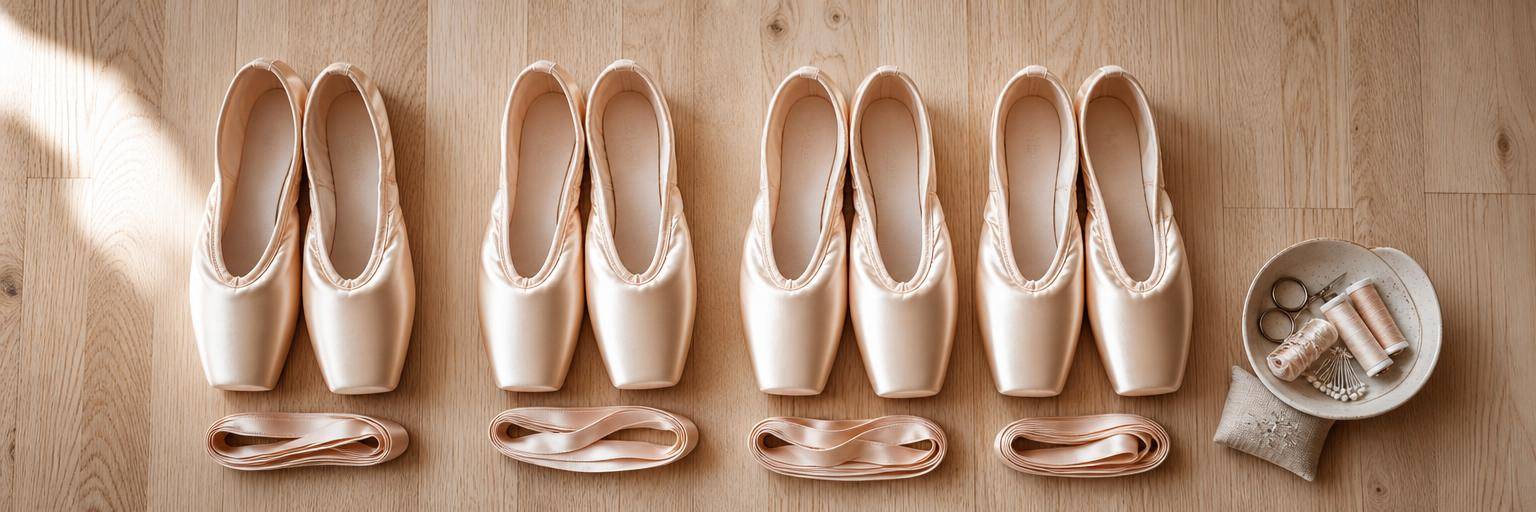
At a summer intensive she is on pointe far more than in a normal week, and a pair only holds about 10 to 20 hours of real dancing, less in a humid studio, because the box and shank are paper and paste that break down with sweat and pounding. That works out to roughly a pair a week at a full-day program, and a strong dancer doing variations and pas de deux can burn through two, so the honest number is two to three pairs for a short intensive and three to five for a long or hard one, all fitted before she leaves rather than bought on the road. Rotate two pairs day to day so each one dries a full 24 to 48 hours, because a pair worn back to back dies in a fraction of the time. Pull a pair the moment you see any of the three dead-shoe signs: the platform goes soft so she sinks past it, the shank breaks or stops springing back so the arch loses support, or the landing goes quiet and dull instead of solid. The part nobody warns you about is lead time, because her exact model, width, and shank can take four to nine weeks to come in, so order the next pairs before she runs out, not the week she does.
Gear for this situation
What to do
- Count the pointe hours, then buy for them. A full-day intensive runs roughly five to six hours of pointe a day for several weeks, which burns a pair about every week, far faster than her regular schedule. Plan two to three pairs for a two to three week program and three to five for anything longer or more advanced, and buy them all before she leaves.
- Get fitted and stock up now, because you cannot fix a bad fit from a dorm room. If her feet have grown or her last pair fought her, have her refitted before she goes, then buy the whole stock of that exact model, width, and shank at once. A mid-program pair ordered blind to beat a class deadline is how she ends up dancing hurt in the wrong shoe.
- Rotate two pairs from day one. A pointe shoe needs a full 24 to 48 hours to dry the sweat out before it is worn again, and a pair danced back to back dies in a fraction of the time a rotated pair lasts, so pack a mesh bag and alternate. It is the same drying logic the shoe-care guide lays out, and at an intensive it is what stretches your stock.
- Learn the three dead-shoe signs so she switches at the right time, not when a shoe finally falls apart. The platform going soft so she sinks past the box, the shank snapping or no longer springing back so the arch loses support, and the landing going quiet and dull instead of solid. Any one of those means that pair is done, because dancing on a dead shoe is exactly how ankles roll and toenails bruise.
- Order the next pairs before she needs them, because the lead time is the real trap. A common model in a common size ships fast, but her specific width and shank can sit on backorder for four to nine weeks, and some fitters are ordering twelve weeks out. Keep one fresh pair ahead at all times and confirm the reorder route (her fitter or the brand) before she leaves, so you are not hunting one down mid-intensive. The first-fitting guide has the model and width details to reorder by.
Common mistakes
- Don't send her with one pair and a plan to buy more there. The intensive may have no fitter, the local shop may not carry her maker and size, and ordering blind to beat a deadline is how she lands in the wrong width. Stock up before she goes.
- Don't let her dance both pairs into the ground at once. Wearing a pair every single day to get your money's worth backfires, because no-rotation shoes die faster and she burns through the whole stock by week two. Alternate so each pair dries.
- Don't wait for a shoe to fully collapse before switching. The arch is gone long before the satin looks worn, and the last week of a dead shoe is exactly when the rolled ankle or bruised toenail happens. Switch at the first dead-shoe sign, not the last.