Quick answer
How do I know what size dance costume to order
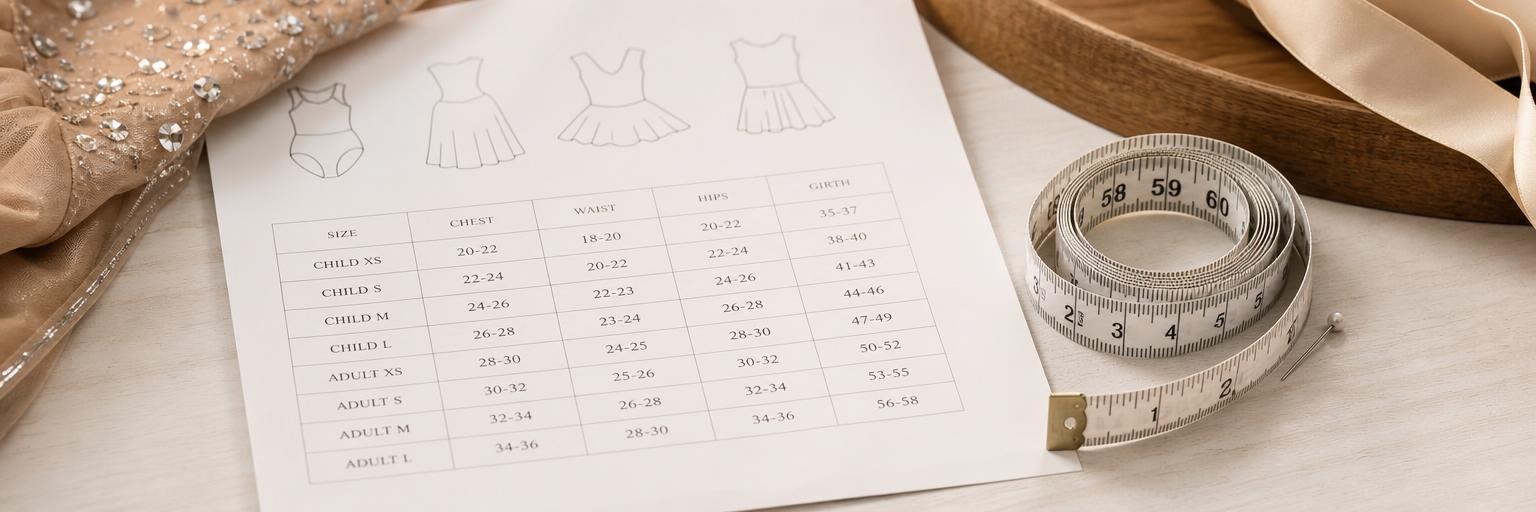
When the studio's costume order form is due Wednesday at midnight, her chest measures 26 inches and the brand's chart puts that exactly between Child Large and Mid Adult, and she has had a growth spurt every spring of her life.
Quick read
Always size by measurements, not by age or street clothing size. Dance costumes are sized to body measurements: chest, waist, and hips. When between sizes, size up, not down. A costume that's slightly large can be taken in; a costume that's too small cannot be let out. Measure the child the day you fill out the form, not from memory. If the studio's size chart conflicts with the costume brand's chart, the costume brand's chart takes priority.
Gear for this situation
What to do
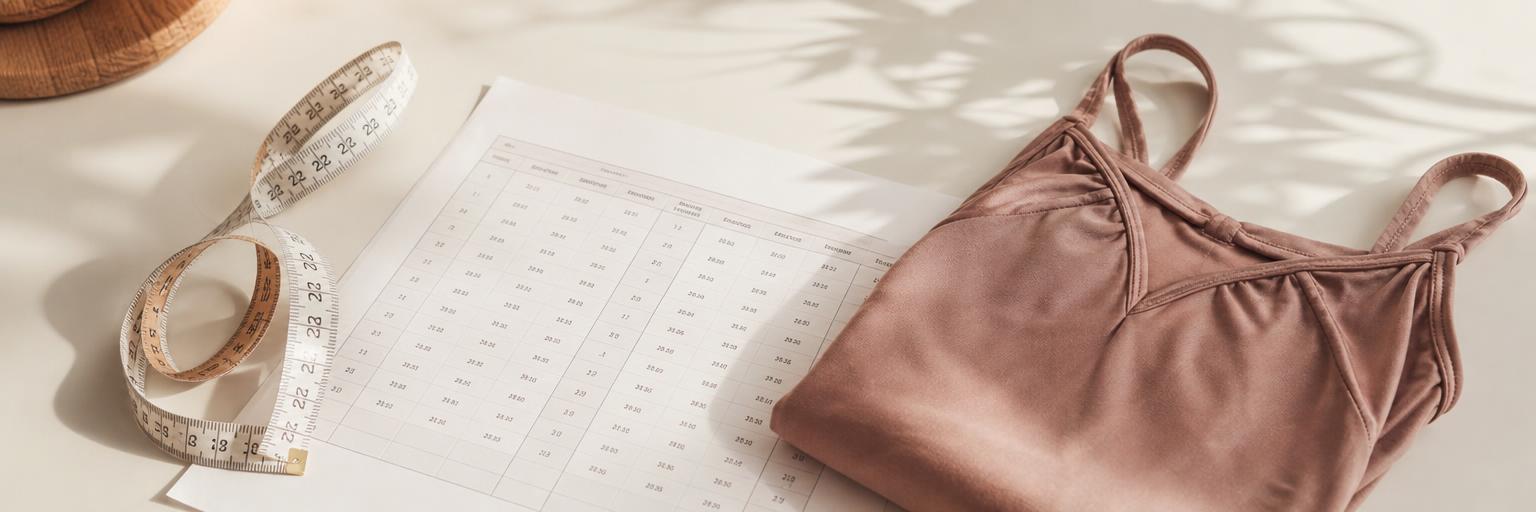
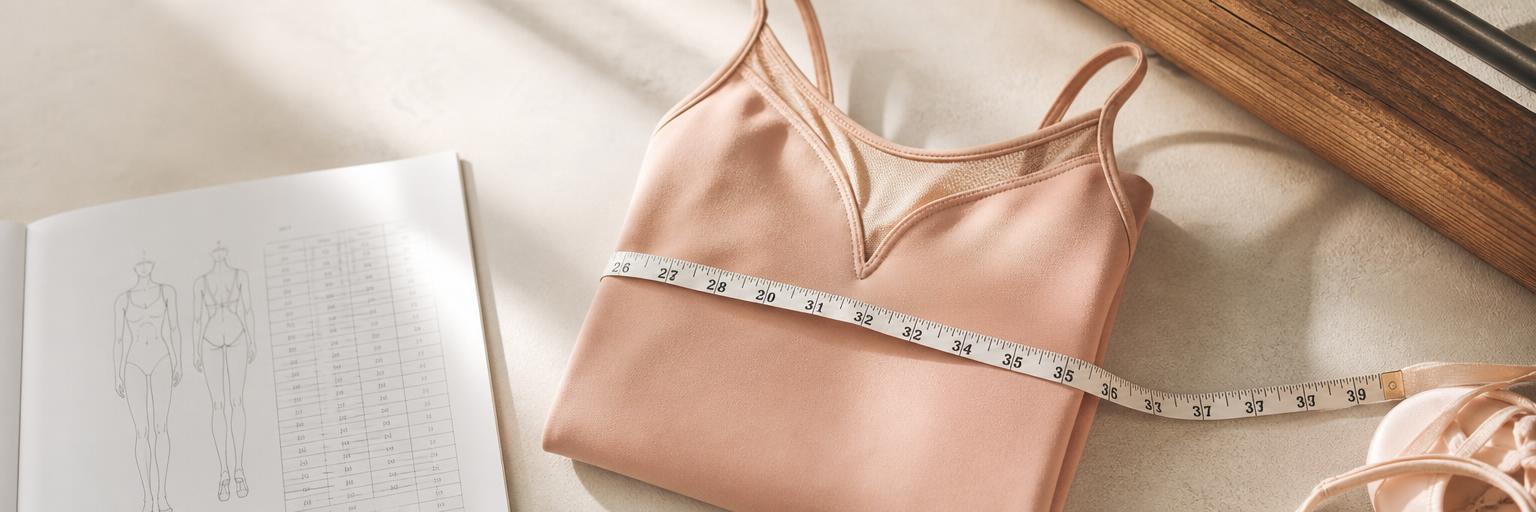
- Measure the child on the day you fill out the sizing form. Not last month, not from a recent clothing purchase: today. Children grow fast enough that measurements from 6 weeks ago can produce a costume that doesn't fit at recital. Three measurements are all you need: chest (around the fullest part), waist (natural waist, not the waistband of pants), and hips (around the fullest part, usually 7 to 8 inches below the waist). Use a soft sewing tape if you have one; if you don't, a piece of string wrapped where the tape would go and then laid flat against a ruler works fine. Keep the tape snug but not tight, level all the way around, and have her stand normally, because a kid who sucks in for the waist measurement orders herself a costume that pinches. And if the chart is in centimeters, measure in centimeters (most tapes print them on the flip side) instead of converting inches in your head, since a half-inch rounding error is a full size on some charts.
- Use the measurements, not the age or clothing size. Dance costume size charts show measurement ranges, not ages. A child who wears a size 8 dress does not necessarily wear a costume size 8. The costume manufacturer's measurement ranges are the correct guide. Use them.
- When between sizes, size up. A costume that's slightly large can be taken in by a seamstress with a few stitches. A costume that's too small cannot be let out. Growing room in a costume is fine; shrinking the costume because it's the wrong size is not (and when the arrived costume IS too tight despite the rule, the costume-doesn't-fit playbook walks the studio-side fix path before recital).
- Expect the three measurements to disagree, and order to the largest one. A real child rarely lands on one clean size. Her chest might read a 10, her waist an 8, and her hips a 12. When the numbers split like that, order the size that fits the biggest measurement, because a costume that binds across the chest or hips cannot be let out, while a loose waist is a few stitches for a seamstress. Reading only the chest, or splitting the difference, is how a costume arrives tight in the one spot you cannot fix.
- Order for the body that wears the costume, not just the one in front of you today. Most studios collect costume forms in the fall for a spring recital, so a number you measure in October is sewn into a garment your dancer first wears in May, and a kid in a growth spurt can gain a full size in that gap. This is not a license to guess high on everything, since an across-the-board oversize costume looks sloppy on stage and only some of it can be taken in. Measure accurately today, then if she has jumped a size in the last six months or is in an obvious spurt (you can tell by how fast she burns through shoes), let that nudge a borderline number up rather than down, because a seamstress can take in a roomy bodice but cannot conjure fabric for one she has outgrown by June. Ask the studio when costumes actually arrive too, since a costume that lands in March leaves far less growing room than one that shows up the week before the show.
- If the studio's size chart and the costume brand's chart disagree, use the costume brand's chart. The studio chart is a general guide. The manufacturer's chart is calibrated to the actual garment. The same chart-conflict rule applies to leotards; the leotard-size walkthrough explains the brand-by-brand variance in more detail.
- Pay attention to the 'natural waist' vs. 'low waist' distinction on the form. Bodice-style costumes (ballet and lyrical numbers) are measured at the natural waist. Hip-length shorts (jazz and hip-hop numbers) often use a low-waist measurement. Read the form's measurement guidance before measuring.
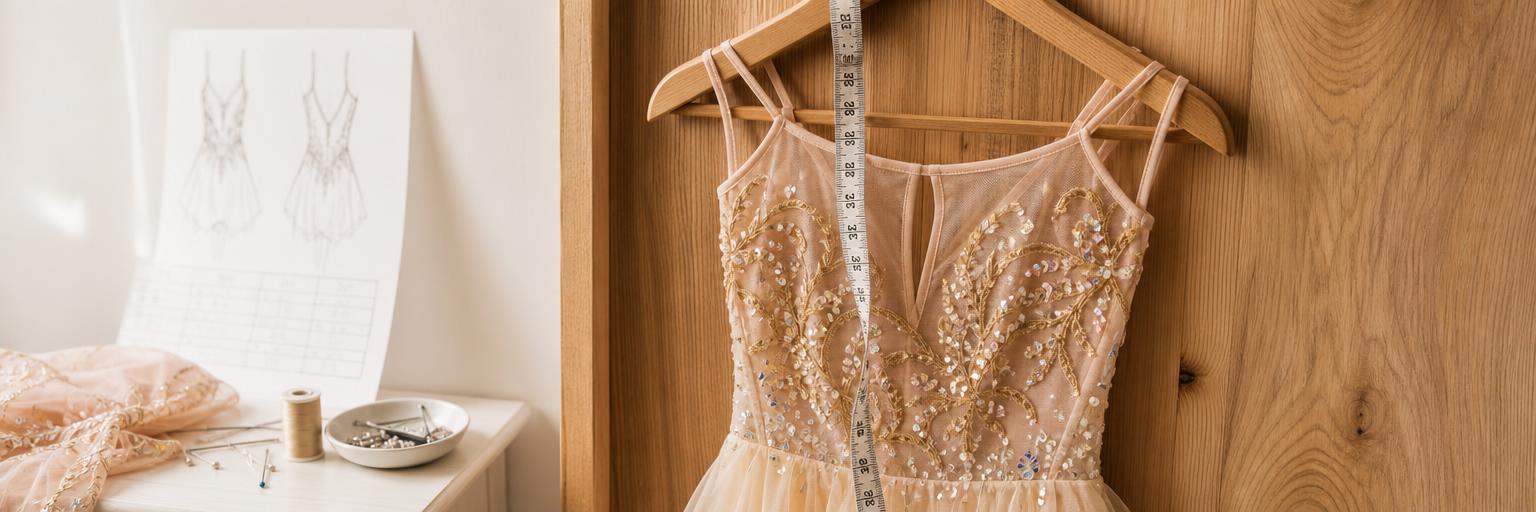
- If the costume is a one-piece, look for a girth measurement on the form, because chest, waist, and hips do not tell you whether a leotard or unitard actually fits. Girth is the loop measured from the top of one shoulder, down through the crotch, and back up to that same shoulder, and it is what decides whether a one-piece sits comfortably or pulls down on the shoulders and digs in at the seat. The basic three can all read a size 10 while a long-torso or tall child needs the next girth up, so a costume that looked right on the chart rides up the moment she lifts her arms overhead. Measure it with the tape snug but not tight while she stands tall rather than slouched, and if the form does not list girth but the piece is a leotard, bodysuit, or unitard, size to the longer torso when she is tall for her age, because a one-piece that is too short through the body is the fit a seamstress can do the least about. The leotard doesn't fit diagnostic maps the same girth-and-torso problem to the specific failure mode (rides up, pulls down at the shoulders, gaps at the chest) so you know which way the size needs to go.
- Submit the sizing form on time. Studios set hard deadlines for costume orders because manufacturers have minimum order windows. A late submission can result in a different production run, or a missed order entirely. Put the deadline in your phone calendar the day the form arrives. The next message from the studio is the invoice, which usually bundles costume, tights, shoes, hair piece, and alterations into one shocking line item; the costume cost sanity check walks the read-it-line-by-line move plus the resale option and the payment-plan ask that families miss because the invoice does not advertise either.
Common mistakes
- Don't use street clothing size as a starting point. Costume sizing and clothing sizing use completely different systems. A 'size 8' at one costume manufacturer may be a child 7 to 8, or it may be based on specific measurements entirely. Start from measurements every time.
- Don't measure over thick clothing or a leotard. Costume measurements are taken against the body or a thin layer. Measuring over a sweater adds inches that will result in a too-large costume.
- Don't assume last year's size is this year's size. Children grow. Even a six-month gap between last season's costume and this season's form can mean a full size difference. Remeasure every season.
- Don't guess when the child isn't available. Guessing measurements is the most common cause of costume fit problems. If you can't measure the child before the form deadline, contact the studio for a brief extension or to ask what they recommend.