Quick answer
My child's dance costume doesn't fit
When the costume arrived Tuesday and the back zips halfway up no matter how hard you pull, she has grown 2 inches since last summer's measurements, and recital is in 19 days.
Quick read
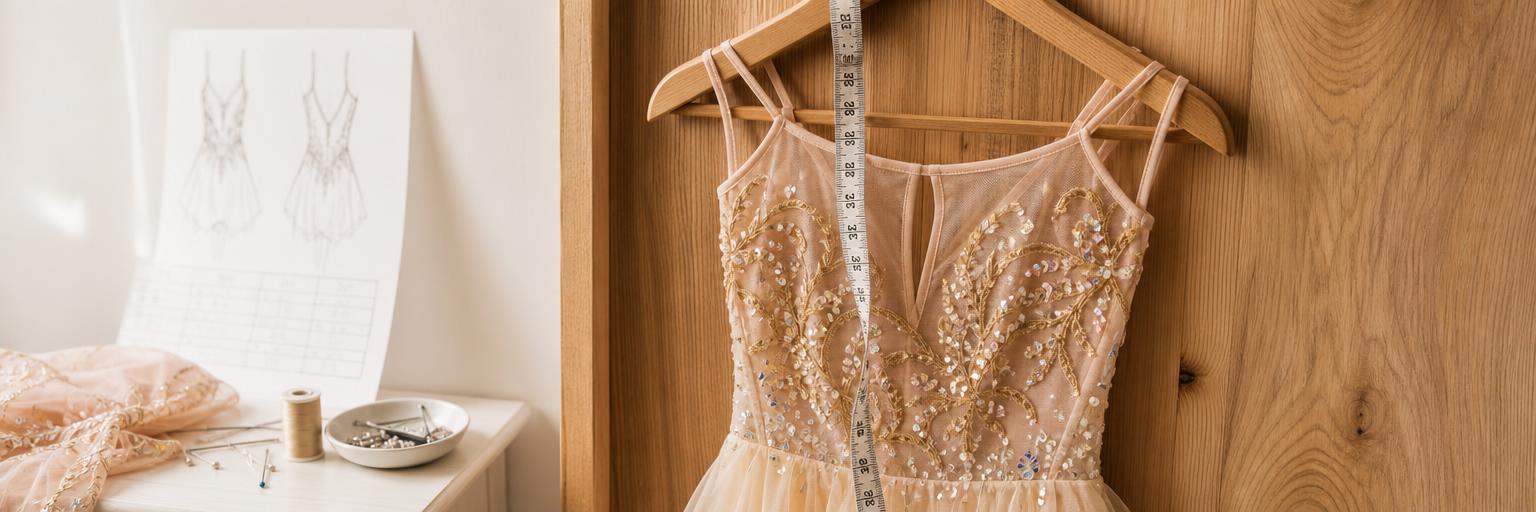
Call the studio director the day the costume arrives, because this is a common problem with a known process and the only real enemy is delay. Many studios keep the next size up in their group order or can arrange an exchange before the manufacturer's order closes. If the costume came straight to you and an exchange isn't possible, professional alteration is usually faster than an emergency reorder. Measure the child now, chest, waist, and hips, and have those numbers ready when you call.
Gear for this situation
What to do
- Call the studio director before doing anything else. Studios almost always have a process for this. Many keep extra sizes in their group order for exactly this situation. Some can arrange an exchange before the manufacturer's order closes. Some have a parent-to-parent loan or swap system. The studio's process is faster than any alternative, and they've handled this before.
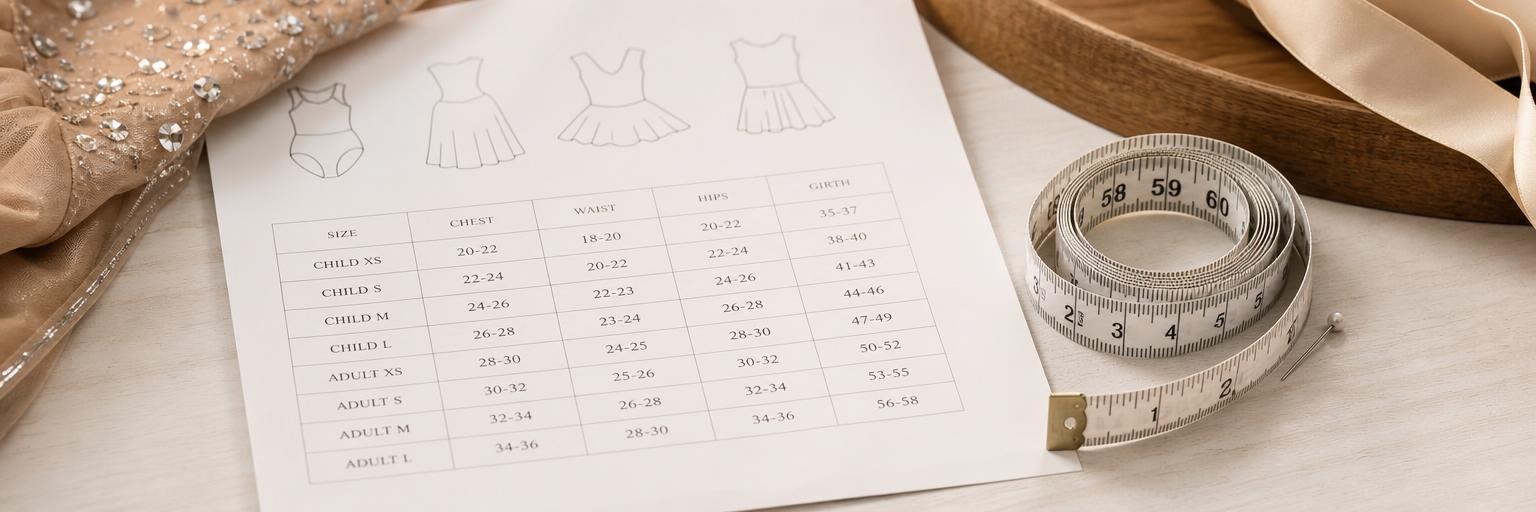
- Measure the child now: chest, waist, and hips. Have those measurements written down before you call. The studio or alteration professional will ask for them. Measuring from memory or from last season's clothes is not accurate enough for costume fit. How you take the numbers matters as much as taking them, tape snug but not tight, level all the way around, no sucking in for the waist; the full technique is in how do I know what size dance costume to order. Take the measurements at the end of the day rather than first thing in the morning, since a body settles longer through the torso and the waist reads about half an inch larger after a normal day of eating and moving around, which is the size she will actually be wearing the costume in. An exchange sized off a bad measurement just delivers a second costume that doesn't fit.
- Test the costume in motion, not just standing still, because a costume can pass every measurement and still fail on stage. Have her put it on and do the hardest things the routine asks of her: arms all the way overhead, a few kicks, a backbend, a turn, a deep plie or a floor slide if the number has one. Watch for the costume that rides up, gaps open at the neckline or armhole, binds across the shoulders when she reaches, or, on a leotard or unitard, pulls down at the seat the moment she lifts a leg. A piece that fits the tape measure but stops her from dancing full out is the wrong fit even at the right size, and you do not want to discover that from the wings on recital night. Note which movement breaks the fit before you call, since a neckline that gapes on a backbend and a one-piece that is too short through the body point a seamstress at completely different fixes.
- Keep the costume exchange-eligible while you sort the fix. Before anything is altered, or even worn beyond a careful try-on, photograph the costume, its size tag, and the packing slip, then leave the tags attached. Studios and costume companies resolve a wrong-size or mis-shipped costume far faster when you can send a clear photo of the size label and the fit problem, and most exchanges are void the moment tags come off or a seamstress touches a seam. Decide on alteration only after you have confirmed an exchange truly isn't an option.
- If the costume is too small and exchange isn't possible: professional alteration is faster than an emergency reorder. A seamstress experienced with dance costumes can add a back zipper, let out a seam, or add a panel in 3 to 5 business days if the fabric allows. Ask the studio if they have a recommended seamstress or alteration contact before searching on your own. And alongside alteration, scan the same-style used-costume route in parallel, because a teammate or another studio that ordered the same routine costume in the next size up is sometimes a faster fix than any seamstress; the buying and selling used comp costumes playbook walks the Facebook groups, studio swap pages, and the verification questions before money changes hands.
- If the costume is too large: this is easier than too small. A good seamstress can take in a bodice, shorten a skirt, or add boning to a chest panel. Where it gets hard is decoration. Anything with rhinestones, beading, or applique on a seam line makes alteration harder and more expensive.
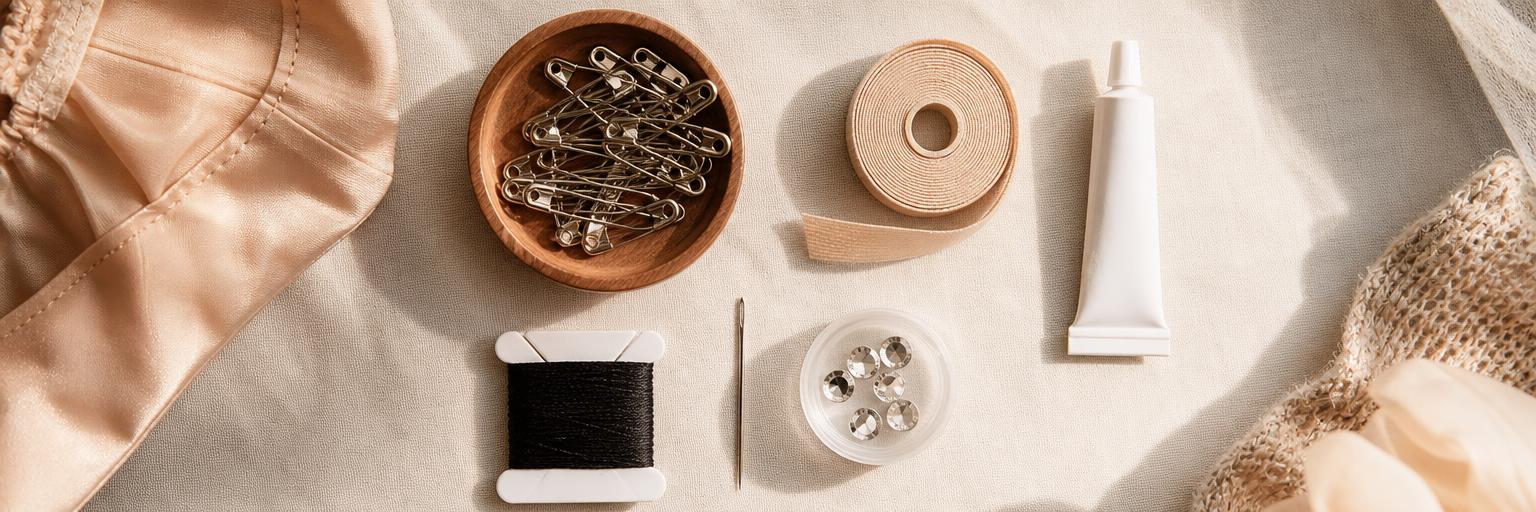
- Before you assume it needs a seamstress at all, separate a wrong size from a costume that simply does not sit right, because the second is often a safe ten-minute fix at home. The usual culprit on a child is straps that are too long, so the bodice slides down or the shoulders gape. You can shorten straps without cutting by folding the extra under and tacking it with a few hand stitches or a costume snap, which is fully reversible if she grows. A gaping neckline or armhole holds for the show with a strip of skin-safe double-stick body tape. A hook, snap, or hook-and-eye that keeps popping open is usually one resewn closure, not an alteration. None of this cuts a seam, disturbs the rhinestones, or changes the costume's size, so it stays exchange-friendly, and these reversible fixes are the kind a studio almost always allows, though a quick check first is smart if yours has modification rules. Save the seamstress for the structural work, the letting out, taking in, and added panels, and handle the strap-and-closure tweaks yourself. The costume-piece breaks backstage playbook is the same kit on a 90-second clock, worth reading once now so the body tape, safety pins, and clear nail polish are already in the bag for show day.
- Don't cut fabric, remove decoration, or attempt alterations at home without asking the studio first. Some studios have rules about costume modification that affect whether a dancer can perform. One bad seam on stage is worse than a costume that fits a little loosely.
- If the costume arrives more than 6 weeks before recital: contact the supplier directly. Some costume companies accept exchange requests if the original order was shipped incorrectly. Have the order confirmation, the studio's order number, and the child's measurements ready when you call.
Common mistakes
- Don't wait to call the studio. A costume that doesn't fit with three weeks to go has options. A costume that doesn't fit with three days to go has almost none. The first call should happen the same day the costume arrives. If the studio doesn't call back inside 24 hours and the clock is real, how to push back on poor studio communication has the escalation script (text the team mom, copy the director, name the date) that gets a verbal 'we'll figure it out' converted to an actual exchange-or-alteration plan before the days you have left shrink past the recovery window.
- Don't try to alter a too-small costume at home. A machine-sewn seam on a costume with no seam allowance, stretched across a child who has grown since the costume was sized, will not hold through a performance. A professional is required.
- Don't order a replacement online without confirming the exact style, color code, and costume code matches the studio's order. Most recital costumes are unique to the recital year and are not available through general retailers.
- Don't assume the costume needs to fit perfectly off the rack. Most costumes are designed with some adjustment in mind. Before calling for an exchange, check whether a snap, an elastic insert, or a simple hem adjustment might be all that's needed.