Quick answer
What is a dress rehearsal and what do I need to bring
When the studio's email named Saturday May 10th as 'mandatory dress rehearsal at the high school auditorium 9am to 1pm,' she has been to studio rehearsals all year but never the venue, and you cannot tell if you bring the full costume or class clothes.
Quick read
Dress rehearsal is the full run-through of the recital program in costume, usually at the performance venue, one to two weeks before the show. It's mandatory, not optional. Your child needs the complete costume (including shoes, tights, hair, and accessories) exactly as they'll wear it on recital day. The goal is to find and fix problems while there's still time. Anything that doesn't fit, doesn't stay, or doesn't match comes out here, not backstage the night of the show.
Gear for this situation
What to do
- Confirm the dress rehearsal is mandatory. For most studios, dress rehearsal is required attendance, not optional. If your child misses dress rehearsal, they may not be allowed to perform in the recital. The notice from the studio will say whether it's required. Assume required unless it explicitly says optional.
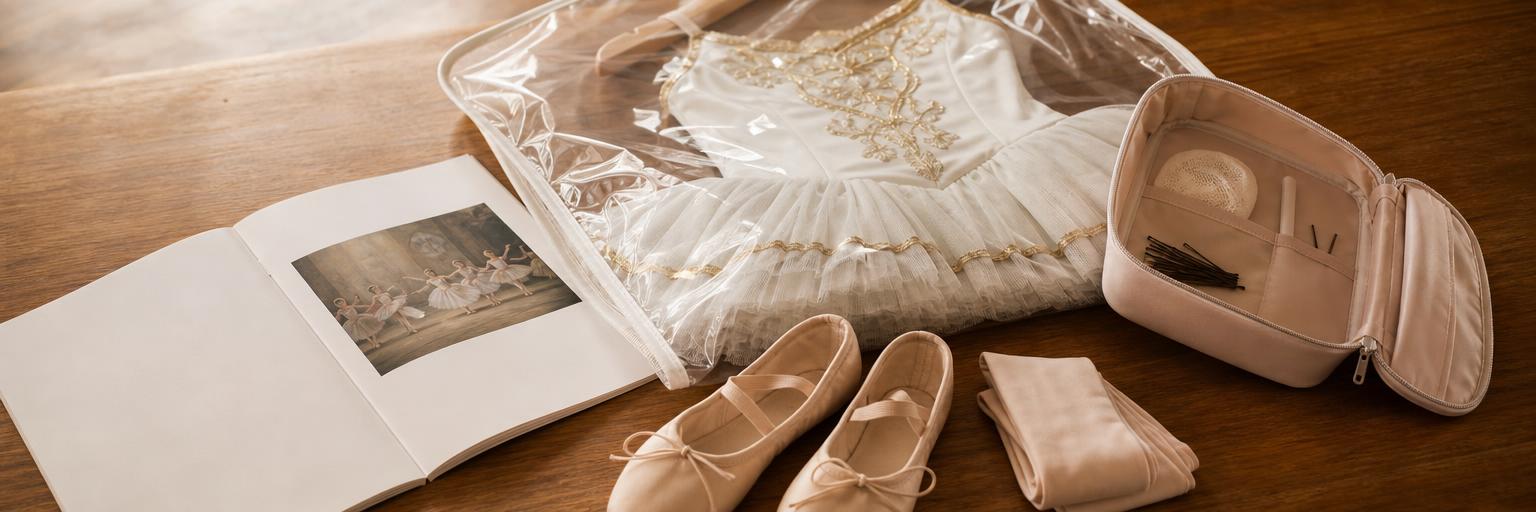
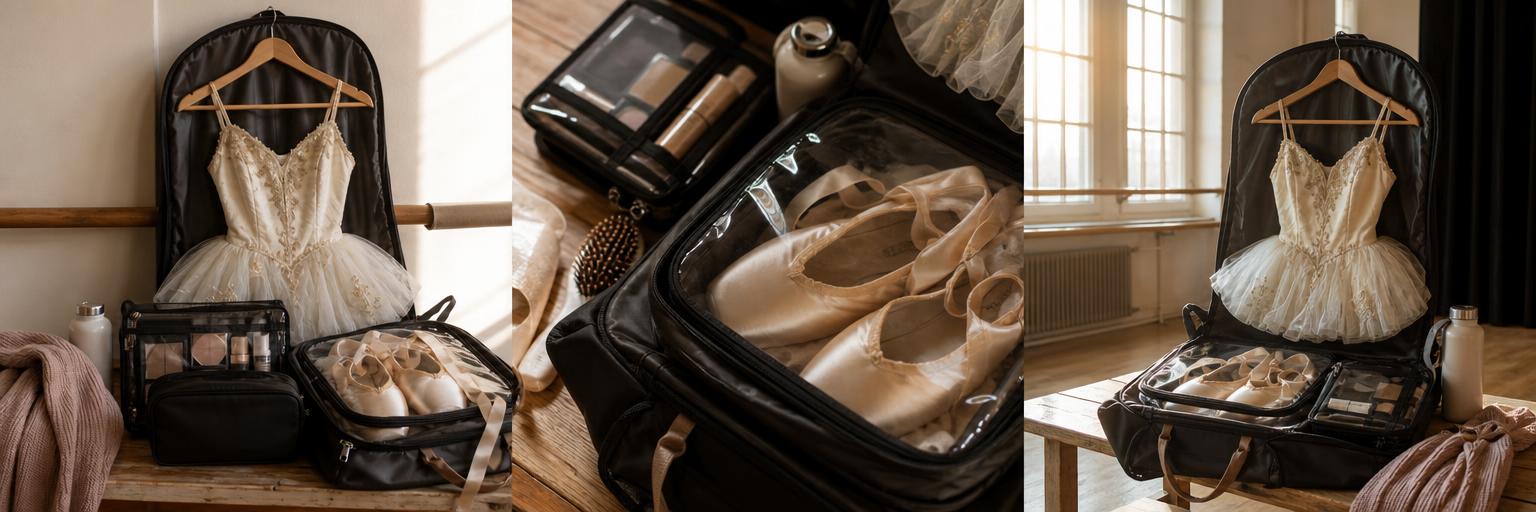
- Prepare the complete costume, not a partial version. Dress rehearsal is a full run-through in full costume. This means everything: the costume itself, the correct shoes (with proper tights on), the required hair style, any hair accessories or headpieces, and any required makeup. The point of dress rehearsal is to find problems while there's still time to fix them. A dancer who shows up with the right costume but missing the headpiece gives the director one week to solve a problem instead of one minute. The first recital prep playbook covers the lead-up: which gear to buy first off the costume sheet, how to verify shoes and tights against the spec, and the night-before bag-load that puts every piece in the right hand at the right moment.
- Arrive 15 to 20 minutes early. Studios typically schedule dress rehearsal in block groups (usually by class, by age group, or by number). Arrive before your dancer's scheduled block. Hair and costume should be complete before you arrive at the venue, not put together in the lobby. Parking at a performance venue on dress rehearsal day can be difficult, so plan for it.
- Expect a lot of waiting, and pack for it, because dress rehearsal does not run like the recital. Numbers are often rehearsed out of program order, repeated, or stopped halfway for a staging fix, so your dancer may perform her thirty-second routine and then sit for an hour or two before she is finished for the day. Bring a button-front or zip cover-up she can wear over the costume between turns so it stays clean, snacks that will not stain (water and plain crackers, not red juice or chocolate), and a quiet activity for the downtime. A young dancer who is bored, hungry, and still in full costume is the one who ends up with a stain or a wilted bun before she has even performed.
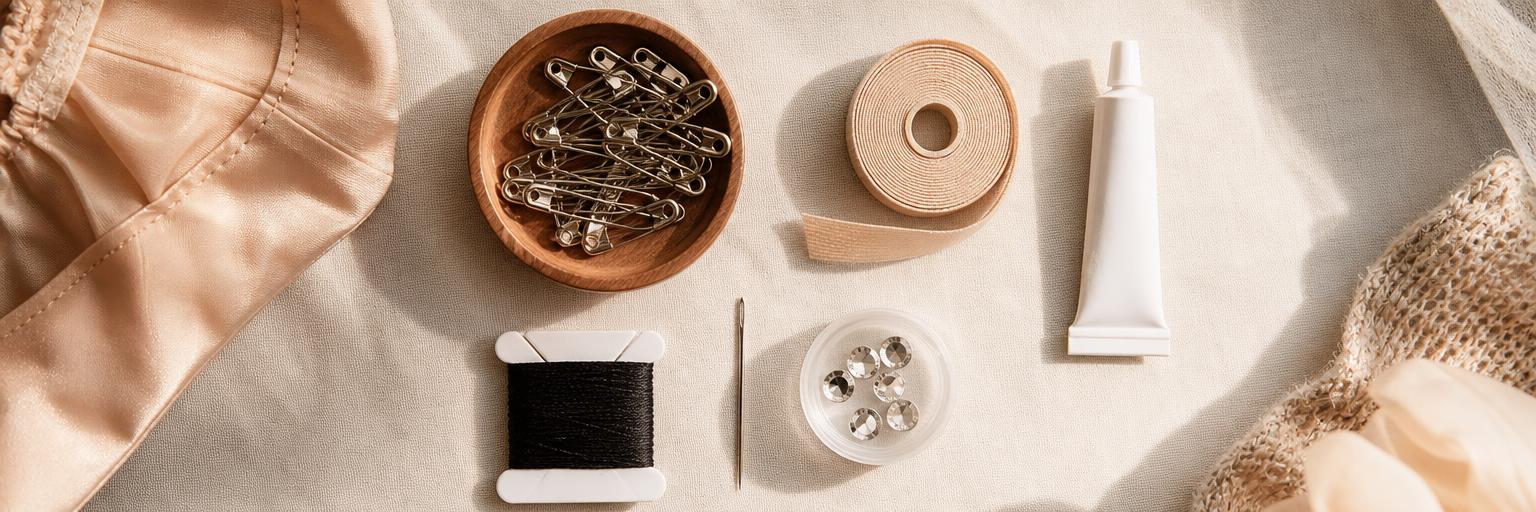
- Bring the full backstage kit for this run-through. Dress rehearsal is when you find out that a strap rubs, a tap screw is loose, or the tights shade doesn't quite match under stage lighting. Bring the same kit you'd bring to the actual performance: safety pins, clear nail polish for runs, a small Phillips-head screwdriver if your child wears tap shoes, and backup tights in the required shade. When something does fail today, the backstage costume break playbook walks the actual fix for each one (which glue NOT to use on costume fabric, how a safety pin holds a popped closure, the slow re-mesh for a split zipper, the no-sew hem-tape save), and dress rehearsal is the day to discover the missing item, not Saturday at 6:45pm.
- Use the run-through to see her under stage lights from the audience, because dress rehearsal is the only time before recital that you can. Stage lighting and the distance to the seats wash color out, which is why proper stage makeup looks alarming up close and reads as almost nothing from row fifteen. The first-year instinct is to scrub some of it off in the lobby, and that is the mistake, because a bare-faced little dancer washes out under those lights while the kid beside her pops. If you have a second adult along, send them out to sit in the house during her number and report back the things only that view catches: whether the face reads or vanishes, whether the costume stays put through the choreography, whether she lands in her spot. The seats tell you what no dressing-room mirror will, and dress rehearsal is the one day you can still fix it before an audience is watching. If the lighting check shows her face washing out, the performance makeup and hair emergency kit covers the setting spray + powder routine that makes stage makeup hold its color, and the right shade depth for stage lights (one shade darker than her real skin, brown eyeliner instead of black for younger dancers).
- Take notes on anything the teacher or director corrects. Dress rehearsal is a working session, not just a preview. Directors will stop numbers to give corrections, adjust staging, or send families back to fix a costume detail. Write down any note the teacher gives directly about your child's costume or appearance so you can address it before recital day.
- Confirm recital day pickup and drop-off logistics while you're there. Dress rehearsal is usually at the same venue as the recital. Use the visit to confirm where drop-off happens, where backstage is, where parents wait during the performance, and where pickup is after the show. First-time families who haven't been to this venue before often have logistical questions. Dress rehearsal is the right time to ask them.
- Find out who is backstage with her on recital day, because at a lot of studios the answer is not you. Many recitals keep parents out of the wings and the dressing rooms and run the backstage on assigned helpers or volunteer backstage parents instead, taking each dancer at a check-in and returning her after the finale. Dress rehearsal is where you learn that system before it counts, so ask how drop-off and pickup work, who is supervising her age group, and whether she stays backstage for the whole show or sits with you until her number. Then pack so someone who is not you can run her costume, which means one labeled bag with her name on everything, the costume pieces and shoes stacked in the order she puts them on, a water bottle and a snack that will not stain, and nothing in there she cannot manage or at least explain to a helper. Walk her through it once at the rehearsal, where the bag lives, what goes on first, who to ask when she needs help, so the first time she does it without you in the room is this practice run and not the real one with an audience already in their seats.
Common mistakes
- Don't skip dress rehearsal because it seems optional. It's almost never optional, and missing it often means missing the recital. If you're not sure, ask the studio directly.
- Don't show up with an incomplete costume. Dress rehearsal is not the time to ask whether the hairpiece is needed or whether the makeup is required. The answer is yes to everything on the costume sheet. If you're not sure something is required, confirm with the studio before dress rehearsal, not during.
- Don't treat dress rehearsal as a photo opportunity. Most venues prohibit photography during the actual run-through. The director needs to focus on the performance, not navigate around phones. There's usually a photo window before or after, so ask the studio when that is.
- Don't wait until recital day to fix what the director noted. Dress rehearsal corrections are usually about fit, appearance, or staging. If the director said the heel is wrong, the tights shade doesn't match, or the hair is not staying put, those are problems to solve in the week before recital, not in the hour before the performance starts.