Quick answer
Can my dancer wear a compression shirt under her leotard for sensory needs
When the feel of the leotard is the thing standing between her and getting through class, or she settles the moment she is in something snug, and you want a layer that gives her that without making her stand out.
Quick read
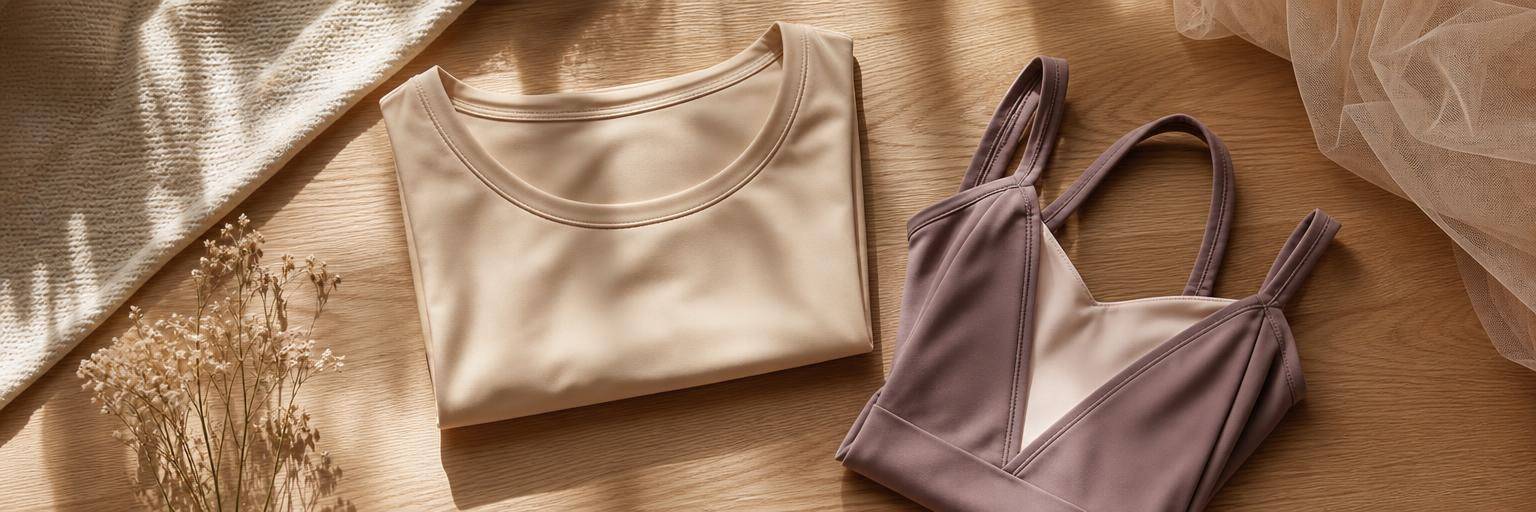
Yes, and it is a real strategy occupational therapists use, not a workaround. Two different sensory things can happen with a leotard, and the fix is slightly different for each. If she is calmer and more focused in tight clothing, that is deep pressure, the same input as a firm hug, and a thin compression undershirt worn under the leotard gives her that steady pressure all class so she can settle and dance instead of fighting her own body. If instead the leotard's seams, the tag, or the feel of the fabric is what sets her off, the fix is a seamless, tagless layer between her skin and the leotard so the irritating part never touches her. What to buy is the same either way: a thin, seamless, tagless undershirt or tank in a four-way stretch so it moves with her, in a skin tone or a color that disappears under her leotard. Brands made for exactly this include Kozie, Sense-ational You, CalmCare, and the seamless SmartKnitKIDS line. The one dance-specific catch is sizing: you want it snug enough to give the pressure but not so tight it shortens her reach or her line, because a dancer needs full range, so size for support, not for squeeze. Two things to do first: talk to her OT or therapist about whether compression actually helps her and how much, since this is individual and not something to guess at, and check with the studio that an under-layer is allowed, because some dress codes are strict about the look on stage. None of this is medical advice; it is the gear side of a plan her therapist leads.
Gear for this situation
What to do
- Figure out which sensory thing is happening first, because it changes why you buy more than what you buy. Some dancers are calmer in tight clothing, which is deep-pressure input like a firm hug, and a compression layer gives them that all class. Others cannot stand the leotard's seams, tag, or fabric feel and need a smooth layer between skin and leotard. The garment you buy is the same kind either way; knowing the reason just helps you and her OT judge whether it is working.
- Buy a thin, seamless, tagless, four-way-stretch undershirt or tank. The four-way stretch is non-negotiable for a dancer because it has to move with her through full range, and seamless plus tagless is what removes the irritation. Get it in a skin tone or a color that vanishes under her leotard so it does not change the look. Brands built for this include Kozie, Sense-ational You, CalmCare, and the seamless SmartKnitKIDS line.
- Size for support, not for squeeze, which is the dance-specific catch. A compression layer needs to be snug enough to give steady pressure but not so tight it shortens her reach or breaks her line, because a dancer who cannot fully extend is worse off than one who is a little under-compressed. When in doubt, size up a touch and let a snug-but-mobile fit do the work.
- Loop in her OT or therapist before you commit, because compression is individual. Whether deep pressure helps her, and how much, is a question for the person who knows her sensory profile, not a guess off a product page, and they can tell you whether a compression layer, a seamless one, or something else is the right call. This is the gear half of a plan they lead.
- Confirm the studio allows an under-layer, especially for stage. Class is usually flexible, but some dress codes and competition looks are strict about a visible strap or line, so ask before recital season what is allowed and whether a skin tone or a specific cut is required. The what to wear under a costume answer covers the hiding-layer cuts that disappear under different necklines.
Common mistakes
- Don't size it tight to maximize the pressure. More squeeze is not more benefit past a point, and a too-tight layer restricts the range she needs to dance, which trades one problem for another. It should feel snug and she should still be able to move. Tight is a different thing.
- Don't buy a generic athletic compression top and assume it is the same. The sensory lines are seamless and tagless on purpose, and a regular compression shirt with flat-lock seams and a sewn-in or printed tag can be the exact thing that sets her off. Buy the one made for sensory needs, or check a regular one carefully for seams and tags first.
- Don't treat the garment as the whole plan or as medical advice. A compression layer is one tool that supports what her OT or therapist is already doing, not a treatment, and whether it helps is something they assess. Get it as part of their plan, not instead of one.