Quick answer
What should my child wear under their dance costume
When the recital costume arrived in a sealed bag this week, the bottom is a brief cut, you can see the regular-underwear line through the front when she tries it on, and dress rehearsal is Friday.
Quick read
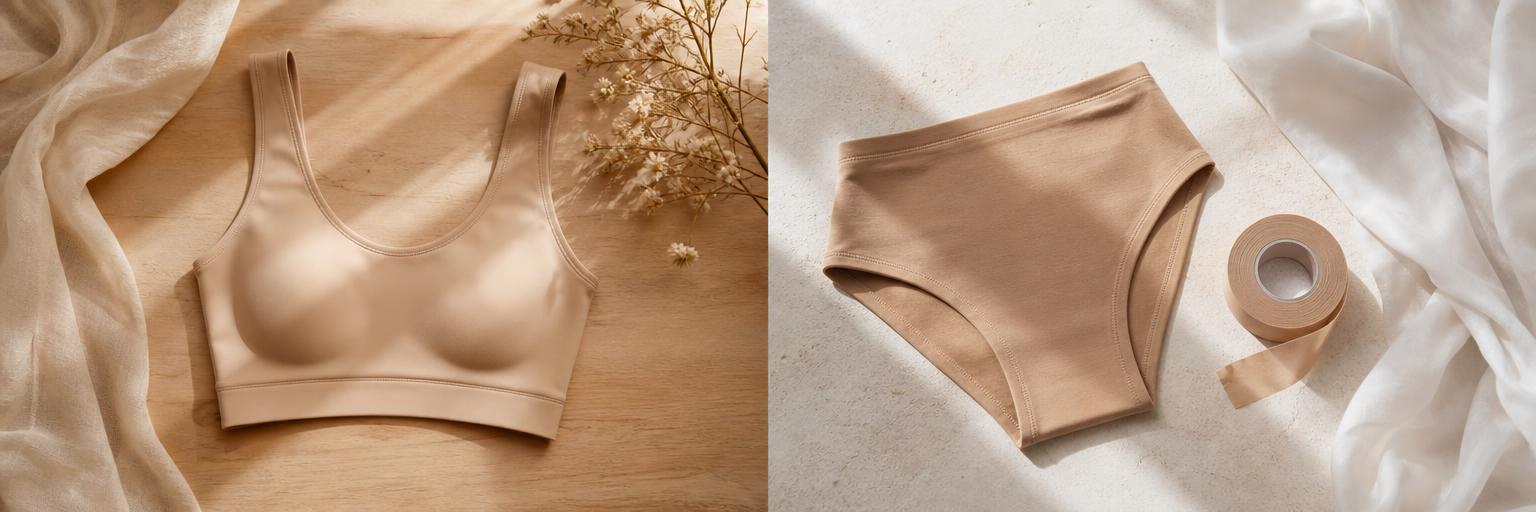
Check the costume for built-in coverage first. Many recital and competition costumes have bra cups, a modesty panel, or a shorts lining already sewn in, and when coverage is built in you add nothing there. On the underwear question every parent asks, the answer is usually none, because regular underwear shows its line and waistband under stage light. Most dancers wear nothing under a brief or trunk bottom, or a seamless skin-tone pair if she needs one for comfort. Tights are the real base layer and often provide the bottom coverage too, so put the costume's required tights (footed, convertible, or transition) on first. If she needs chest coverage and the costume has no cups, reach for a seamless skin-tone leotard, a nude bra, or stick-on cups, never a regular bra whose straps and band will show. The rule under stage lighting is simple, seamless and skin-tone, the minimum layer that solves the specific problem, because seams and ridges that look invisible in living-room light show up from below on stage.
Gear for this situation
What to do
- Read the costume spec sheet before buying any undergarments. Many competition costumes have built-in bra cups, modesty panels, or shorts linings already sewn in. If the costume is already lined or has built-in coverage, no additional layer is needed in that area. Open the costume when it arrives and check.
- Ask the studio or choreographer what they require for under-costume dress. Some studios specify no visible panty lines, no colored undergarments under light costumes, or specific modesty coverage rules by age group. Get the answer before the first dress rehearsal.
- Go seamless and skin-tone for anything worn under a fitted costume. Visible seams, waistband ridges, and decorative elements on regular underwear show clearly under performance lighting, especially from the front and from low angles. The color should match the costume lining or the dancer's skin tone.
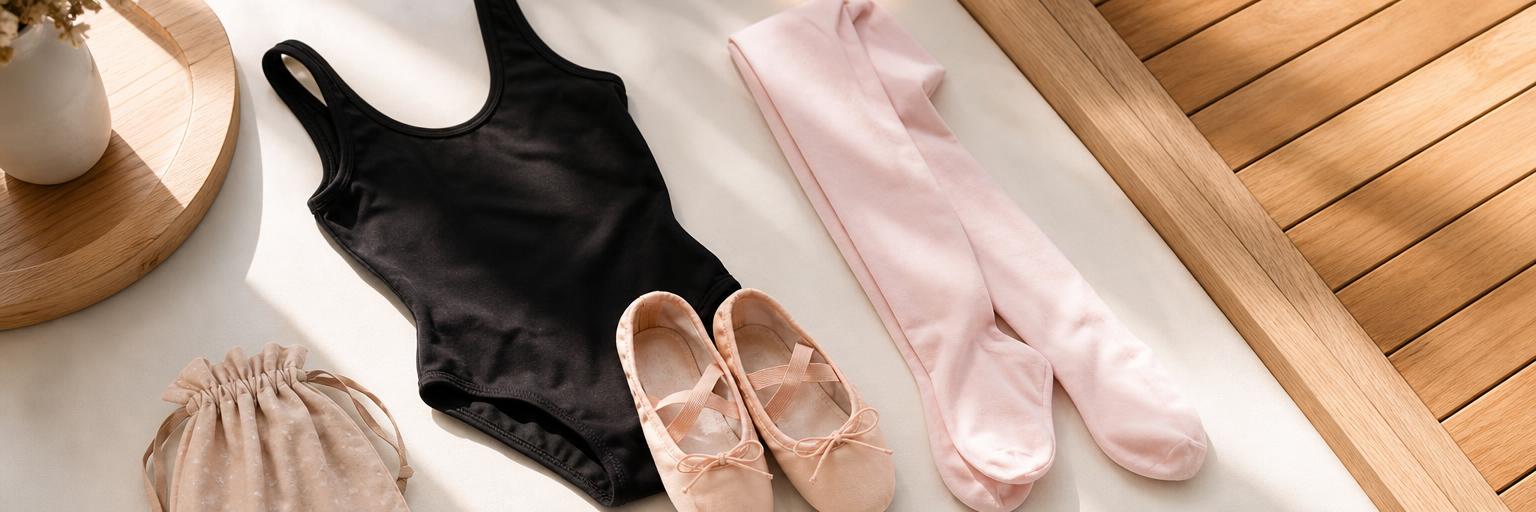
- Know that the tights are the underwear under most costumes, so think hard before adding panties beneath them. Dance tights are made to be worn with nothing underneath, and that is the cleanest line you will get on stage. Slip regular underwear under footed or convertible tights and you put back the exact waistband ridge and panty line the costume is trying to hide, plus a seam that catches the light. If a young dancer is not comfortable going without, or a quick change leaves no time to manage tights, the fix is a seamless skin-tone dance brief or a built-in costume short, not everyday underwear. Whatever the dancer wears, match what the studio tells the whole class to do, because group costume photos look off when one dancer shows lines and the rest do not. For the specific competition-day version of this question (including the period-week reality, the seamless dance-brief brands, the period-underwear option, and what to do when a dancer is uncomfortable going without), the underwear on competition days walkthrough covers the conversation studios assume parents already had.
- Pick convertible tights over footed ones for a young dancer who will need the bathroom in costume, because it is the under-costume choice parents most often wish they had made. A one-piece costume or a leotard worn over footed tights has to come most of the way off to use the toilet, and at most recitals you are not backstage to help, so a five or six year old is left either waiting or peeling off tights she cannot get straight again on her own. Convertible tights have a small opening at the ball of the foot, so she can slip her foot out and pull them down to go, then back up, without taking off her shoes or the whole costume, and the same pair doubles as a footless or transition tight when a number wants a bare foot. The dance tights guide lays out the Body Wrappers convertible line most studios accept (footed, footless, and run-guard in one pair) so the same tight covers a footed number, a bare-leg number, and the bathroom in costume. Send her to the bathroom right before the costume goes on no matter what, pack a labeled backup pair, and if the costume genuinely has to come off, that is exactly what the studio's backstage helper is there for, so make sure she knows to ask.
- For dancers who need bra coverage: use a dance bra, a seamless bralette, or a thin seamless skin-tone camisole for younger dancers who only need a light layer rather than structure. Regular underwire bras with visible straps, bows, or colored detailing show under open-back or thin-strapped costumes. A standard sports bra works if the costume fully covers the back.
- For thin or light-colored costumes, plan for chest show-through even on a dancer who does not need a bra. Stage lights coming through thin lycra, or a cold backstage, makes the chest read in a way nobody notices in the dressing-room mirror, and it turns up in photos and from the front rows. A built-in shelf or a dance bra solves it when the costume back allows one, but for a strappy or open-back cut that hides nothing, reusable skin-tone petals (adhesive covers, a few dollars a pair and good for most of a season) sit flat under the fabric and read as nothing on stage. Match them to the dancer's own skin, keep a spare set in the kit because the adhesive eventually gives out, and like everything else here, check the look under a bright light at home before the costume goes on for real.
- For short costumes where hip or thigh coverage matters: dance shorts or compression shorts in skin tone prevent costume riding and make transitions more comfortable. These are different from regular bike shorts. They're seamless and sit flat under tight costume fabric.
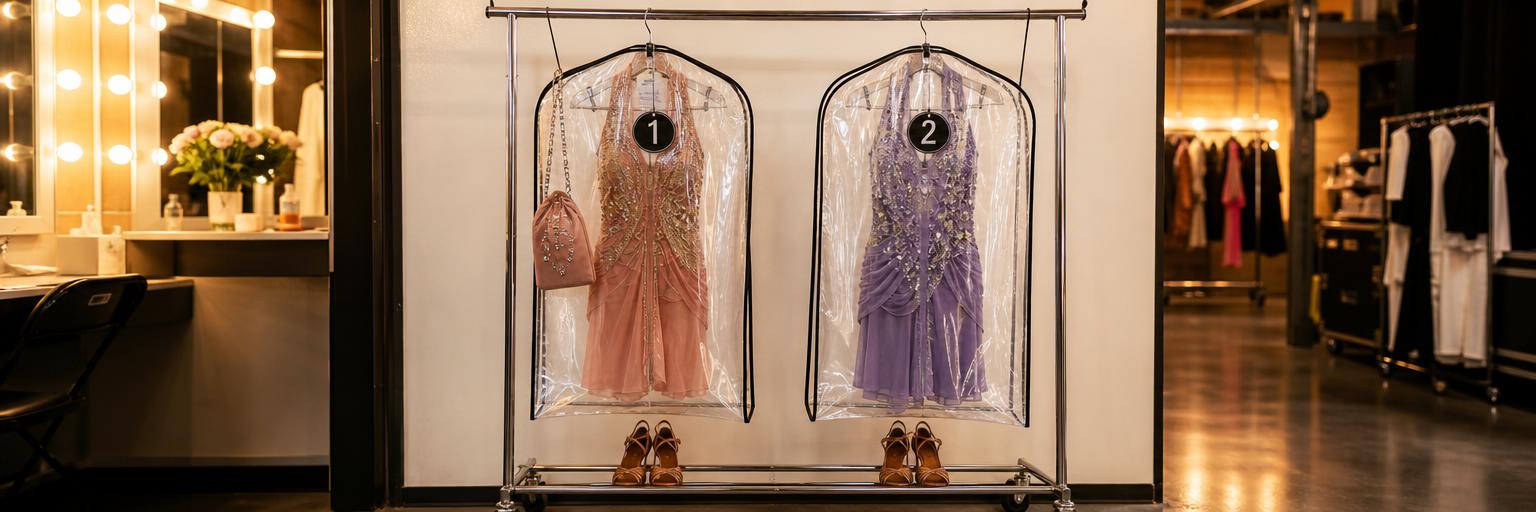
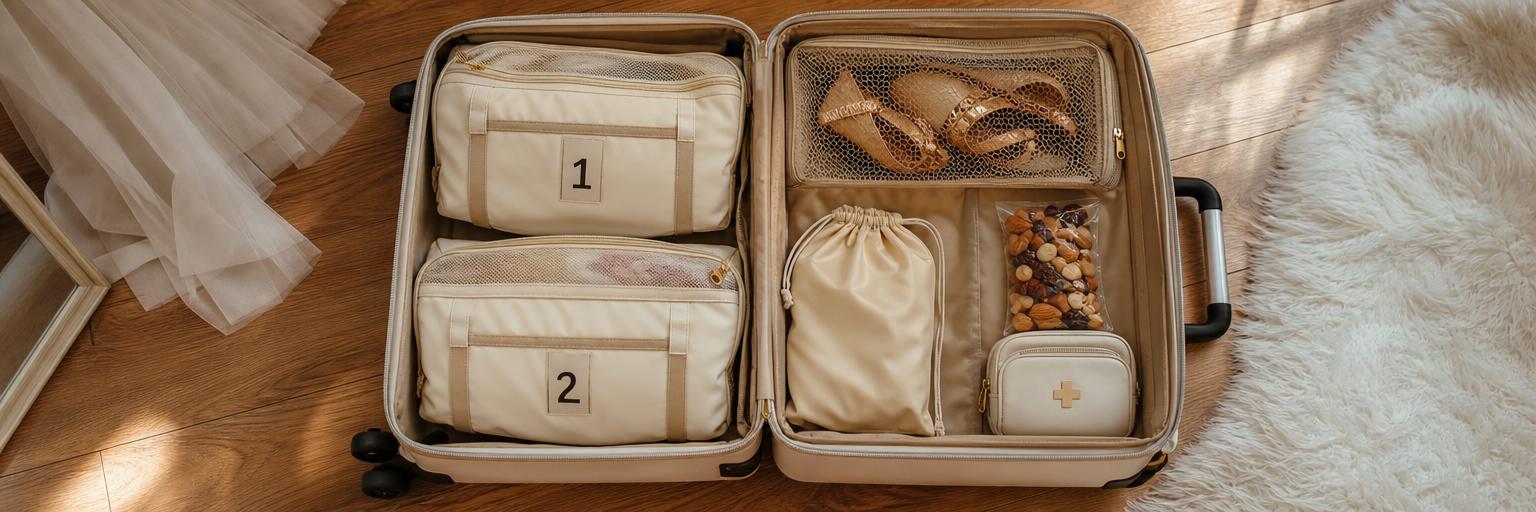
- For competition dancers with multiple costume changes: pack under-costume items with each costume inside the garment bag, labeled with the routine number. Quick-change stress is when the wrong under-costume items go on under the wrong costume. The quick-change 101 playbook covers the bag-loadout order (cami first, costume on top, accessories in a labeled pouch) and the 90-second wing protocol so the right under-layer lands under the right number.
Common mistakes
- Don't assume regular underwear is invisible on stage. Performance lighting from below and from the sides is designed to show the dancer's lines, which means it also shows everything underneath. White underwear under a light-colored costume is visible to audiences and judges. Test the look under a bright light at home.
- Don't use visible-seam or structured undergarments under tight performance costumes. Bra underwire lines, waistband ridges, and underwear seams show through fitted fabric under stage lighting. Seamless construction is not just about comfort. It's about what the audience sees.
- Don't buy new under-costume items for the first time on competition or recital day. Elastic that rolls, straps that dig, or shorts that ride up are discovered at rehearsal, not on stage. New under-costume items should be tested at home before performance day.
- Don't add more coverage than the specific problem requires. Extra layers under a fitted costume change the silhouette, add heat, and restrict movement. Solve the specific problem (bra coverage, hip coverage, visible panty line) with the most minimal item that works.