Quick answer
What to bring to your studio placement audition
When it is Friday at 6:42pm, placement auditions are tomorrow at 9am at the studio she has danced at for years, the email's dress code line said 'be ready to be seen,' and her bag is on the bench by the front door.

Quick read
It is Friday at 6:42pm. Placement auditions are tomorrow at 9am. The studio sent the email last week with the warm-up time, the dress code, and the part that says 'be ready to be seen.' Your bag is on the bench by the door. You think you know what to put in it. Here is what I would actually pack, what to wear so you do not look like you are trying too hard, what counts as a red flag in how the panel groups you, and what to do with the 24-hour rumination spiral that hits the second you walk out of the studio tomorrow.
Gear for this situation
What to do
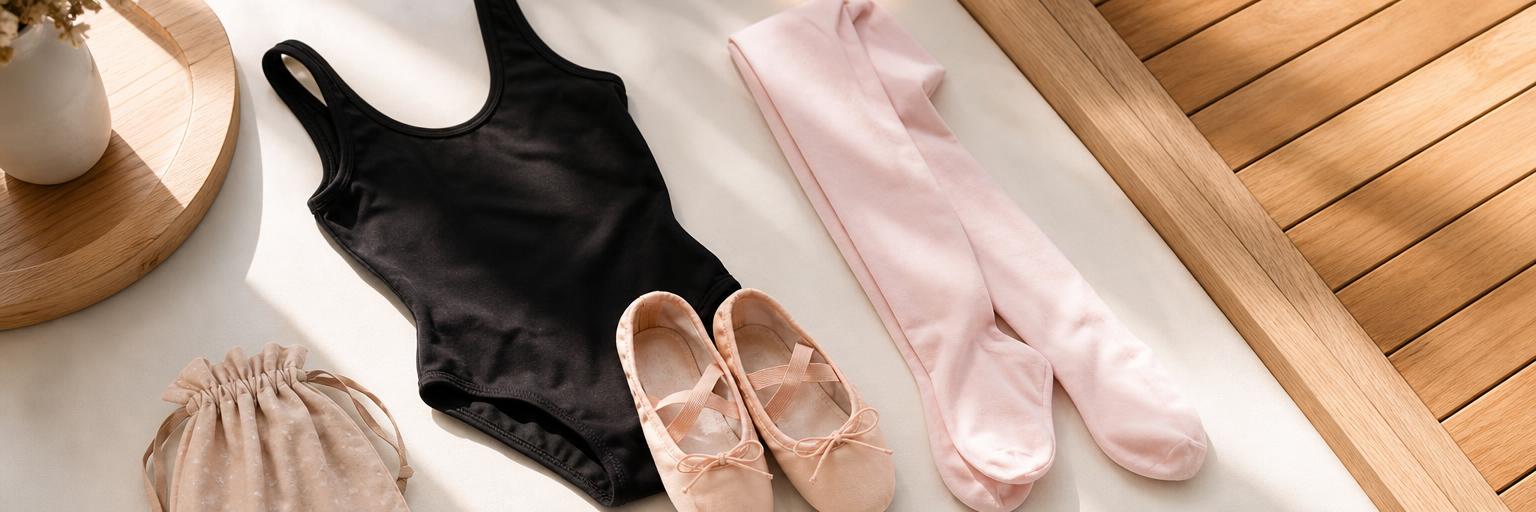
- The bag. Clean black leo. Not the one you wore to Saturday class three times. Fresh, dry, no pit stains. Convertible tights (black if your studio leans classical; tan if your studio leans modern). Jazz shoes. Contemp foot undeez. Hair done before you leave the house, not in the studio bathroom at 8:50am. Water bottle. One snack you have eaten 50 times before (this is not the day to try a new bar). Audition number sticker pre-cut so you can put it on at 8:55am without fumbling.
- What to wear that reads 'serious without trying too hard.' The leotard tells the panel you respect them. The convertible tights tell them you came ready for combinations in any genre. Avoid: matching crop-and-shorts sets in bright colors (reads as 'I want to be seen but not auditioned'), brand-name dancewear that is all logo (reads as 'I bought the kit, not the discipline'), anything you would wear to a friend's birthday class (reads as 'this is not a real day for me'). The dancers who get placed up are the ones whose outfit does not compete with their work.
- The warm-up. Get to the studio 30 minutes early. Use the back corner. Roll out your feet on a tennis ball. Find your developpé on the wall. Run your across-the-floor combinations from last year's most-used class. Don't do tricks for the panel before they ask. Trick-bombing the warm-up is the surest way to look unready when the actual count starts.
- In the room: what they are actually watching. Not the trick. The trick is the lowest-information moment of the audition. They are watching: your retentions (do you remember corrections from one combination to the next?); your spatial awareness (do you collide?); your direction-changes (are you 90 percent done with the turn before the music says you should be?); and how you treat the dancers around you in the dead moments between combinations, when the panel is still watching but the audition is not. The retention is the single most weighted thing. When the panel does ask for a trick (a leap, a turn, your best switch), the play is the version you land 9 times out of 10, not the one you land 6 times out of 10. A clean triple reads as control; a fourth-rotation you barely save reads as risk you cannot afford to manage. The dancer who places up is the one whose biggest trick is the one she actually owns.
- Groupings: what is normal and what is a red flag. Normal: being moved between groups two or three times across the audition (they are checking you against different dancers). Normal: being asked to do a specific combination one-on-one with another dancer (this is them comparing). Red flag: being left out of an entire genre's grouping and not being asked to demonstrate or repeat it (this is them showing you, gently, that they have already placed you). Red flag: being grouped only with dancers you know are getting placed down (they would not group you with them unless you were getting placed there too). Red flag is information, not failure. Read it and decide what you want to do about next year.
- What to do with the friend dynamic. Your closest friend in the studio is auditioning too. You will compare what group you were in. The right move: agree before the audition that you will not text grouping observations to each other during the day. After the audition: get food together; do not compare. The placement email comes a week later. Whatever happens, the answer to 'are we still in the same class?' is decided then, not by what you saw in the room.
- The 24-hour rumination spiral. Most dancers come home from a placement audition and replay every moment for 24 to 48 hours. This is normal. What helps: get out of the dancewear; shower; eat real food; do something physical that is not dance (walk the dog, ride your bike); do not watch your friends' Instagram stories from the audition (they will edit out the parts they hated). What does not help: rerunning the combinations in your head trying to figure out what you 'did wrong.' You did not do anything wrong on the count where you missed a count. The spiral catches you because there is no answer to it; you have to wait for the email.
- If the panic gets bigger than the audition. Light clinician gate. The 24-to-48-hour rumination is normal. If you cannot sleep three nights in a row, if you cannot eat the day after, if you feel a panic-attack pattern starting (chest tight, hands shaking, brain locked on the same loop), or if you feel like you have to dance perfectly or your life is over, talk to your parents and ask to see your pediatrician this week. The audition is not worth losing your relationship with your own body over. Plenty of dancers who got moved down a level had a better next year than the ones who got moved up; that is not nothing. The burnout, panic attacks, and quitting competitive dance walkthrough uses the same clinician gate for the larger version of this pattern and the parent-side cues for when to make the call.
Common mistakes
- Don't wear a brand-new leotard you have never danced in. The first time you wear a leotard is the first time you find out it cuts wrong in arabesque. Audition is not the day for first-wear.
- Don't try a new trick in the audition combination. The panel did not ask for the double-front-aerial. If they wanted it, they would have asked. Showing up with a trick they did not ask for says 'I do not listen,' which is the opposite of what you came to say.
- Don't compare grouping observations to your friend during the day. You will read the same observation differently after the placement email lands a week later. Talk after.
- Don't text the studio director that night to ask how you did. They will not tell you and now they know you are anxious about it. The email is the answer; the question is when, not what.
- Don't decide what next year looks like before the placement email. You do not have the data yet. The data is the email.