Quick answer
What does my child need for a combination class
When the studio schedule says 'combo class' and you're not sure whether one shoe works for multiple styles or whether your child needs three different pairs.
Quick read
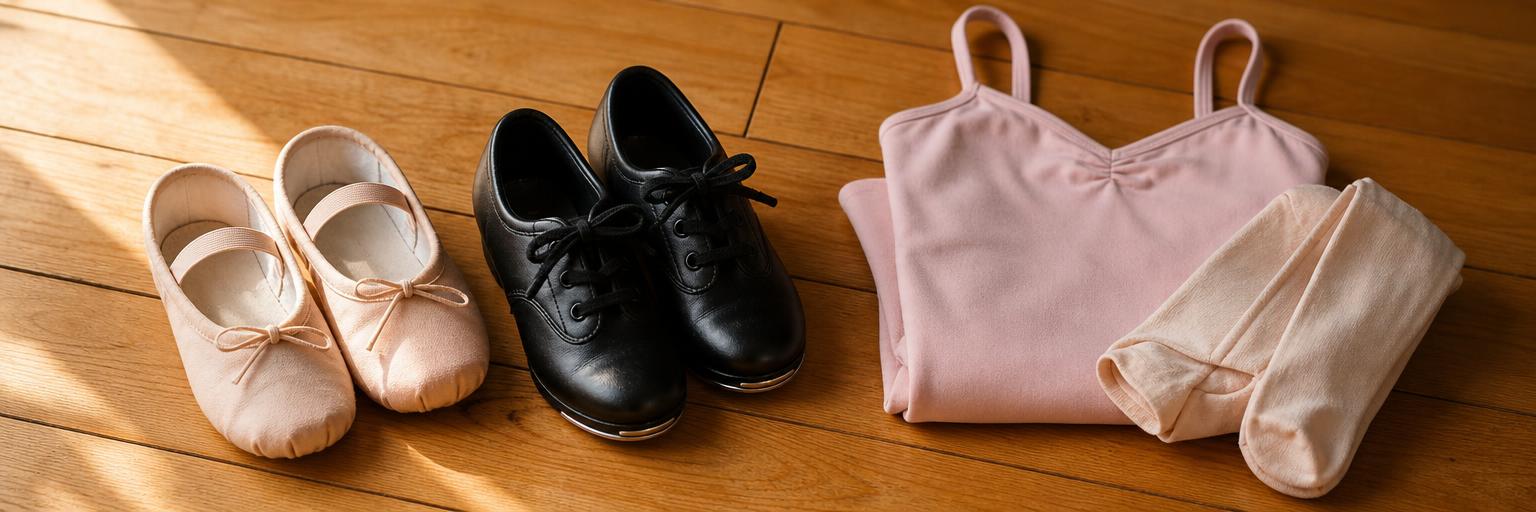
Combo class means multiple dance styles in one class period, and most studios require a different shoe for each style. A ballet slipper does not work for tap, and a tap shoe does not work for ballet. The most common beginner combo is ballet plus tap: you need both shoes, sized separately using each brand's own chart.
Gear for this situation
What to do
- Ask the studio what styles the combo class covers and what shoes they require. Most studios that run beginner combo classes list the shoe requirements in the welcome packet or on registration. If the packet doesn't specify, one email or text to the front desk gets you the answer before you order anything.
- Don't assume one shoe covers multiple styles. Ballet and tap require completely different shoes for completely different reasons: tap shoes have metal taps that click on the floor; ballet slippers have soft leather or canvas soles that let the foot point and flex. A ballet slipper in a tap class is unusable, and a tap shoe in a ballet class makes the wrong sound on every step.
- For the most common beginner combo (ballet plus tap): you need both a canvas full-sole ballet slipper AND a beginner leather tap shoe. Buy them separately, sized separately. Ballet slippers typically run 1-2 sizes smaller than street shoes; tap shoes vary by brand but usually run closer to street size. The beginner ballet slippers guide and the beginner tap shoes guide both have current sizing notes and picks.
- If the combo includes jazz: jazz shoes are a third separate pair. Split-sole canvas is the most common beginner class requirement. Same sizing rule applies: use the brand's chart, not street size. The jazz shoes guide covers what to look for at the beginner class level.
- Order all required shoes at once from one retailer when possible. Discount Dance and DancewearCorner both carry Capezio, Bloch, and So Danca. Ordering from one place means one shipping window, one exchange conversation if a size is wrong, and one return policy to understand before you click buy.
- Try every pair on carpet before your child wears them to class. Scratched soles or marked taps make returns impossible. Most dance retailers allow exchanges if shoes are unworn and in original packaging. Don't let your child wear them outside or on hardwood until you're sure the size is right.
Common mistakes
- Don't buy generic 'dance shoes' or a 'combo class shoe set' from Amazon. Sets almost always include poor-quality items that studios reject, and bundled sizing is usually wrong for at least one shoe in the package.
- Don't buy one pair and hope it works for multiple styles. One wrong class day with the wrong shoes wastes the class, and some teachers will send you home before the next lesson to get the right pair.
- Don't leave growing room in tap shoes the way you would in sneakers. Extra space in tap shoes shifts where the taps contact the floor and makes it harder to learn the basics. Fit tap shoes snug with toes near (but not curled at) the end.
- Don't size all three shoes the same way. Ballet slippers run 1-2 sizes smaller than street shoes. Tap shoes usually run closer to street size. Jazz shoes vary by brand. Read each brand's chart separately.