Quick answer
What does my child need for their first tap class
When tap class starts next week and you need to know whether any hard-soled shoe works, what 'tap shoe' actually means, and whether the shoes need to be broken in before the first session.
Quick read
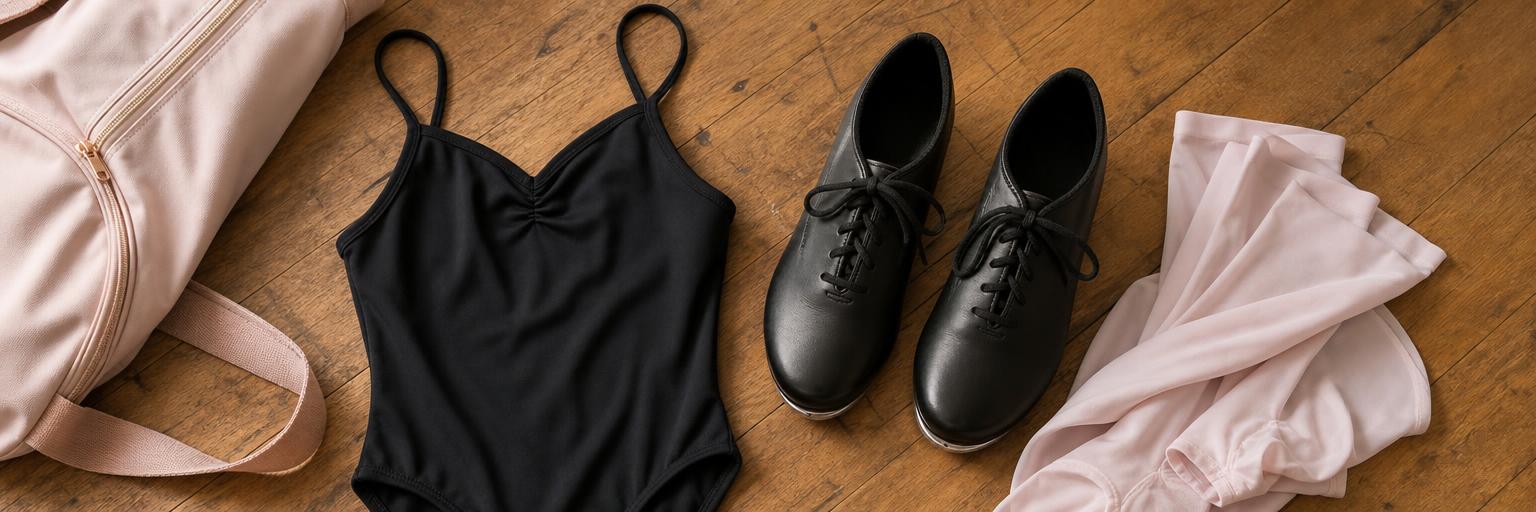
Tap class requires tap shoes with metal taps: not sneakers, not dress shoes, not toy-store costume shoes with plastic taps. Proper beginner tap shoes cost $35-50 and come in Mary Jane (young children, easy on/off) and lace-up styles (older students). Class attire is usually the same as other styles: fitted clothing the teacher can see the feet through. Break the shoes in at home for a few sessions before the first class: tap shoes are stiffer than sneakers.
Gear for this situation
What to do
- Confirm the required tap shoe style with the studio before ordering. Most studios specify Mary Jane style (strap closure, no lacing) for young children because it's faster on/off between styles in a combo class. Lace-up oxfords are standard for older students. Some studios also specify color: black is most common, tan is required by some recital programs. Ask before ordering: 'What tap shoe style and color does the class require?'
- Buy from a dance retailer, not a toy store or general shoe retailer. Toy store tap shoes have plastic taps that make the wrong sound, wear out in weeks, and don't develop the technique the teacher is training. A proper beginner tap shoe has metal taps screwed to a leather or leather-look sole. Capezio Jr. Tyette (Mary Jane strap, ages 2-8) and Capezio Mary Jane Tap (older children) are the standard entry-level options at $35-50.
- Size from the brand's chart, not street shoe size. Tap shoes typically run closer to street shoe size than ballet slippers, but each brand's chart differs. Check the product size chart before ordering. Don't buy a size up for growth room: a loose tap shoe slaps against the foot during footwork and is the first thing a tap teacher will stop to correct.
- Break the shoes in at home for 2-3 sessions before the first class. New tap shoes are stiffer than sneakers, and the metal taps add unfamiliar weight. Having your child wear them for 10-15 minutes on a hard kitchen or hardwood floor for a few days before class means they're not fighting the shoes on day one.
- For class attire: check the studio dress code. Tap class typically has the same requirements as other styles: leotard or fitted top, tights or fitted shorts or jazz pants. The key rule: no loose pants or long skirts that cover the feet. The teacher needs to see the feet and ankles. Fitted is always correct.
- Keep tap shoes off outdoor surfaces. Metal taps get ground down on pavement and concrete within weeks. Outdoor grit and debris also contaminate the studio floor surface. Tap shoes go from the dance bag directly to the studio floor. If your child wants to practice at home, a hard kitchen floor or a small square of tap board is correct: not the driveway.
Common mistakes
- Don't buy costume or toy-store tap shoes. Plastic taps make the wrong sound and signal to the teacher immediately that the student isn't equipped for real technique training. A proper metal-tap beginner shoe costs $35-50 and is available at any dance retailer.
- Don't order from a marketplace listing without verifying the taps are metal. Amazon and eBay list both legitimate dance tap shoes and dress-up costume shoes under the same search terms. The product description should specify metal taps, leather or leather-look sole, and dance use. When in doubt, order from Capezio direct, Bloch direct, Discount Dance, or DancewearCorner.
- Don't skip break-in. Tap shoes that are stiff on the first day make class feel harder than it is and can create blisters at the heel where the leather hasn't flexed yet. Ten minutes of wearing them around the house on a hard floor before school for a few days solves this completely.
- Don't buy them loose to grow into. A tap shoe that's too big produces sloppy sound (the shoe moves independently of the foot on each step), creates heel blisters, and is immediately noticeable to any tap teacher watching footwork.