Picks at a glance
Price$29.95 list, showing $19.95 at check time on 2026-08-02
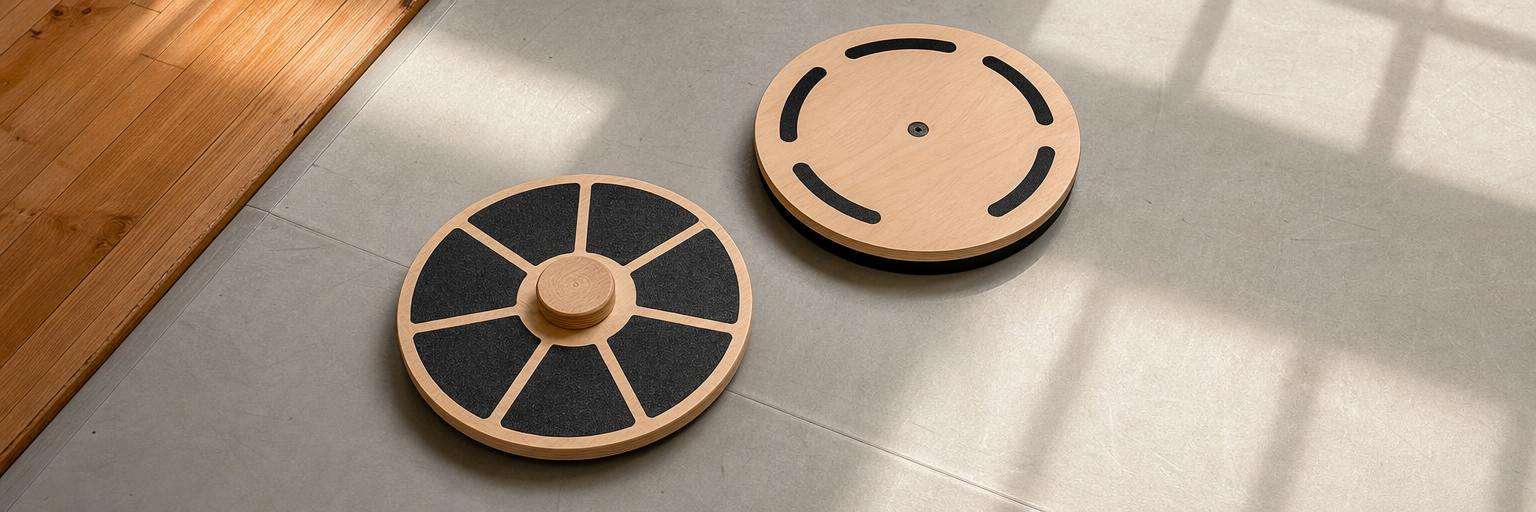
Why it winsCheap, portable, and the version teachers actually recognize, so a dancer using one is drilling the thing her teacher described.
Where it falls shortIt teaches turning on a slick board, not on a floor. Time on it does not transfer one-to-one, and overuse builds a habit of relying on the glide.
Check before buyingConfirm the return policy before buying. Use only with drills the teacher has approved: a board rewards a spot and a strong core, and it will happily reinforce a bad habit too.
Check at Ballet Is Fun →Price$99.00 for the 16-inch, $149.00 for the 24-inch, $199.00 for the 30-inch, verified 2026-08-02
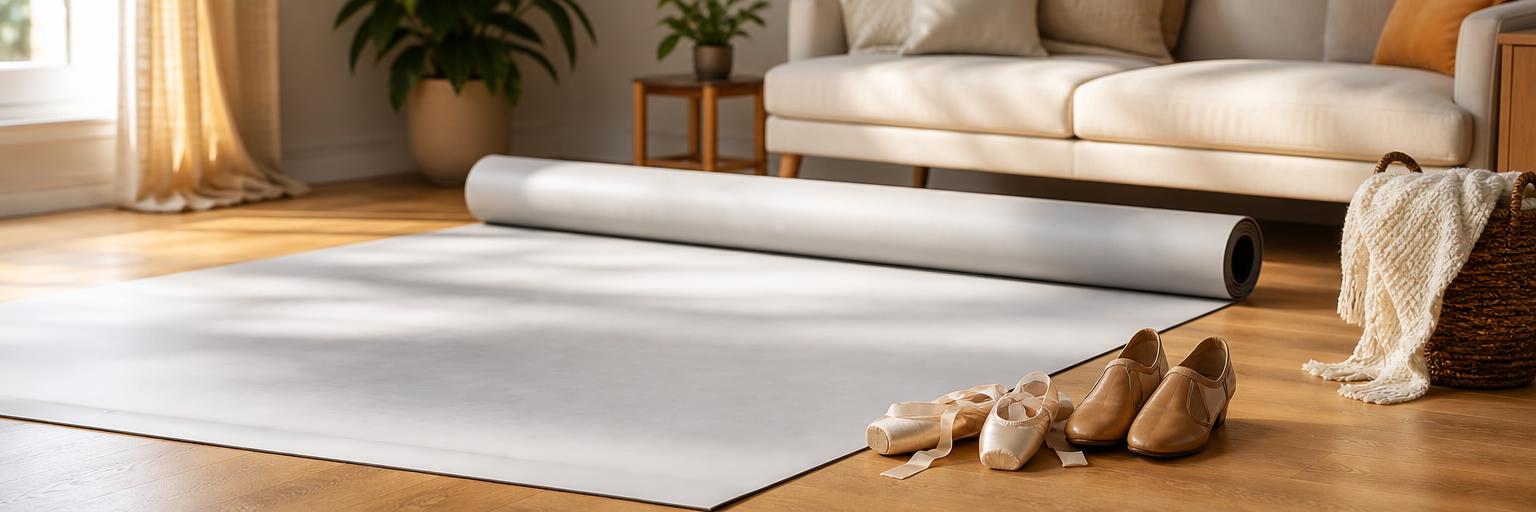
Why it winsReal marley under the foot, so what she practices on matches what she competes on, which a plastic board cannot claim.
Where it falls shortStarts at $99 and reaches $199, which is a lot for something you can only turn on, and it does not travel like a board does.
Check before buyingAll three sizes in stock at check time. Do not treat the disc as a studio floor: it is a one-foot spot for drilling, not somewhere to run combinations.
Check at Dancing Disc →Price$14.95, verified 2026-08-02
Why it winsHalf the price of the TurnBoard for the same basic function, which matters if you are not sure she will stick with it.
Where it falls shortNot made by a dance company, so nobody at the studio will recognize it, and the return path is less certain than buying from a dance retailer.
Check before buyingFrom a general athletic training catalog rather than a dance specialist, so check the return rules yourself. Skip any turning product marketed with guaranteed-improvement claims.
Check at Myosource →Which one for your dancer
- Teacher has approved a specific drill: buy ONLY the tool type she asked for. Don't substitute because something else is on sale.
- Home-practice setup: check the floor first. Hardwood is slick; carpet might not allow the right motion. Wrong floor + turning tool = how dancers get hurt.
- Buying as a gift: skip turning tools unless the teacher or parent specifically asked. They're easy to misuse and easy to disappoint with.
- Slipping or sticking on a real floor (studio or social venue): the answer isn't a turn board. It's shoe care or sole conversion. Dance Floors And Shoe Care For Practice.
Before you buy
- Ask the teacher whether your dancer is ready for a turning tool. 'Ready' isn't an age. It's whether she has enough balance and control to use the tool without forming bad habits.
- Don't use on crowded living rooms, slick hardwood, wet floors, or near walls. The board can't see the room.
- Skip products that 'guarantee better turns.' Better turns come from drilling under teacher supervision, not from gear.
- Read the return policy on training tools. Many become non-returnable the moment they're opened and tried.
How to approach it
Treat a turning tool the way you'd treat a weightlifting program: useful with a coach, risky without one. The board doesn't teach technique. It lets a dancer drill a SPECIFIC piece of technique under SPECIFIC conditions. So work in this order: teacher approval first, safe floor second, deliberate drill third. If the real problem is the floor or general balance, no board will fix it. And if your dancer is drilling fouettés alone in the kitchen at night, the board isn't the gift: supervision is.
What we would do
For a teacher-approved drill, we'd buy ONLY the tool type the teacher requested: usually the TurnBoard by Ballet Is Fun. For home practice, we'd check the floor BEFORE the product: slick hardwood plus a turning board is how dancers slip into walls. For gifts, we'd skip unless the teacher specifically said the dancer needs one. And we'd route any floor-friction question to Dance Floors And Shoe Care For Practice; sometimes the answer is a $35 sole-conversion kit, not a $30 board.
How to work out which one
Start with the drill, not the product. If your teacher said 'a TurnBoard would help you drill spotting,' buy that. If you're shopping because your dancer wants to turn 'better,' stop and ask the teacher what would actually help. For home practice, check the floor BEFORE you check the catalog: the room decides whether the tool is safe. And if the real problem is floor friction in the practice space, a sole-conversion kit or a small portable surface is often a safer purchase than a board.
Mistakes to avoid
Don't buy a turning tool as a shortcut around technique. The board can drill what's already there; it can't put what isn't. Don't use it on crowded living rooms, slick hardwood, wet floors, or near walls. The board doesn't know the room is wrong. Don't gift one to a young dancer without teacher or parent approval. The wrong tool can reinforce bad habits or create injury risk. The right tool only helps inside a sensible practice plan.
Where to start
| Best For | Start Here | Why | Check First |
|---|
| Teacher-approved drill | The exact tool type the teacher requested: usually TurnBoard | Technique context decides whether the tool helps. Buying without that context wastes money. | Dancer's level. Drill purpose. Supervision plan. |
| Home practice (any age) | Check floor and space first, then buy | A turning tool on the wrong floor creates real injury risk. The room matters more than the tool. | Floor type, open clearance, slip behavior, and whether someone's around if something goes wrong. |
| Buying as a gift | Don't, unless the teacher or parent specifically asked | Turning tools are easy to overpromise on, and unwanted ones sit in closets. | Teacher approval. Whether the dancer already has safe practice guidance. |
Using The Board Safely Once The Teacher Says Yes
Say the teacher gave the green light and the board is home. Everything above is about whether to use one. This is how to actually use it without anyone hitting the wall, because a turning board on the wrong floor in the wrong spot is exactly how the kitchen-fouetté injuries happen.
- Clear a real space first, not a corner of the kitchen. She needs a flat patch with arm's-length-plus clearance on every side and nothing hard within falling distance, no counter edge, no coffee table, no doorframe. A board can slingshot a dancer sideways when a turn goes wrong, so the room has to be wrong-proof before she ever steps on.
- Match the board to the floor, then test it before she trusts it. The whole point of the board is a near-frictionless spin, so on slick hardwood or tile it becomes a launch pad. Low-pile carpet is usually the safest home surface. Set it down, have her step on and shift her weight with a hand on a sturdy barre or wall, and if it skates out from under a still foot, the floor is wrong.
- Give her something to hold for the first sessions. A real barre, a steady countertop, or a wall within reach turns a scary free-spin into a controlled drill. The board is for isolating the spot and the axis, not for proving she can turn untethered, so the hand stays available until the teacher says otherwise.
- Expect her to get dizzy faster than she does in class, because the board makes it happen. A near-frictionless surface lets her spin through far more rotations than carpet or a studio floor ever would, so the dizziness stacks up harder and faster than she is used to, and that is its own hazard on a slick board near furniture. Spotting, the quick head-snap back to a single point, is the brake on it, so a dancer who cannot spot reliably yet will feel sick within a few turns and is better off drilling the spot on the floor before the board adds speed. Ramp the number of rotations up slowly over sessions rather than letting her chase a personal best the first day.
- Drill short and specific, then stop. Five or ten focused minutes on one correction, a clean spot, a still vertical line, a held relevé, beats a half hour of dizzy free-spinning that just grooves in bad habits. Board work is quality reps, and a tired or dizzy dancer is the one who falls.
- Keep a grown-up or the teacher watching, especially early. The dancers who get hurt are the ones drilling alone at night with nobody to catch a bad fall or call it when they are spent. Dizzy, the spot gone sloppy, or reaching for the wall every turn means the session is over, that is the body saying stop, not push harder.
The shortlist
- Teacher has approved a turning-board drill? TurnBoard by Ballet Is Fun (about $19.95 on sale, $29.95 list). The dance-specific original, bought direct from the brand. Studio and reseller discounts available.
- Want a cheaper alternative? Myosource Dance Turning Board (about $9.95, roughly half the TurnBoard). Comes from a general training catalog, not a dance specialist, so read the return policy carefully before buying.
- Adding to an existing dance order? Turning tools are stocked at Dancewear Corner for one-cart convenience. Check the return policy on the specific item. Some training tools become non-returnable the moment they're opened.
- Buying for a young dancer without your teacher's approval? Don't. Turning tools are easy to overpromise on, and a kid drilling fouettés unsupervised is how injuries happen.
- Is the actual problem the floor, not the dancer? Read Dance Floors And Shoe Care For Practice first. Sometimes the right purchase is a portable Marley turn surface or a $35 sole-conversion kit, not a turn board. Our home dance floor selector walks you to the right tier in a couple of taps and often lands on a $12 brush or a $99 turn disc instead of a floor.
How to choose
- Ask the teacher whether a turning tool is appropriate for your dancer's level. 'Appropriate' isn't an age question, it's a control question. Can she balance on one foot reliably already? Then maybe. If not, the tool waits.
- Use a turning tool in a CONTROLLED practice context. Not as a shortcut. A board can drill spotting and balance; it can't teach core control. Confusing those is how dancers get worse.
- Know what the board actually trains, and what it quietly hides. A turning board spins almost without friction, which makes it excellent for drilling one thing at a time, a clean spot, a still vertical axis, a held relevé. The catch is that it hands the dancer the rotation for free, so it can paper over a weak plié and a lazy push, the very things a real floor demands. A dancer who turns beautifully on the board but falls out of a single pirouette on Marley hasn't built the turn; she's borrowed it from the board. Use it to fix the spot and the alignment, then take that exact correction straight back to the floor where the turn has to live.
- Check the floor BEFORE using a turning tool on it. Slick floors and turning boards together can launch a dancer into the wall. Carpet is usually safer than hardwood, depending on the board.
- Pick clear return policies over novelty bundles. The 'turning kit' with three accessories is usually three extra things to lose.
Skip it if
- Don't buy a turning tool for a young dancer without the teacher's approval. They're easy to misuse and easy to overpromise.
- Don't use a turning tool on unsafe floors, slick hardwood, crowded living rooms, near walls. The board doesn't know the room is wrong.
- Don't buy the deluxe bundle when a simple board is all you need. Extra accessories rarely earn the extra money.
- Don't trust any product that claims it'll guarantee better turns. Better turns come from controlled drilling and teacher feedback. A board can help. It cannot do the work.