Quick answer
What shoes does my child need for musical theatre class
When musical theatre class starts and you need to know whether character shoes are required, whether tap is part of the curriculum, and whether the shoes needed are different from what your child already owns for recitals.
Quick read
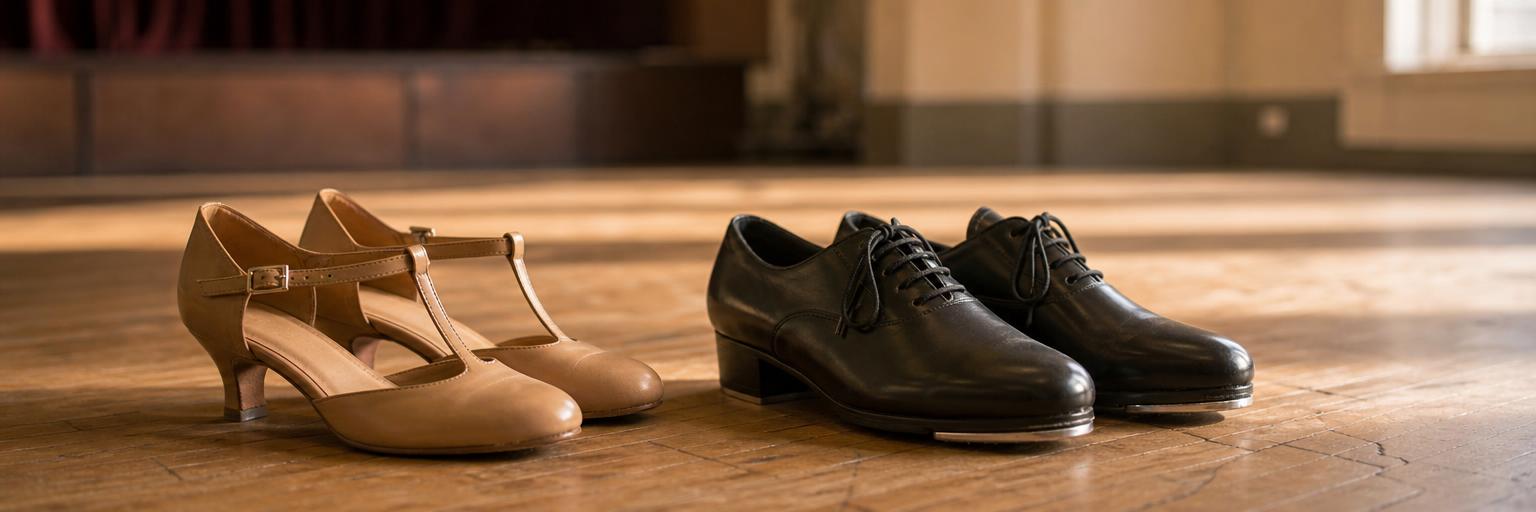
Musical theatre dance class almost always requires character shoes: a low-heeled leather oxford or T-strap with a 1.5-inch stacked heel. If the class includes a tap component, tap shoes are also needed. Ask the teacher before buying: some MT programs use jazz shoes instead of character shoes for movement-heavy curriculum. Character shoes for MT class are often the same style used for recitals, so check before buying a second pair.
Gear for this situation
What to do
- Confirm with the teacher what shoes are required before buying. Musical theatre programs vary: some require character shoes, some use jazz shoes for movement-heavy curriculum, and some need both if the class includes a separate tap segment. The shoe requirement is set by the teacher, not by the style name on the enrollment form. One email or question at drop-off saves you from buying the wrong thing.
- If character shoes are required: look for a low-heeled leather T-strap or Oxford in tan, caramel, or nude, with a 1.5-inch stacked heel. This is the standard MT class and recital character shoe. Budget $45 to $65. Capezio and Bloch both make widely-used versions. The teacher will specify heel height if the program has a preference. For younger dancers (under age 8), some programs allow a kitten heel or flat character shoe.
- If tap is part of the curriculum: a separate tap shoe is required. Most beginner MT programs do not include tap, but some do. Ask specifically whether the class involves tap work before assuming the answer. A tap shoe is a distinct purchase from the character shoe and cannot be substituted.
- Check whether your child already owns character shoes from a recital. MT class and recital character shoes are often identical: the same style, heel height, and brand. If your child already has character shoes that fit, confirm with the teacher before buying a new pair. Many families buy a second pair unnecessarily because they assume class and recital shoes must be different.
- Attire for MT class is usually the same as other dance styles: fitted leotard or fitted top with fitted shorts or leggings. Some MT programs allow a character skirt. Confirm whether the studio has a specific uniform requirement before buying new attire.
- After the first class, confirm the shoes and attire were correct. MT teachers often give specific feedback on heel height, color, and attire fit at the first class. Use that feedback before buying backup shoes or additional attire.
Common mistakes
- Don't assume MT class requires the same gear as a recital. Recital costume shoes are sometimes dyed or styled to match a specific costume. Class shoes are functional and are worn every week. Confirm the class requirement is separate from any recital shoe specification before buying.
- Don't buy character shoes without confirming heel height. A 1.5-inch stacked heel is standard for MT class, but programs for younger dancers or movement-intensive programs sometimes specify a lower heel. Buying the wrong heel height means the shoe may not be approved for class even if the style is correct.
- Don't confuse jazz shoes with character shoes for MT. Jazz shoes are split-sole, very flexible, and have a low or no heel. Character shoes have a stacked heel and a more structured sole. They are not interchangeable. If the teacher said character shoes, a jazz shoe is not a substitute.
- Don't skip the teacher confirmation step even if the program is described as musical theatre. MT is a broad category that includes programs where jazz shoes are the standard footwear. The title of the class does not determine the shoe requirement.